It’s Not The Serengeti

A spell of dry weather with very little rain has exposed cracks in CRTs maintenance planning.  

This summer, many boaters experienced low water levels and changing plans due to drought. Even at the time of writing, Oxford still has restrictions in place. People heading north had to hold their nerve or turn back. Holiday boaters were restricted to boatyards and marinas. The Leeds canal completely drained, and could easily have been confused with a rubbish tip.  Emails advising people to move into pounds with water points were not entirely unexpected as partial closures and timed restrictions in early August quickly became complete lockdowns to retain water on higher ground from August 15th. 20% of the network was closed on Tuesday 26th, the day storm Erin hit.

Despite allowances for the drought, the condition of the canals and locks does seem to be deteriorating over time. A ‘if it ain’t broke, don’t fix it’ attitude combined with lack of routine maintenance and the outsourcing of works to contractors raises the question; Were CRT tasked with maintaining the infrastructure or overseeing its managed decline? We can’t forget that the selling off of plant infrastructure and deskilling their own work force were policy decisions. Selling vast quantities of water to HS2 from Fenny Compton Reservoir that feeds this section must surely play a part in this too?

An FOI request by NBTA has revealed that dredging, a statutory duty to maintain navigation on the inland waterways, started to be phased out in the 1990s. It has now been completely been outsourced to third parties with ‘old equipment phased out and resources re-allocated to other work’. What other work? If they’re not dredging the canals and maintaining the network, what other work is there? These are the basics.

And while CRT claim ‘a surcharge on boaters without home moorings is necessary for those who make most use of the ‘utility’, it turns out that ‘utility’ is rain! An element that belongs to no-one and affects us all equally. Perhaps they rely a little too much on bad weather?

NBTA Casework? What On Earth (or Water) Is That?

NBTA helps any boater without a home mooring facing CRT enforcement or other issues that can arise from living on a boat without a home mooring, such as accessing benefits or registering with a GP. We are not a charity; we are boaters not too different from you, and we do this out of solidarity with our fellow boaters.

The reason NBTA puts effort into casework to support individual boaters is our foundational belief that we are stronger together. We shouldn’t allow authorities to target us one by one.

Most boaters on CRT waterways who seek help from us with enforcement issues find themselves in this situation because they have travelled less than 20 miles in a year, turned around a bit too much, or are facing health issues or engine problems that prevent them from moving as frequently or as far. A small number of those who come to us have not moved for quite some time, sometimes even years. Often there are valid reasons for not moving, such as health problems.

Without prejudice, we will do everything we can to stop a boater from being evicted; however, what we can do is limited by what is in existing Acts (of Parliament). On CRT waterways, the main Act for us is the British Waterways Act 1995. This Act states that CRT cannot refuse a licence to someone who has insurance, a boat safety certificate, and either a permanent mooring or who uses their boat for navigation, provided they do not stay longer than 14 days in one place unless reasonable.

So, stopping evictions on CRT waterways hinges on the boater’s ability to demonstrate an intention to use their boat for navigation or to obtain a home mooring.

To demonstrate that intention, the boater may require help in challenging CRT’s decision or more time to get a boat safety certificate, or to get their engine fixed. We use our collective resources as caseworkers to help the boater get licensed.

Another Act that significantly impacts our casework is the Equalities Act 2010, which both BW and CRT ignored until 2014, when a successful campaign by the NBTA brought the issue into the press and thus caused wider pushback. Under this Act, people who are unable to move as often as others or who need to overstay due to a disability or chronic illness can be allowed to stay longer than 14 days or to not have to travel as far in a year. Completing forms or dealing with CRT can be challenging, so we can also assist people with that aspect. Nevertheless, boaters needing reasonable adjustments still must use their boat for navigation if they don’t have a home mooring.

The NBTA believes that as a community, we need to stick together and support one another in sharing the waterways and protecting the travelling way of life.

If you want help from a caseworker, email: nbta.london.caseworker@gmail.com or ring 01615431945. If you are interested in becoming an NBTA caseworker, let us know by emailing us on NBTALondon@gmail.com

All’s Fair In Love And War?

When Canal & River Trust (CRT) come up with a new policy or strategy, they have a favourite word to cover up the subtext: fairness. Safety Zones – fairness; extortionate pre-bookable moorings – fairness; converting casual moorings into restricted time visitor moorings – fairness; the licence surcharge for itinerant boaters – fairness. But who loses out each time? Who is targeted? Which part of the boating community is further marginalised whenever CRT talks about fairness? It is, of course, boaters without a home mooring.

But the subtext doesn’t stop with CRT. NBTA members & volunteers speak to a lot of people; members of other boating organisations, boaters and the public on the towpath when we are leafleting and delivering newsletters, people at our public events and of course at events like Cavalcade where we engage with the public and aim to undermine CRT’s spin that they are some kind of beneficent society. And sometimes we are asked “what is your solution?”.

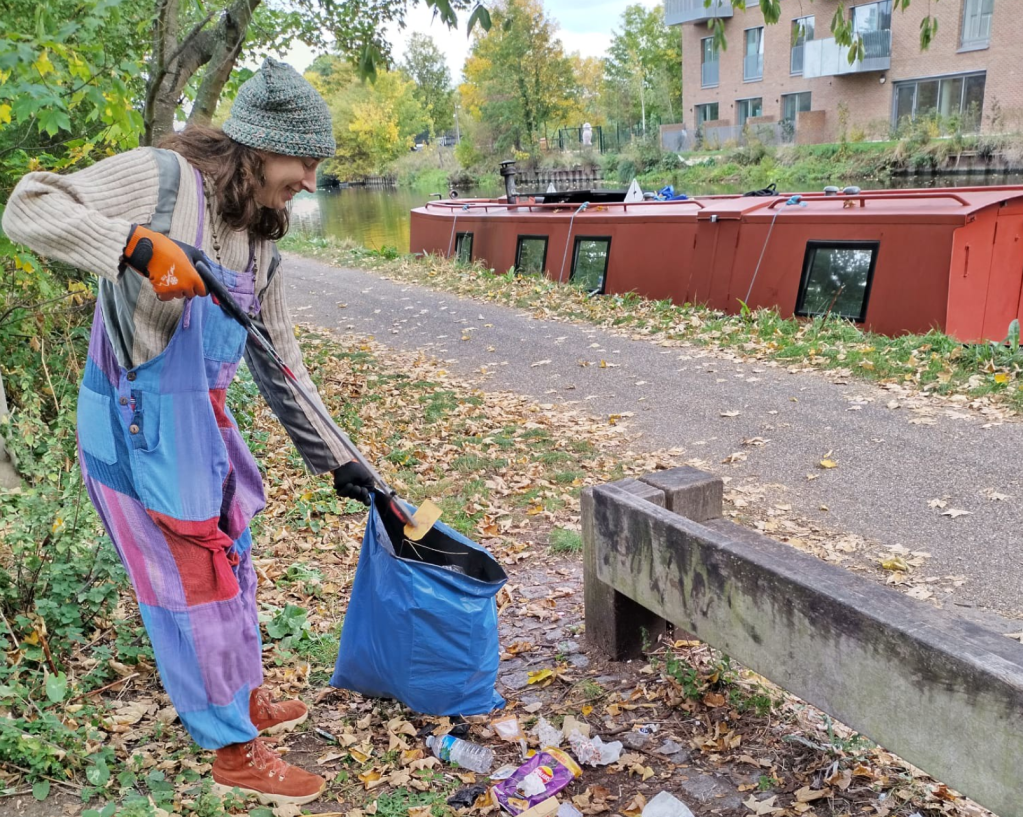
Boaters recently got together to clear up litter in Tottenham

What are we supposed to do to come up with this “solution”? Stop campaigning against the “Safety” Zones? Stop campaigning against the removal and monetisation of casual moorings? Stop campaigning against the licence surcharge?

Stop campaigning for the interests of parents who need to send their children to school, or people with physical and mental health issues who need adjustments to their expected cruising plans?

The fact is that these “what is your solution” questions are very rarely made in good faith. They are an attempt to deflect away from CRT’s attacks on our community and down a cul de sac where they can blame us for not coming up with the answers, framed within an acceptance of CRT’s claims that we are the problem. For these people, when they talk about a solution, they mean a solution to us, itinerant boaters.

So what could our reply be when we are asked about solutions? CRT need to stop blaming us; to stop marginalising us; to stop discriminating against us, and then, and only then, can we talk about the bigger picture.