Early in 2021, CRT announced that they would be restricting moorings along 10km of the river Lea, claiming that mooring in these ‘Water Safety Zones’ was unsafe.
The NBTA, together with the London boating community, fought against these so-called water safety zones. First, we organised the Broxbourne flotilla in April. Then, we organised Hackney Flotilla in June, which was attended by over a thousand people. CRT were forced to listen to ask boaters’ opinions, then ignored what we had to say.
Now, we face the extra threat of payable moorings in central London, but we continue to resist CRT and fight to protect our nomadic lifestyle.
We’ll also be putting on a vegan BBQ and refreshments plus more additions to be announced!
Hopefully we’ll get a lot of lovely sunshine and a lot of lovely faces so bring yourself, your friends and the family and let’s show CRT that life isn’t ‘better by water,’ but on it!
Picnic starts Sunday 26th June at 12 noon on Walthamstow Marshes, opposite the Anchor & Hope pub.
The Environment Act 2021, which became law on 9th November, will remove the partial exemption for vessels from the Clean Air Act 1993.
Local authorities will now have the power to apply their Smoke Control Areas to vessels moored within the areas, under Section 73 and Schedule 12 of the Act. CRT and other navigation authorities have been asked to provide contact information for boat owners to local authorities where they need it to enforce Smoke Control Areas.
There is an exemption for smoke which is created to propel the vessel or to generate electricity. There is no exemption for heating. Local authorities can now impose fines of at least £175 for breaches of Smoke Control regulations.
Friends double moored whilst frozen in near Kensal Cemetery, Winter 2017
There is a danger that this will be used as a tool to remove boats from areas where the local authorities are opposed to boat dwellers, or where local residents are hostile to liveaboard boaters. Tower Hamlets Council have already started harassing boaters. Notices from the council have been issued to boaters about their engines which go much further than is stated in the new Act. NBTA London has sent a complaint to the council, telling them they are going further than new Act gives them ability to do.
The new Act has opened the door to more attacks on our community.
We must stand together.
Please get involved in NBTA: more people involved means we can do more to defend our way of life.
Get in touch if you’d like to join us, we’d love to hear from you.
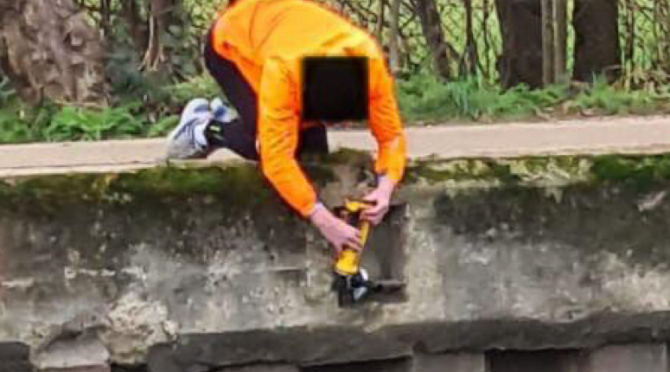
Oh look, an (allegedly senior) member of Lea Rowing Club (LRC) taking an angle grinder to the grab bars which can help people who have fallen into the river get out safely.
LRC has been unapologetic in pushing for CRT’s implementation of the “safety zones” – in fact they were the ones who came up with the deranged scheme in the first place.
But actually useful pieces of safety infrastructure there to help everyone don’t seem to matter to these overly entitled hypocrites. Could it be that their interest in “safety” has more to do with their desire to not share the river with other users?
Canal and River Trust (CRT) are attempting to bring in yet another restriction to all boaters, including boat dwellers without a home mooring, which will prohibit mooring nationwide on any bends or near bridges, regardless of whether it blocks navigation or not.
This proposal has not gone through any consultation process, but has been underhandedly tagged on to CRT’s “No Mooring” strategy that we are currently experiencing predominantly on the River Lee. The new restriction of no mooring on bends or near bridges refuses to take in to account the safe mooring on the bends of wide waterways such as the River Lee and parts of the Grand Union Canal.
It is the view of NBTA London that if safe navigation is not impeded by mooring on a bend or near a bridge, then to restrict mooring is simply reducing the possibility of liveaboard and leisure boaters alike from stopping in an available and perfectly feasible mooring.
Banning boaters from perfectly safe casual moorings on the bends of wide waterways begs the question of whether already existing, online long term moorings, located on bends or under bridges, and from which CRT derives income, will be removed.
Of course this won’t happen.
Just another example of CRT’s hypocrisy when it comes to attacking our community.
The Canal and River Trust (CRT) is preparing to launch an assault on the rights of boaters. Specifically, their rights to moor on large stretches of the historic River Lea, a river which has been populated by boat owners of all flavours dating back to the Bronze Age.
They are pursuing this strategy in the name of safety: they claim moored boats are a hazard to the users of the waterway. We do not agree. In fact, it is CRT themselves who are allowing the River Lea to become a dangerous place. They are allowing it to become dangerous through a lack of care, a lack of investment and a lack of sense. There are too many places which are too shallow, which make it impossible to moor close to the bank or even moor at all, in some places it even makes it hard to navigate.
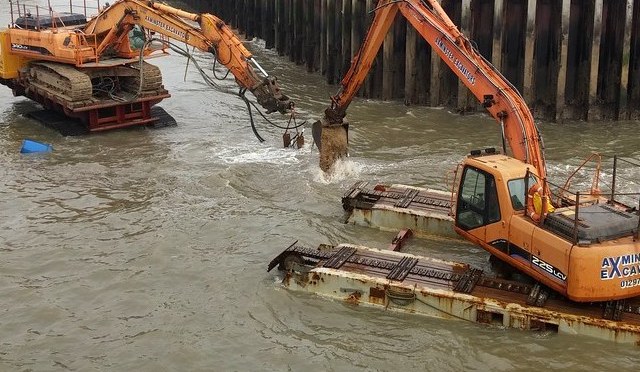
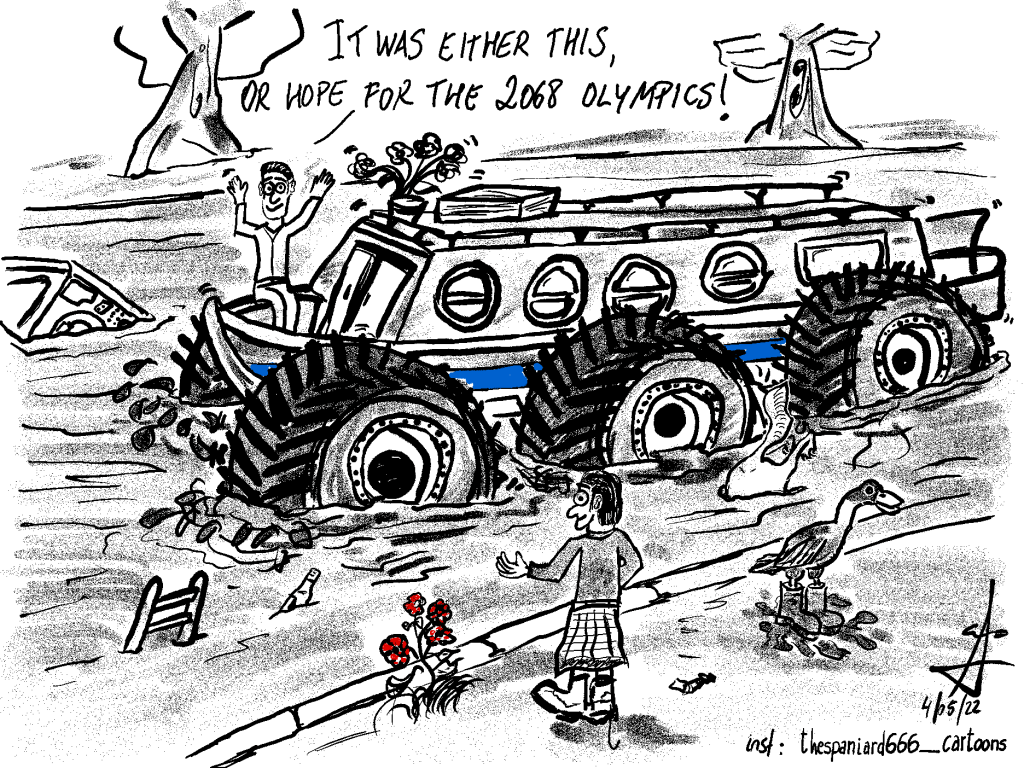
The Lea has not been properly dredged for many years, 11 to be precise – and that was just the Lower Lea. Waltham Town Lock to Kings Weir hasn’t been done since 2009 and doesn’t even have a record of when above Waltham Town Lock has been done last.
And why, 11 years ago was the cost of dredging the Lower Lea deemed acceptable? The answer is simple, the City of London and by extension British Waterways did not want important, international visitors to the Olympic park to have to contend with the putrid smells and depressing sights of the nearby river which had been neglected. At the time, Simon Bamford, General Manager of British Waterways (BW) in London, is quoted as saying ‘[water] quality on the River Lee Navigation has been an issue of concern for many years, affecting local residents, wildlife, boaters and other waterway users’.
The reason for the poor quality? To put it quite simply, a deluge of raw sewage overflows brought down from Deephams Sewage Works in north London. 11 years later and that issue has not gone away! Together with the 2018 Lower Lea river oil spill, the Lower Lea is fast becoming a toxic mess that is hazardous not only to the humans that spend time within its proximity, but also the animals that call it home.
If safety was a real issue for CRT, rather than removing places where we can moor, they should be looking at positive actions which would get wide support, like dredging.
Canal and River Trust (CRT) are planning to change visitor moorings in central London into paid, pre-bookable moorings.
They are proposing ten locations, totalling 1.1 kilometres of towpath between Kensal and Viccy Park, where moorings that are currently free 7 or 14 day moorings will become 7 day moorings costing £10 to £12 per night. The fees that are being asked for would equal between £70 and £84 per week with no mention of how CRT will manage late arrivals, cancelled bookings, or over-stayers.
The proposals would mean for many boaters who cannot afford these significant fees a very long run from Kings Cross to Willesden that may well cause a lot of stress. It is another attempt by CRT to push out poorer boaters from central London. This is nothing less than social cleansing of the waterways.
CRT are also planning to make it an ‘improper mooring’ offence to moor a widebeam and a narrowbeam next to each other, no matter how wide the river or canal is. While we understand that this may be sensible where the waterway is narrow, such a blanket rule is unnecessary and unfair, especially given their plans to further reduce free mooring spaces in London.
[September 2023]Risk Assessment Confirms River Lee ‘No Mooring’ Zones are ‘Not Necessary’
The National Bargee Travellers Association (NBTA) commissioned an independent risk assessment across CRT-proposed “No Mooring” Zones within the WSZ in December 2022. This assessment, carried out by a qualified and experienced IOSH and IIRSM Risk Assessment professional at three of the ‘No Mooring’ Zones, concluded the following:
‘Boats moored in this area cannot be considered an additional risk as they comply with national standard practice(…) Mooring restrictions at these sites are not necessary’.
The resulting verdict goes on to suggest that it is more important for craft – including row boats – to manage their speed effectively to avoid any potential incidents. Read more here
The Safety Zones continued…
When the CRT first proposed the full details of the Water “Safety” Zones in 2020, NBTA calculated that 550 mooring spaces would be lost in Broxbourne and Tottenham/Hackney. In some places the CRT also proposed introducing a ban on double mooring and wider boats. Following the magnificent efforts of the boating community to push back against these “Safety” Zones, CRT initially appeared to desist from their implementation, in favour of a navigation forum of stakeholders.
Unfortunately, the CRT continue their attempt to impose, potentially the most draconian part of the original “Safety” Zones outline, their new no mooring sections. We now estimate that 295 casual mooring opportunities are at risk.
Snapshot history of the Water Safety Zones
(click on the arrows to reveal key moments of the campaign each year)
2023
CRT stated that enforcement of their no mooring zones would begin on 10 January 2023. Hundreds of boaters remained defiant, with many staying in these zones up to 14 days before being replaced by another resistant boater. The CRT notices left by District Enforcement stated that a boater was moored contrary to British Waterways Acts, Bye-laws, Conditions, Guidance etc. To investigate what kind of legal standing CRT believed they had, NBTA solicitors asked them to qualify which specific Acts and Bye-laws relate to the no mooring sites. CRT subsequently failed to provide any Acts or Bye-laws to support their stance.
NBTA caseworkers continued to provide boaters with replies to CRT enforcement letters around the clock. In response, CRT responses were weak and deflective. After one particular email exchange where we sought to clarify the CRT’s stance in relation to the law, the officer ended one of their emails with:
“Anyway, I’ll leave it there for now. Feel free to get back to me if you have any other questions I won’t be able to give a straight answer to.”
This elusiveness hasn’t been exclusive to the legal side of the campaign either, with CRT’s public relations efforts regarding the matter continuing to deny their unfair treatment of itinerant boaters.
As of 31 May 2023, a Freedom of Information Request detailed that the Trust had spent £250k (rounded to nearest 10k) on trying to stop boaters from mooring in the ‘Water Safety Zones’ on the River Lea (across Lower Lee at Hackney/Tottenham and Broxbourne). All the while, CRT continued to increase license fees and divide the boating community.
The CRT lied to us by stating that they were putting the safety zones on hold, pending a discussion within the Lea Navigation Forum meeting. However, before the first Forum meeting had taken place, the CRT had already installed no mooring signs on most of the ‘no mooring’ sites on their Water Safety Zone map. We (NBTA London) brought this dishonest behaviour to the attention of the Lee Navigation Forum. CRT’s response was to disregard the dishonesty of their own actions which undermined the whole Lee Navigation Consultation. We asked for reasoning from CRT to why each of the no mooring spaces were made as such. CRT didn’t provide this. We then provided a document stating our opinion of each no mooring site at the very next meeting. More than half a year later CRT were yet to give a proper response.
During that half year, boaters moored in places that are perfectly reasonable and safe have continued to receive unjustified threats from CRT. Thankfully people continue to moor in these places in large numbers.
2018-2020: FROM ‘WATER SPORTS…’ TO ‘WATER SAFETY…’
“Water Sport Zones” had been part of CRT’s 2018 London Mooring Strategy, much of which wasn’t realised for funding reasons. After fading away for 2 years, CRT reintroduced them in 2020, cynically rechristening them as “Safety Zones”.
Predicated on the deeply flawed notion that stationary, moored boats pose a collision risk to rowers, the Safety Zones had not undergone stakeholder consultation (except for two rowing clubs) and caused a backlash from boaters.
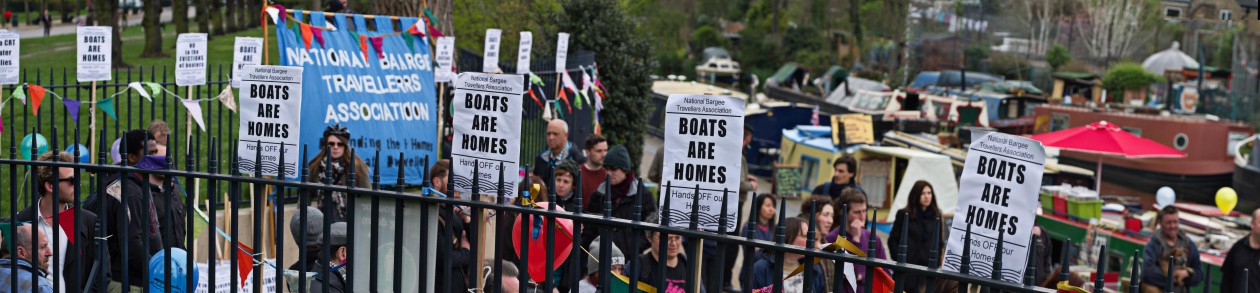
On Saturday 26 March 2022, hundreds of boaters marched on Canal & River Trust’s (CRT) main London office to protest the Trust’s continued attack on the capital’s liveaboard boating community.
Starting in Regents Park, the protest marched to CRT’s offices in Little Venice where they were addressed by speakers from the boating community and land based supporters and engaged with the public to explain how these discriminatory policy changes are threatening people’s livelihoods.
The protest was hailed as a great success by Ian McDowell, Chair of the London branch of the National Bargee Travellers Association, which has helped organize boaters’ opposition to CRT’s attacks.
Since London’s boaters forced CRT into a consultation on their plan to remove up to 550 mooring places on the River Lea in 2021, the Trust has doubled down on their plans to cull boats from London’s waterways including:
• Bringing in more reduced mooring times on the Grand Union; • Implementing banning boats from 295 ‘no mooring’ spaces in ‘safety zones’ despite indicating they wouldn’t; • Turning a blind eye to criminal damage of safety features of the River Lea inside a so-called ‘safety zone’; • Proposing 1.1km of new chargeable moorings and further mooring restrictions in Central London; • Revealing that the Trust no longer takes complaints about their policies.
The National Bargee Travellers Association (NBTA) believe this is further evidence of CRT’s plans to prioritise leisure over living on Britain’s waterways. Early in 2021, CRT announced that they would be restricting moorings along 10km of the river Lea, claiming that mooring in these ‘Water Safety Zones’ was unsafe. The NBTA, together with the London boating community, fought back by organising two flotillas involving over 70 boats and 1000+ people. CRT was forced to engage boaters in consultation, the result of which showed boaters are concerned about safety, but the ‘Water Safety Zones’ would not make the river safer. The ‘River Lea Forum’ was established with representatives from all interested user groups to discuss what would make the waterways safer. However, CRT ignored boaters’ voices by imposing many of the ‘Safety Zones’ before the first Forum even took place.
In October 2021, ‘no mooring’ signs started appearing on the River Lea and boaters moored in these areas were told they would have enforcement action taken against them under the new ‘Improper Mooring Process’. CRT claims that these sites come under its existing rules on where boats are permitted to moor, but these are the exact same stretches that they’d planned to designate as no mooring as part of their ‘Water Safety Zones’, making these new rules for areas where boaters have lawfully moored without any penalty for many years.
On 10 January 2022, enforcement started on the ‘no mooring’ sites and since then, CRT has continued to try and intimidate boaters by giving notices threatening to terminate licences and thereby forcing boaters out of their homes. CRT has also employed a third party car parking ‘enforcement’ agency at huge cost to hand out these notices.
Tyrone Halligan, Amelia Friend and their two year old son Isaac.
London houseboat dwellers stage a protest against what they believe is a drive by the Canal & River Trust to force them out, as part of a gentrification process of the UK (particularly London’s) waterways.
Amelia and Tyrone have lived on a boat travelling the London waterways for seven years. Together with their two-year-old son, they spend up to 6 months a year staying in one place to the next along the stretch of the River Lea from Tottenham to Stratford where the ‘no mooring’ signs have gone up. They are currently expecting their second child and worry that they may have to leave the water, and perhaps London, altogether. “This area is our home. My son attends a nursery here and we’re registered with doctors, dentists, and my midwife appointments are in Homerton Hospital. We have built a life within this area and not being able to moor here truly feels as if we are being forced out,” Amelia says. “The stress of receiving abrupt emails, notices and knocks at the door, about where we are moored, in areas we have allowed to be for years previous, is causing us a great deal of stress at a time when, as a young and growing family, we already have a lot going on. No consideration is being given for people who have set up their lives, careers and families in these areas.”
Days before Christmas 2021, CRT made a fresh attempt at trying to take away mooring spaces in the capital by sneaking out another consultation with proposals for paid-for bookable short term moorings of less than 14 days. This, despite their own figures showing that the two ‘test sites’ for these new chargeable moorings have had less than 25% occupancy – most of the year they were wasted moorings. They’re also proposing further areas of restrictions on triple mooring and narrowboat to widebeam mooring – regardless of how wide the navigation is. “This continued disregard for the people who live and work in these new ‘no mooring’ and proposed paid-for mooring areas drives boaters away from their livelihoods, and out of their homes,” argues Ian McDowell, chair of the London branch of NBTA. “By ignoring its responsibility to preserve the waterways for all communities, CRT is crossing a dangerous line that could see London Waterways and other waterways become usable only by those who can afford any extra costs CRT chooses to introduce in addition to the licence fee. Their actions only serve to show that while CRT markets themselves as a charity that promotes wellbeing, they repeatedly try to introduce policies which attack boaters’ wellbeing and way of life.”
NBTA London demands that CRT concentrates on its mandate to maintain the navigation with things like dredging, rather than persecuting boaters who moor on some of the widest waterways in the country. The Trust must stop destroying boating communities by favouring one kind of boater over another.
NBTA and London Boaters have fought and prevented unfair and destructive attempts like these before, and we will do so again. National Bargee Travellers Association London branch (NBTAL) is supporting boaters in their direct action to disobey the ‘no mooring’ signs through providing a template complaint letter if they do receive a notice and posters to display in windows declaring the boat is moored in protest. Hundreds of boaters have defied CRT’s unfair and unjustified restrictions so far and since we are unable to complain online, now we are marching on CRT’s offices to resist the displacement of boaters and to protect our homes.
Come to discuss what is next for the campaign against the ‘safety’ zones and chargeable mooring. Help us make a plan for what we as a campaign should do next.
10th April 2022 at 5pm The meeting can be accessed online via:
Ali was moored at Daubeney Fields. She works for a food and farming charity which advocates for land redistribution and community grow projects. Ali has been on the water for three years. “I’ve been involved in the protest movement against the new CRT restrictions for about a year and a half now, since the safety zones campaign started. I consciously seek out places where the new no mooring locations are. I speak to my neighbours about the restrictions, so that everyone in the community knows about them. And I think it’s important to show up physically against CRT’s attempts to gentrify the waterways even more. These are perfectly great moorings and the idea that they could become paid for or private moorings is really shocking. It’s been a hard year for everyone and the fact that space and land access is going to be restricted is really disgusting.”
“We must take a stand to protect our way of life or they will do everything they can to get rid of it.”
Marcus
Dee, Michelle and their son Io were moored offside at Daubeney fields. They have been on the water for just over a year. Mychelle is a baker. Dee is a gardener and has been clearing up the bankside where they are moored to make a lovely space for their son and other children to play. “It is a good spot to moor and it doesn’t cause any obstruction to anybody; there’s no reason for it not to be moored on. It’s a good spot to be. “The fact that it is a no mooring spot hasn’t really changed our minds about mooring here to be honest. If there was a real reason, like if it felt dangerous, then we wouldn’t moor here, obviously. But there’s no reason. Usually, families moor along here and our son will hopefully start school locally too.”
Lud by his boat
Lud “I work in a cleaning and maintenance job on a dock restoration site by the river. I’ve been on the water since 2016 and I fell in love with boating life and its people. I’m resisting the ‘no mooring zones’ because I think they are not fair to boaters who live on their boats and there’s nothing to justify them.”
Ben and Pru were moored at Matchmaker’s Wharf. They have been on the water for about three years. “We got a notice from the enforcement guy saying that we are wrongfully moored – there are no signs to tell us that we shouldn’t moor here and we haven’t received an email updating us about where we can and can’t moor. “CRT tried to put a load of water safety zones in and then realised that they hadn’t consulted anyone apart from the rowing groups. In a few years it will be impossible to moor in London and it will become just a rich city for rich people. It’s a subtle cultural genocide. They want to take us away.”
Jade and Ted were moored by the Green Bridge (Mandeville St).
Jade & Ted “There is no logic to what CRT are trying to implement. What they say it is about and what it is actually about are two different things. Safety is important, but this is nothing to do with safety”
Matthew was moored on the bend just above the Princess of Wales. He is a musician and he fits out sailaways to sell on. “I love the river and I love the people on it. I think (the safety zones) are absolutely ridiculous really. Boaters made the canal and rivers habitable again, haven’t we? We have a lot to do with the regeneration of the canals in London. The rowers don’t own the river . This is our life, for them it’s just a hobby. It’s really backward thinking and there’s a definite disconnect between us and CRT.”
Jay was moored near a bridge on the Filter Beds. Jay works in theatre, but has just quit his job and is going to cruise to Bristol at some point soon. “I didn’t realise that I was on a no mooring section. I’ve not heard anything, and I’ve been here a week. I think its just CRT saying that boaters are creating a problem, but we’re not. It’s kind of bullshit isn’t it? I don’t think mooring here makes any difference compared to mooring there, or mooring there (pointing to mooring spaces nearby).”
“In a few years it will be impossible to moor in London and it will become just a rich city for rich people. It’s a subtle cultural genocide. They want to take us away.”
Ben & Pru
Amy was moored near a bridge on the filter beds. “I don’t think (the safety zones) are needed. I think it is an unnecessary crackdown on numbers of boats in some of the widest parts of the river. The restrictions are unnecessary and I plan to ignore them for as long as possible.”
Marcus and his son aboard their boat
Marcus was moored by the electricity bridge on the offside. He is home schooler and plumber and has lived on the water for 10 years. “Over the years Canal and River Trust has been taking places where it has been possible to moor away. We must take a stand to protect our way of life or they will do everything they can to get rid of it.”








 National Bargee Travellers Association - London Branch