Category Archives: Advice

The Poop-volution: Boaters Do It Better

In law, there is no designated authority responsible for providing sanitation facilities for boaters. Unfortunately, our community has experienced first-hand that the CRT cannot be trusted to support us in this way, with poorly maintained boater facilities falling into ongoing disrepair or disappearing entirely. Wanting to avoid the weekly chore of lugging a cassette up the towpath—only to find the elsan broken—or taking a long detour to a pump-out, many boaters have turned to separating (composting) on-board loos for both ecological and convenience reasons.

Boater’s compost toilet – Image: Facebook Group/”Compost Toilets for Boats and Off-Grid Living”

Circular Revolution was born in 2021 with the aim of providing boaters with a reliable and sustainable solution to manage their separating loo ‘waste’. C.R. believes that, with the right resources, we boaters want to care for our shared environment and that, with our knowledge of the community and the waterways, we are best placed to do so. The core C.R. service collects dry material from separating loos on boats across London on a monthly or fortnightly basis by e-cargo bike and processes the amassed material into soil conditioner—transforming ‘waste’ into a valuable resource.

C.R. became a Co-operative Community Interest Company (CIC) in 2023, meaning the business is owned and controlled by its members to meet their shared needs. Their aim is to showcase to the UK that a successful, grassroots alternative to the broken-by-design traditional sanitation industry is possible—and that we boaters can be at the forefront of leading this shift.

They are also working hard to make their service accessible to all who want to use it, including introducing sliding-scale drop-off points and running a volunteer scheme where people can contribute a small amount of their time in return for a monthly subscription.

Should I moor on the payable moorings? Some brief guidance and advice.

This guidance is to help you to decide whether to moor on the chargeable moorings or not. If CRT charge you for mooring without booking, contact NBTA Caseworkers for help. 

For more detailed guidance, including case law and foot notes, see here

I’ve already decided to moor – what are the basics I need to remember? Brief Information

CRT’s ability to issue charges is untested. They state that they will charge double the nightly cost for any boat that stays without paying. It isn’t known if they can uphold this (see [link] for more info). 

Stick to the British Waterways Act 1995: do not overstay the 14 day limit unless reasonable, use your boat for bona fide navigation, have a valid BSS, have insurance. 

Check that mooring is available on CRT’s website before mooring on the chargeable mooring. If it is fully booked, don’t moor there. Be respectful to other boaters who may have paid.

If you say that you are mooring there in protest or there are clear signs which state the charges, then then CRT could argue that you have agreed to the terms and conditions of mooring there. This may make it easier to charge you. 

Hiding index numbers is against the 1975 BW byelaw. However, CRT do not have the power to refuse you a licence for not displaying your index number. If someone doesn’t display an index number, it is harder for CRT to know who is moored on the chargeable mooring and therefore to send emails to them.

Do not engage in conversation with mooring rangers. 

If CRT move beyond threats and do issue a charge, contact the NBTA London caseworkers: https://nbtalondon.co.uk/resources/contact-nbta-caseworkers/

Should I moor on the payable moorings? More detailed guidance

This detailed guidance is to help you to decide whether to moor on the chargeable moorings or not. If CRT charge you for mooring without booking, contact NBTA Caseworkers for help. 

For less detailed guidance, see here.

I don’t know whether to moor there – what do I need to consider?  Detailed Guidance 

Can CRT Charge me?

CRT claims it could charge a fee for breaking the T&Cs and ignoring their signs. They haven’t issued any extra charges to boaters for ignoring their signs. 

CRT are claiming that they can charge double for mooring on chargeable moorings without booking. This has not been tested. We believe it to be unlikely and as far as we are aware, no charges have been issued for overstaying before. However, mooring will be at your own risk.

If no signs are visible clearly saying what the restrictions are, CRT will not be able to charge boaters for staying there. If signs are visible, it can be argued that the boater is entering into a contract with CRT by mooring there. In ‘Parkingeye Ltd v Beavis (2015), a motorist’s appeal against a charge was rejected because there were plenty of signs stipulating the length of stay and the penalty1.

Similarly, if a mooring ranger tells you to move, it can be argued that by remaining there the boater is entering into a contract with CRT. If you were to tell a CRT employee that you are moored in protest, you would be acknowledging that you know about the chargeable mooring and so also be entering into the contract. However, you should only feel compelled to move if safe and able to do so. 

If you mooring on a chargeable mooring doesn’t stop another boater who has paid, then CRT can not issue a large fine. In the Parkingeye Ltd v Beavis 2015 court case, the judges ruled that a charge collected needs to be in line with the loss incurred. This suggests that if you cause CRT to lose money by mooring in a spot someone else has paid for, they will be able to charge more than if you had not caused them a loss2. Take a screenshot of the available booking online and of the empty spaces so that you have proof of this. 

The booking website will show you if there is limited or no availability on the chargeable moorings (amber or red). If it is red, we do not advise that you moor there. If it is amber, make your own judgement about whether to moor there. 

CRT cannot legally issue fines which automatically take money from your bank account. They might be able to send a penalty charge notice to your address. 

Can CRT take away my licence if I get a charge and don’t pay it? 

Mooring on chargeable moorings without paying should not affect your licence. It is a breach of your licence Terms and Conditions.

Legal advice states that CRT that cannot refuse to relicense your boat so long as you satisfy all the conditions of section 17 of British Waterways Act 19953 (Not staying more than 14 days, the boat is used for bona fide navigation, has insurance, and valid BSS). Whether you breach the Terms and Conditions or refuse to pay the charge, it is not relevant and should not affect your renewing your licence.

CRT cannot evict a boater only for running up charges that they say are owed to them. In Ravenscroft Vs Canal and River Trust court case (2018), the judge ruled that CRT cannot recover ‘outstanding cost’ from boat owners using Section 8 of British Waterways Act 1983 (one of the eviction notices that CRT issues to boaters)4.

If I decide to moor there, how do I go about it?

  • untickedCheck that mooring is available on CRT’s website before mooring on the chargeable mooring.
  • untickedStick to British Waterways Act 1995: do not overstay the 14 day limit, use for bona fide navigation, have a valid BSS, have insurance. 
  • untickedHiding index numbers is against the 1975 BW byelaw5. If someone doesn’t display an index number, it is harder for CRT to know who is more on the chargeable mooring.
  • untickedYou do not have to engage in conversation with mooring rangers. 

If CRT move beyond threats and do issue a charge, contact the NBTA London caseworkers: https://nbtalondon.co.uk/resources/contact-nbta-caseworkers/

Footnotes

 1 Parkingeye Ltd v Beavis [2015] EWCA Civ 402: “[28] …charges of the kind now under consideration should be recoverable, provided that they had been brought clearly to the attention of the motorist at the time he made use of the car park.”

2Parkingeye Ltd v Beavis [2015] EWCA Civ 402: “ [12] It will be held to be a penalty if the sum stipulated for is is extravagant and unconscionable in amount in comparison with the greatest loss that could conceivably be proved to have followed from the breach.”

3 https://www.legislation.gov.uk/ukla/1995/1/section/17/enacted

4  https://www.casemine.com/judgement/uk/5b2897fa2c94e06b9e19e90e

5  “No person shall knowingly cause or permit to be concealed a pleasure boat licencce or commercial vessel license required to be displayed on a pleasure boat or commercial vessel in accordance with this Bye-law”,
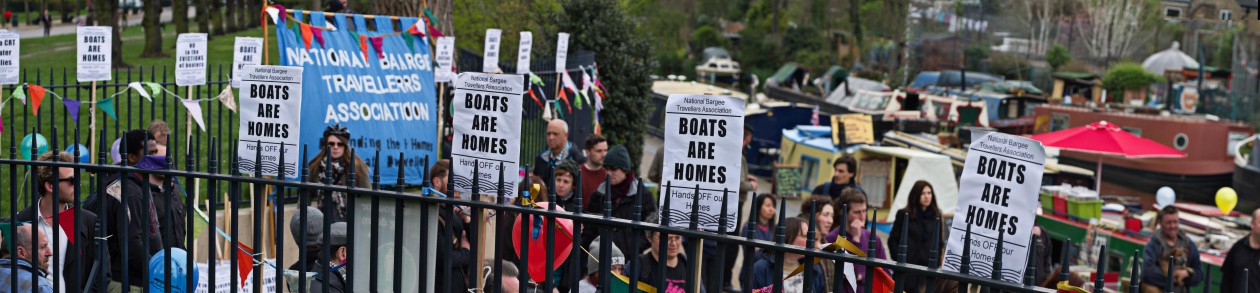
March Against Surcharge – Organised Transport Info

Car share whatsapp group

Here is a group for discussing and organising car shares to the Birmingham protest:

https://chat.whatsapp.com/ILqAoOiuJEw2VvqxpMUeNQ

If you don’t have whatsapp, email us on stopboatlicencediscrimination@gmail.com

Coach from London

Please get a ticket for a coach to Birmingham from Hackney here:

https://buytickets.at/nbtaprotestsurcharge/1048376

Transport from Pewsey and Bradford On Avon (K&A)

Protest bus from Pewsey and Bradford On Avon (K&A)

Here is where you can get tickets for the bus:
https://buytickets.at/nbtaprotestsurcharge/1053926

More info about this march can be found here

Newsletter Article: BOATERS ADVICE

pan1WHAT DO I DO IF CRT REFUSES TO RENEW MY 12 MONTH LICENCE?

Licences

CRT’s new enforcement policy  has meant many boaters have  had renewal of their 12 month  licence refused and a 6 or 3 month license offered instead.

How far is ‘far enough’?

CRT stated on 6th March: “Whilst this means that we cannot set a universal minimum distance for compliance, we can advise that it is very unlikely that someone would be able to satisfy us that they have been genuinely cruising if their range of movement is less than 15-20 miles over the period of their license. In most cases we would expect it to be greater than this.

We will be advising those boaters without a home mooring whose range of movement falls short of this distance that their movement needs to increase or we may refuse to renew their licence.”

The policy is now three months old and hundreds of boaters have been affected.

Help!

If you are affected by this new enforcement policy, the first thing to do is:

Obtain your sighting data from CRT and check its accuracy. This is
the log they have of your movement during the previous licence period.

Subject Access Request

We’ve had recent reports that CRT will only provide your sighting data in response to a Subject Access Request under the Data Protection Act 1998.  However, do try asking nicely for it as SAR’s can take up to 40 days. If CRT refuses to provide your data, email London Enforcement Manager Simon Cadek:  Simon.Cadek@canalrivertrust.org.uk

Clearly mark the email as a ‘Subject Access Request’ and ask for your sighting data and any other information that CRT holds on you. CRT can lawfully charge you up to £10 for this.

Should I accept a restricted licence?

When faced with the ‘option’,  you can either take the 6 or 3 month licence offered by CRT in time to get the prompt payment discount (if not paying by direct debit), or you can complain. If you are unhappy with being offered a restricted licence, we strongly advise you to make a formal complaint about the lack of warning and
opportunity given to remedy the situation and the retrospective application of this policy.

Make yourself heard

To lodge a Level 1 complaint,  use the template provided on the Kanda website or contact the NBTA caseworkers for help.

Download the Canal and River Trust’s “MAKING A COMPLAINT” guide here.

Refusing a licence

We believe if you take the restricted licence, during that time CRT will expect you to travel in excess of a range of 15 to 20 miles or they won’t renew it without a home mooring. If  you feel you will be unable to comply with this distance then DO NOT accept the license and seek legal help through nbtalondon@caseworker.com

It can be challenged through the courts. CRT’s new enforcement policy is highly unlikely to be considered lawful if you sit tight, are prepared for the stress of a court case and you have complied with the legislation and moved a reasonable amount at least every 14 days, as the the law (The 1995 British Waterways Act) does not specify a minimum distance that must be travelled to comply.

Download the NBTA London Newsletter July here