Category Archives: Legal

Should I moor on the payable moorings? Some brief guidance and advice.

This guidance is to help you to decide whether to moor on the chargeable moorings or not. If CRT charge you for mooring without booking, contact NBTA Caseworkers for help. 

For more detailed guidance, including case law and foot notes, see here

I’ve already decided to moor – what are the basics I need to remember? Brief Information

CRT’s ability to issue charges is untested. They state that they will charge double the nightly cost for any boat that stays without paying. It isn’t known if they can uphold this (see [link] for more info). 

Stick to the British Waterways Act 1995: do not overstay the 14 day limit unless reasonable, use your boat for bona fide navigation, have a valid BSS, have insurance. 

Check that mooring is available on CRT’s website before mooring on the chargeable mooring. If it is fully booked, don’t moor there. Be respectful to other boaters who may have paid.

If you say that you are mooring there in protest or there are clear signs which state the charges, then then CRT could argue that you have agreed to the terms and conditions of mooring there. This may make it easier to charge you. 

Hiding index numbers is against the 1975 BW byelaw. However, CRT do not have the power to refuse you a licence for not displaying your index number. If someone doesn’t display an index number, it is harder for CRT to know who is moored on the chargeable mooring and therefore to send emails to them.

Do not engage in conversation with mooring rangers. 

If CRT move beyond threats and do issue a charge, contact the NBTA London caseworkers: https://nbtalondon.co.uk/resources/contact-nbta-caseworkers/

Resisting CRT’s controversial Surcharge with a Licence Strike

Stop The Surcharge Campaign members are organising ahead of a Licence Strike. They are asking anyone interested in striking to sign up to the Licence Strike Group – tinyurl.com/licencestrike. Strikers will refuse to pay CRT’s new class of licence fee in protest against an ever-increasing additional charge for boaters who do not want, or cannot afford or find a home mooring.

The strength of this protest action is it has real leverage – a real financial and administrational impact on CRT. The new ‘Continuous Cruiser’ fee is perceived within the community as an attempt to incrementally price itinerant boaters off the waterways. Once enough people sign up to the Licence Strike, if CRT doesn’t back down a strike will be called. A coordinated Licence Strike will have a significant impact on CRT, overloading their enforcement team and costing them dearly.

Early signs are strong. Leafleting and promotion has only begun and already over 300 boaters have signed up. Strike organisers have indicated that the number of strikers are growing of their own accord:

“Boaters can see how divisive and unfair the Surcharge is and they want to strike – some are striking already. The intent is already there in the community – all we’ve had to do is facilitate it as a viable protest action. Our job is to make the strike effective and safe for boaters. There are legal protections we can incorporate. There is protection in numbers. Already more than 300 hundred boaters have signed up, and there’s an entire community behind them.”

“Boaters are being charged unfairly every time they renew a licence. CRT almost certainly aim to increase the surcharge beyond what they have stated so far and destroy our community, and boaters know this. The number of strikers will only grow. Once we have enough interest we will call a ballot and strike. CRT have left us with little choice – take action or they will end our community. We must take collective action to stop the ‘surcharge’. “

Stop the ‘surcharge’ by signing up to the License Strike Group – go to tinyurl.com/licencestrike and complete the signup form. There will be a full description of the strike action and a full ballot to members and boaters before any strike action is taken.


NBTA London needs your support to carry on our work. Please get in touch here if you would like to volunteer with us. Alternatively your donations are vital to us supporting boaters with their legal case work, campaign banners and other printed material as well as events. You can help us with your donations online here


CRT Makes Intentions for Travelling Boaters Clear with New Surcharge

The latest power move from the CRT is the introduction of a 25% surcharge for boats without a home mooring, a devastating decision which unfairly targets our community of travelling boaters.

As some of us may remember, this is not the first time the CRT – or British Waterways before them – have attempted to implement what is essentially a punishment for living this lifestyle, each time giving a different reason for doing so. This time around, CRT stated that the reason for this surcharge is that they need more income and we use the waterways and the facilities more than those with home moorings, a bogus statement for which they have no evidence; it could even be argued that some holiday boaters travel a further distance than most itinerant boaters. 

It seems somewhat hypocritical for the CRT to insist some of us to move more, then say it’s our use of the waterways that means we need to pay more. At the NBTA we believe the most honest reason behind these decisions was given in the 2000s by British Waterways, they said that there were too many boats without home moorings and this proposition of a surcharge would encourage people into moorings- which seems to us is what the CRT is attempting to do here too.

Their increased ‘no mooring’ zones, new chargeable moorings and now a surcharge points toward their deeply concerning intentions for our waterways. They claim they need the income from this surcharge, but it would generate less income per year than their two top earners take in a year. They claim this is about money yet they spend hundreds of thousands enforcing ‘safety zones’.

Before now no waterways authority has ever claimed that we should be charged more to generate income, we assume because it would generate an inconsequential amount, it is no different this time. The CRT is chronically mismanaged, they could generate other much more profitable streams of income if they wanted to. This is not about the money they might make from a surcharge, this is about the gentrification of our waterways, they want to physically restrict our moorings and eventually charge us out of our homes, we are undesirable and not profitable to them.

This decision fundamentally discriminates against our already marginal community. Similarly to the ‘safety’ zones, if we fight we can be a force to be reckoned with. This battle is larger than the ‘safety’ zones, please get involved.


NBTA London needs your support to carry on our work. Please get in touch here if you would like to volunteer with us. Alternatively your donations are vital to us supporting boaters with their legal case work, campaign banners and other printed material as well as events. You can help us with your donations online here


Elmbridge council wants rid of boats

Elmbridge Council on the Thames want to bring in a Public Spaces Protection Orders (PSPO) to fine boaters up to £400 for staying for more than 24hrs.

The council was made to re-consult after NBTA amongst others pointed out that boaters weren’t able to fill in the consultation due to not being notified about the consultation.

EA enforcement boat moored at Elmbridge on the Thames

We as NBTA met with the council to discuss solutions to the issues they raised in the PSPO. At one point in the meeting the council reps admitted the issues they have weren’t the ones mentioned in the PSPO but the fact that boats moor there longer than 24hrs. We asked if there was a more reasonable time that the council would be happy with boats staying. They weren’t interested in engaging with this question.

The council has now concluded the consultation and has decided to go forward with PSPO. A boater is taking legal action against the PSPO.


NBTA London needs your support to carry on our work. Please get in touch here if you would like to volunteer with us. Alternatively your donations are vital to us supporting boaters with their legal case work, campaign banners and other printed material as well as events. You can help us with your donations online here


LICENCE DISCRIMINATION: The Canal & River Trust’s plan to eradicate a whole way of life!

Itinerant boaters have yet again become moving targets for CRT, this time with the excuse being financial – the weight of their budget shortfall is to be somehow paid for by surcharging the licence of boaters without home moorings an escalating amount over 5 years. With only 2% of CRT income coming from boaters without permanent moorings, the new surcharge is relatively inconsequential for them, but potentially life-changing for a largely marginal community of itinerant boaters, some of whom face being priced off the waterways they call home. Dividing boaters into multiple sub-groups, and setting us against each other regarding who should subsidise the other, doesn’t raise finance, but rather helps them rid the waterways of the undesirable, financially insecure travelling boaters they resent having to accommodate. Boaters are coming together, resolved to defend our way of life and demand the continuation of one licence for all.

It’s not about the money.

Are CRT serious about their finances, or the canals, at all? It is simply not feasible, or financially sound, for boaters without home moorings to subsidise canal use for those who can afford home moorings. To illustrate the short-sightedness and imbalance of this proposal, an alternative annual 1% increase above inflation across all boat licences would generate more income – AND without heartlessly and knowingly driving many pensioners and low-income earners who live on boats without home moorings into hardship and poverty. An increase of 2% across all licence holders would raise double the revenue!

In fact, it’s more likely that this initiative will lose money on balance – unaffordable licence costs lead to more defaulting and unlicensed boats – criminalising their inhabitants and costly Section 8 1983 British Waterways Act  ‘canal eviction’ proceedings – at £10,000.00 each by latest estimates.

We believe this is discrimination.

A brief look at the past suggests this is part of a longer history of discrimination. For decades, waterways management have been trying to rid the navigation of  itinerant boaters:

  • In the Bill which became the British Waterways Act 1995, British Waterways (the state-owned predecessor of CRT) wanted it to be a criminal offence to keep a boat on the waterways without a home mooring. 
  • In 2002 in an attempt to encourage itinerant boaters onto moorings, they proposed a licence for boats without home moorings at 2.5 times the normal licence price. 
  • Enforcement strategies to make boaters travel 120 different lock-miles every 3 months without turning back were entertained in 2003
  • In 2005 the proposed increase for boats without a home mooring was 147%. 
  • In 2008, proposals to increase the tariff by £150 were again successfully challenged.
  • Rather than implement an increase in 2017 which would be “fairer and less complicated” in charging us more, they halved the early payment discount, put a surcharge on wider boats and have been replacing miles of moorable towpath into chargeable moorings and introducing over-zealous ‘safety zones’ ever since. 

Why have their efforts always failed? Because, aside from being  discriminatory, impractical and unpopular, they are also unlawful. Section 17(3)(c)(ii) of the British Waterways Act 1995 enshrines in law  “the right of all licence holders to use and live on a boat without a home mooring”. The licence comes first, not the circumstance in which you use it. 

They’ve had more than enough time, and knowledge to prepare for this.

They’ve always known government funding was going to end, and they’ve had much longer than planned – and more funding – to transition to a self-sustaining model. Instead of using the time to make best use of their sizeable endowment from the state, they have mismanaged and wasted their resources, outsourcing key functions at massive cost, asset-stripping and prioritising ostensibly charitable initiatives that don’t make financial sense, such as public volunteering and failed fund-raising. Using the upcoming reduction in funding and their inability to respond ethically to rising boat numbers on the canals, they’re disingenuously playing the victim, and using it as pretext to turn on their old punch bag yet again – itinerant boaters.

CRT is making unsubstantiated claims about the impact of our way of life.

Claims regarding itinerant boaters enjoying “greater utility in use of the network” and “greater impact on ageing infrastructure” are not backed up by any evidence and do not reflect real experiences of the waterways – demonstrating further CRT’S disconnection from the realities of the public infrastructure they are responsible for.

There is no proof itinerant liveaboard boaters put more strain on the network’s facilities than other boaters. In fact, seasonal and leisure boaters with home moorings – and to a greater degree holiday hire boaters – are likely to have an equal or heavier toll on facilities and infrastructure, as they lack experience and treat the waterways as someone else’s problem when things aren’t looked after. Many also travel further, and with more people on board, which also takes its toll..

In addition – due to inconsistent availability and frequent malfunctioning of CRT facilities – we often use private facilities for water, waste disposal and rubbish. We are not enjoying the services we already pay for, and are aware of proposals to reduce services further.

We’re an asset to the waterways in ways that CRT refuse to acknowledge.

Evidence and simple logic suggest facilities are better off with us using them year-round – (such as preventing the wood in lock gates drying out and cracking and steel mechanisms rusting during winter) and regularly reporting wear and tear, and often even doing maintenance ourselves (removing fallen trees or cutting back foliage in under-maintained areas).

Looking further back, much of the waterways network was un-navigable in the 70s and 80s – it was predominantly itinerant boaters who opened it up and now keep it moving. We bring safety and community to previously no-go areas of cities and the countryside. We’re a unique

feature of canals across the UK, and a part of the ecosystem, keeping the canals alive – without us they would be desolate and falling into disrepair.

CRT hide behind public misunderstanding of their ‘charitable’ status, and manipulated data from a flawed public survey. 

Data from CRT’s own ‘consultation’ survey which they used to justify this licence surcharge showed that – despite the biased and misleading way questions were phrased – still a majority of 60% of boaters chose options which did NOT include charging boats without home moorings more – they have manipulated the results to make a case for a discriminatory tariff on our way of life.

What do they really want?

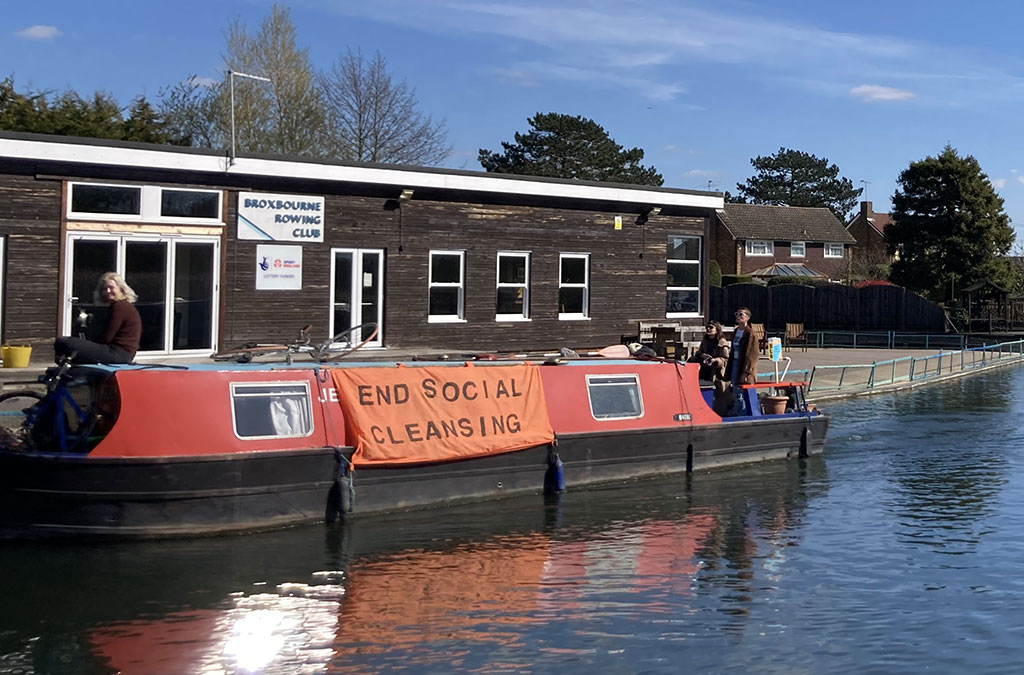
CRT (and BW before them) seem to wish to socially cleanse and curate the waterways for luxury, leisure, affluent mooring cost premiums, especially in urban areas, turning them into un-navigable leisure resorts for walkers and cyclists only. This in the context of wider social dispossession, underfunding of public services, and widening inequality – with the poor and marginalised subsidising the rich and secure.

What do we want?

We’d like recognition of the value itinerant boaters contribute to the waterways, decent services for the money we already pay, and one set of increases applied equally and fairly to all. 

Generating finance fairly ought to be within the remit of a charitable trust. The proposed surcharge and its rationale are insincere political manoeuvres designed to segregate and marginalise travelling boaters, with no serious concern for canal management finances at all.
Boaters left out in the cold over the Energy Bills Support Scheme

At the time of publication, itinerant boaters have still not received an energy grant from the Government, or been offered a user-friendly way in which to attain this grant. Most households across the UK are now into their sixth month of receiving help towards extortionate energy bills, yet the Government are still dragging their heels when it comes to itinerant boaters and other off grid communities. 

All households in the UK were promised the £400 grant back in March last year, and an article published on the 1st April 2022 on the gov.uk website clearly states: 


“If you live in a park home, houseboat or off the grid…The government has confirmed that further funding will be available to provide equivalent support of £400 for energy bills for the 1% of households who are not eligible for the discount. This includes households without a domestic electricity meter and a direct relationship with an electricity supplier, for example if you live in a park home, houseboat or you live off the grid.” 

Depending on how the above is interpreted, itinerant boaters could be included under either the “houseboat” or living off grid examples. Either way, it seemed like we were included as we obviously do not have a domestic electricity meter or a direct relationship with an electricity supplier and therefore meet the criteria.

Since then, the Government have released several announcements regarding the EBSS, including an additional £200 Alternative Fuel Payment for those not using mains gas. However, none of their literature has directly referred to itinerant boaters, leaving us with a vague assumption that we will receive it at some stage in the future, via some unknown means.

In an attempt to find a good solution on how and when itinerant boaters will receive the EBSS, the National Bargee Travellers Association have been in talks with the relevant Government bodies for some time, and thanks to their efforts, a work around solution is now being trialled.

Unfortunately, the best solution the Government could offer was a perplexing arrangement whereby the applicant applied for the energy grant, knowing it would be rejected as it would not meet the criteria needed, then uses this rejection to apply for another grant from their Local Authority. This convoluted approach failed however, as Local Councils were neither informed nor consulted, with many simply replying as such, adding they had no budget for it

Therefore, we still do not have a definitive answer on how or when the majority of itinerant boaters will receive the energy grant. With many boaters spending upwards of £200 a month on heating this winter, the EBSS could relieve the difficult choice between heat or food that numerous folk may be facing.

As the winter months dwindle off into Spring, we are left wondering, will we ever get help to heat our homes?


NBTA London needs your support to carry on our work. Please get in touch here if you would like to volunteer with us. Alternatively your donations are vital to us supporting boaters with their legal case work, campaign banners and other printed material as well as events. You can help us with your donations online here


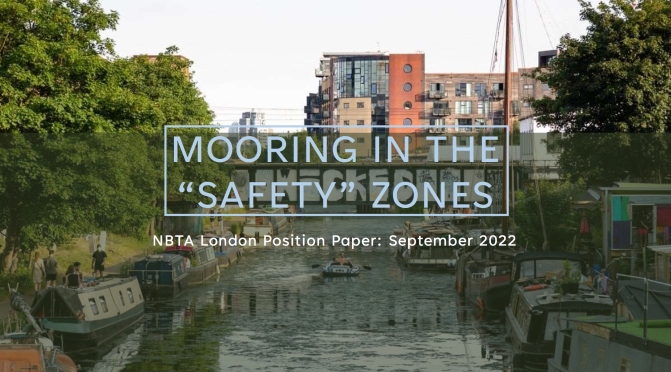
Explained: the no mooring sites in ‘safety’ zones

Have you ever wondered what the ‘no mooring’ sites in the ‘safety’ zones” are all about? 

What are CRT trying to say to justify them, and which sites are NBTA London challenging and why? 

In this document we answer these questions *and more*.  

As well as hashing out the main arguments, we have throughly, concisely and clearly laid out each area which CRT are trying to ban boats from in the ‘safety’ zones. 

The document states CRT’s position and shows NBTA London’s counter argument to each of the sites which we are challenging. 

It’s very useful to help understand the ‘safety’ zones better. It’s not only very pretty, but also a must read!’ —> view pdf


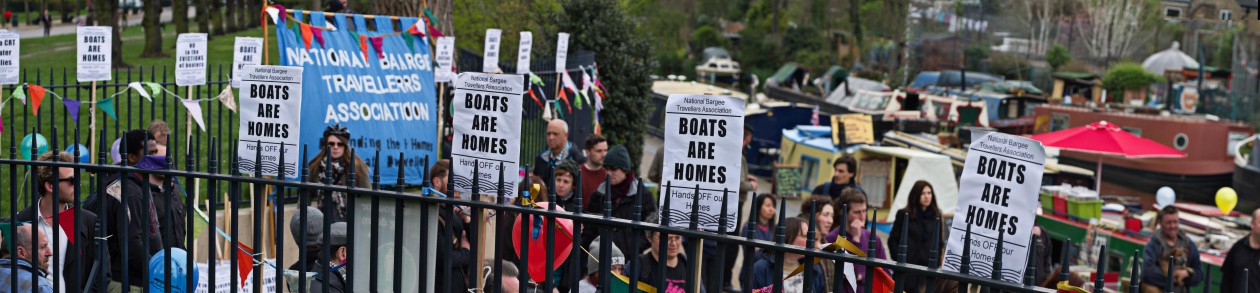
NBTA Boats are homes protest outside CRT’s London offices

NBTA London needs your support to carry on our work. Please get in touch here if you would like to volunteer with us. Alternatively your donations are vital to us supporting boaters with their legal case work, campaign banners and other printed material as well as events. You can help us with your donations online here

The Safety zones continued…

As many of you know, when the CRT first proposed the full details of the Water “Safety” Zones, we calculated that 550 mooring spaces would be lost in Broxbourne and Tottenham/Hackney. In some places the CRT also proposed introducing a ban on double mooring and wider boats. Following the magnificent efforts of the boating community to push back against these “Safety” Zones, CRT initially appeared to desist from their implementation, in favour of a navigation forum of stakeholders. Unfortunately the CRT are still attempting to impose potentially the most draconian part of the original “Safety” Zones outline – the new no mooring sections. We now estimate that 295 casual mooring opportunities are at risk. 

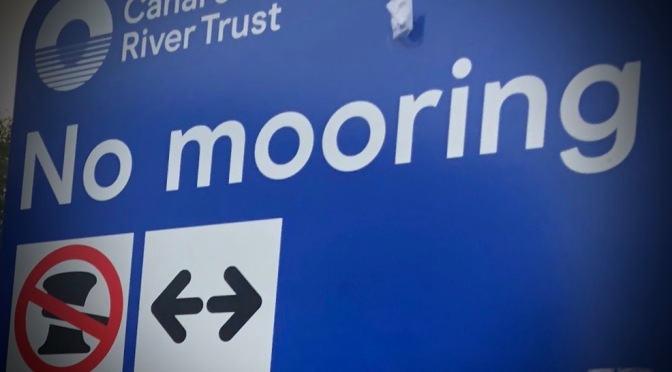
A CRT ‘Safety Zones’ No Mooring sign covered over with a black bin bag in Hackney on the lower Lea

In October of last year the CRT lied to us by stating that they were putting the safety zones on hold, pending a discussion within the Lea Navigation Forum meeting. However, before the first Forum meeting had taken place, the CRT had already installed no mooring signs on most of the ‘no mooring’ sites on their Water Safety Zone map. We (NBTA London) brought this dishonest behaviour to the attention of the Lee Navigation Forum. CRT’s response was to disregard the dishonesty of their own actions which undermined the whole Lee Navigation Consultation. We asked for reasoning from CRT to why each of the no mooring spaces were made as such. CRT didn’t provide this. We then provided a document stating our opinion of each no mooring site at the very next meeting. More than half a year later CRT have yet to give a proper response.

During that half year, boaters moored in places that are perfectly reasonable and safe have continued to receive unjustified threats from CRT. In total, CRT paid £24,840 from October – January to a car parking company called District Enforcement (DE) to attempt to implore our community not to moor on these sites. Thankfully people continue to moor in these places in large numbers. CRT stated that on January 10th the enforcement of the no mooring zones would begin. During this time we began the process of taking the CRT to court in a Judicial Review. While notices and emails to desist were sent to boaters, hundreds remained defiant, many staying up to 14 days before being replaced by another resistant boater. In the CRT notices left by DE they state that the boater is moored contrary to British Waterways Acts, Bye-laws, Conditions, Guidance etc. To investigate what kind of legal standing CRT thinks they have, our solicitors asked them to qualify which specific Acts and Bye-laws relate to the no mooring sites. Even when asked again by the solicitors, CRT failed to provide any Acts or Bye-laws to support their stance. They were unable to provide these because the CRT has no actual legal leg to stand on.

Tyrone Halligan, Amelia Friend and their two year old son Isaac are house boat dwellers affected by the ‘No Mooring’ Safety Zones.

Our caseworkers have been providing boaters with replies to CRT enforcement letters around the clock. In response, CRT responses have been weak and deflective. After one particular email exchange where we sought to clarify the CRT’s stance in relation to the law, the officer ended one of their email with: “Anyway, I’ll leave it there for now. Feel free to get back to me if you have any other
questions I won’t be able to give a straight answer to.” This elusiveness hasn’t been exclusive to the legal side of the campaign, CRT’s public relations efforts regarding the matter are much the same. We have been successful in getting this campaign into wide range of press outlets. The CRT’s defensiveness includes refusing to quantify how many mooring spaces are at risk. Additionally, CRT have also spread untruths to the press, making ridiculous public statements such as, ‘enforcing no mooring sites does not have a negative impact on our community.’  

Boaters continue to resist by mooring alongside some of the ‘No Mooring’ Safety Zone sites on the lower River Lea in Hackney

The boating community are continuing to resist the implementation of the ‘no moorings’ in the safety zones, yet CRT continues to waste money trying stop the resistance. CRT can only afford to waste so much money and incur so much bad press before they are forced to defer to our position on these ‘no mooring’ spaces. However for CRT to back down it will take our community’s continued resistance until CRT does.

Brief update (08.06.2022):

CRT have responded to the NBTA’s document outlining our position on the “red zones no mooring sites within the safety zones”. They have announced a reduction of no mooring restriction by a total of 157 metres. These include near or under pedestrian bridges and a few other places, often just an extra metre here or there. You can read CRT’s full response here

NBTA London needs your support to carry on our work. Please get in touch here if you would like to volunteer with us. Alternatively your donations are vital to us supporting boaters with their legal case work, campaign banners and other printed material as well as events. You can help us with your donations online here

Join us at our Community Summer event at the end of this month. We are having a picnic at the Walthamstow Marshes on Sunday 26th June 2022 – 12pm start. Click here for more details

NBTA London launches new case worker collective

NBTA London new case-worker collective

The London branch of the National Bargee Traveller Association (NBTAL) has launched a new case-worker group in a bid to help London boaters who are affected by enforcement and the new Canal and River Trust policy on refusing licences.

islington lock

The volunteer case workers can be contacted for help and advice at nbta.london.caseworker@gmail.com and will soon be available for a chat on a special mobile phone helpline.

The caseworker group keeps up to date with pooled knowledge of the  current implementation of the new enforcement policy and the legal framework under which the policy sits, and can give assistance  on  ‘how far is far enough’ questions, re-licensing, sighting data queries and benefits, disability allowances and adjustments and other related advice.

After a trial period when the new policy only affected new boaters on their first licence, CRT has recently announced that the new enforcement policy came into action for all boaters on the 1st of May. Anyone having their licenced renewed after that will fall under the new policy.CRT have also stated that if a licence is renewed after the 1st May, they will look back over the previous year and make a decision as to whether you fit their current definition of “moving far enough and often enough”. If the boater fails this test,  they will refuse to renew their licence and will tell the boater to take a home mooring or remove their boat from their waters. If the boat is not removed and is a livaboard, then the next step is that they will probably take the boater to court for having no licence and to seize the boat and remove it from the canal.

For an unspecified trial period, CRT are offering temporary three or six month “restricted” licences to affected boaters so they can “mend their ways”. This offer of restricted licences is “while boaters get used to the new regime”. The NBTAL fears that at some point in the future, CRT will simply refuse to renew licences with no restricted trial period offered. At a recent Canal User Group meeting, an NBTAL member asked the London enforcement manager how long the trial period would last and what would happen afterwards and was told that “boaters would always be warned before we refuse to renew their licence.”

After a request from the NBTA at a recent meeting, CRT have stopped charging premium rates for these “restricted” licences and the cost is now pro rata to the full licence.

A spokesperson for the group said:

“In April and May this year, 60 licences out of a total of 160 new first year boaters were put on three or six month “restricted” licences for what the Canal and River Trust claim is “not moving far enough or often enough.” Regardless of our concerns about the legality of the new policy, the caseworker group is keeping itself up to date on its implementation and are available to give the best information possible to help livaboard boaters keep their homes.” 

“If you are affected then contact us and we will do our level best to work with you to offer advice and support to enable you to carry on living on the water. We are also monitoring what distance/criteria CRT are enforcing on and what criteria they are saying must be fulfilled to ‘pass’ the restricted temporary licence period, so even if you think you can handle it yourself please get in touch as the info is invaluable. It will be confidential and we do not publish or publicise any individual emails to or from the enforcement team, though we may release the odd report with the anonymised generalised trends of where the implementation of the enforcement policy is heading.”  

“We will also work with the Waterways Chaplaincy in the case of particularly vulnerable boaters. The case workers will work in your interest and keeping you on the water, if that’s what you want; is paramount, whether through negotiation, support, referral or other appropriate methods. As a last resort because court cases are usually lose-lose situations, we have experienced boaty lawyers at hand for advice and referral just in case the shit really hits the fan.”

NBTA General Meeting

This meeting is to decide what the NBTA does in general.

This will be on the Saturday 21 November at the Quaker Meeting House, 150 Church Rd, Watford WD17 4QB (near Watford
Junction Station). Registration starts at 9.30am, the General Meeting ends at 6pm. There are going to be breaks in-between, including lunch .

If you would like to come to the General Meeting, please book a place as soon as possible by emailing secretariat@bargee- traveller.org.uk or phoning 0118 321 4128. We need to keep the venue informed of the numbers so please let us know in advance if you wish to attend.

Further travel directions etc. will be sent out on booking.