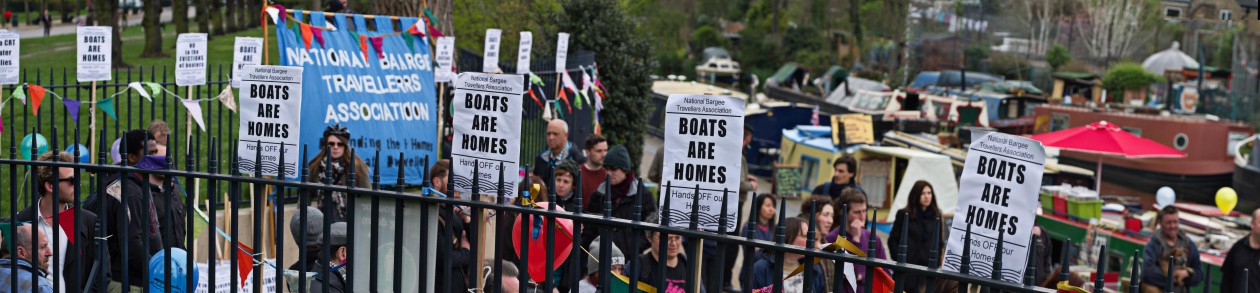
If the UK is a country of villages, then its canal network is the longest village of them all. Our 250-year-old itinerant boating community stretches all the way from Bristol to York. And the community spirit of our shifting village is stronger now than ever. The world’s longest village got together on the 14th June to celebrate life on the water at the Boaters’ Big Bash, held on the Paddington Arm in West London. In what can best be described as a village fair, the Boaters’ Big Bash brought together live music from boater musicians; rousing speeches; a raffle; arts, crafts, and entertainment for boating families; and, of course, a classic tea and cake stall.
Big Boater’s Bash Summer 2025
It took two four-banners stitched together to display the “Welcome to the Longest Village in the World” poster. Land-dwelling local residents came to join the celebration of life on the water, with many telling boaters how glad they were to see the once-abandoned waterways brimming with life again.
The NBTA continues to protest against CRT at boating events around the country. Get in touch if you’d like to join in.
We from the NBTA believe events like this are great to bring people together, increase feelings of community, and public support. If you helped with the event or just attended it, thank you.
If you would like to get involved to help make the next event a success, let us know by emailing nbtalondon@gmail.com.
As itinerant boaters face the double threat of license surcharges and extortionate ‘pre-bookable paid towpath moorings’, it is worth reminding ourselves that when we faced similar challenges in the past, our protests were successful.
In 2010, British Waterways (who were later succeeded by CRT), introduced ‘local mooring strategies’ in London and the West end of the Kennet and Avon. They claimed that ‘more boats are moored along the river Lea than desirable’ and tried to implement a set of rules that would make it near impossible for most itinerant boaters to live in these areas.
British Waterways, in an attempt to make the river Lea less popular for boaters, tried to define the word ‘place’ in the following statute: the vessel ‘will be used bona fide for navigation throughout the [license period] without remaining continuously in any one place for more than 14 days or such longer period as is reasonable in the circumstances.’ (BW Act 1995, Section 17)
They claimed that a ‘place’ is the same as a neighbourhood and then defined enormous stretches of the waterways as one neighbourhood. In London, the entire length of the river Stort became two ‘neighbourhoods’ (and almost entirely seven day mooring only); all waterways in London south of the North Circular became one neighbourhood, including Limehouse cut and the Hertford Union; the Lea north of the north circular was split into three neighbourhoods.
Having redefined the meaning of the word ‘place’, British Waterways declared that itinerant boaters had to move to a new neighbourhood each 14 days and would have tospend an equal amount of time in each neighbourhood across the licence period.
Against this unfair attempt to cleanse the river Lea of itinerant boaters, hundreds of boaters protested. It was at this time that London Boaters, originally a protest group, formed. They got information about the changes out to residents, rowers, canoers, cyclists and surveyed boaters and towpath users. They encouraged responses to the consultation and demonstrated that, far from being unwanted on the Lea, itinerant boats were welcome.
London Boaters also challenged the legality of BW’s proposals and worked with other boating organisations such as NABO (National Association of Boat Owners) and RBOA (Residential Boat Owners’ Association). They conducted their own research which challenged BW’s unsupported claims about congestion and examined the likely impact of the proposals, which would increase homelessness and put pressure on local housing waiting lists. They showed that the changes would prevent boaters accessing education, employment and health care.
Eventually, in September 2011, British Waterways realised the game was up and announced that it was dropping its plans for London. But, they were implemented by the newly formed Canal and River Trust in a 12 month trial in 2014 on the K&A.
On the K&A, similar to the ‘neighbourhoods’ idea, they set a maximum length of time that could be stayed on each stretch of the canal. They also planned to implement a charge of £25 a day for staying longer than stated on a less-than-14 day visitor mooring and introduced a 20 mile minimum distance. If boaters couldn’t abide by these draconian rules, CRT offered ‘roving mooring permits’ (£800 a year for a 60ft boat) which enabled the boater to move every 14 or 28 days. While CRT eventually conceded that the ‘roving mooring permits’ were illegal , many of these requirements will be familiar to itinerant boaters across the country as they have since been rolled out in guidance to all boaters. The parallels between the new ‘constant-cruiser’ surcharge and the ‘roving mooring permits’ might also be noted. BW backed down in London because boaters dedicated a huge amount of time and energy to fighting their cause, but CRT re-used the same ideas on the K&A some years later and are re-using them again now in the introduction of the itinerant boater surcharge and the pre-payable visitor moorings in London. We must stick together and stay united in our opposition to their incessant attacks on our way of life – attacks which have been defended against before and can be defended against again.
NBTA London needs your support to carry on our work. Please get in touch here if you would like to volunteer with us. Alternatively your donations are vital to us supporting boaters with their legal case work, campaign banners and other printed material as well as events. You can help us with your donations online here
It’s been over a year since Canal and River Trust (CRT) started introducing chargeable moorings as part of their plan to bring down boat numbers in London.
So far only part of the plan to bring in 1.1km of chargeable moorings to London has been implemented but already these changes have had a great impact on boaters who move through these areas of London.
In the CRT’s London Mooring Strategy, the length of chargeable moorings in London could go up to 1.5km in the next year.
CRT claimed to have consulted boaters in 2022 on the need for such moorings but it has not provided the results of this consultation. Notably, their 2022 “Issues & Challenges Report” did not mention a shortage of moorings, instead it highlighted boaters concerns about disrepair and lack of facilities.
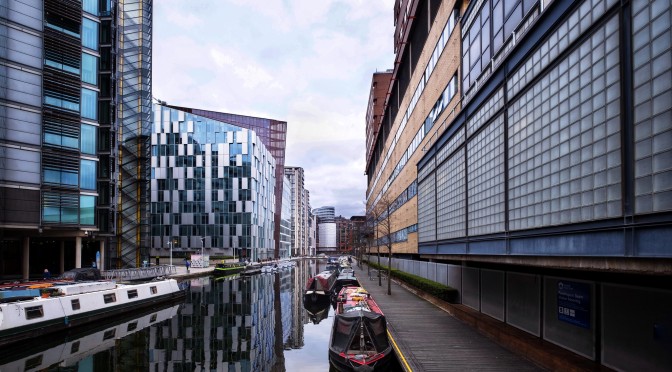
Little Venice chargeable moorings in August 2024. Once brimming with life, now desolate.
Chargeable moorings were first introduced here in 2019, but they were priced at £10 to £12 a night. Despite low demand at that price, CRT has significantly raised the price, leading to even more space in central London being wasted, empty of boaters.
According to a Freedom of Information (FOI) request submitted in June 2024, only 1,203 bookings were made between October 2023 and May 2024 (out of a possible 7,224 bookings), indicating that the moorings were used at just 17% capacity.
The FOI revealed that CRT earned a gross income of £36,532 from these bookings on an average of just over £30 per night. We believe this is barely enough to cover the cost of administering prebookable moorings.
The rationale for them is to enable people to book a berth without having to find somewhere to moor on their own in central London. However, the data tells us that the demand is simply not there: only 16.5% of the availability has been utilised.
Rather than improving access to the capital, the charges have effectively priced many existing boaters out of central London, leaving prime locations empty. As a result, many boaters must now cruise for a full day to find a mooring, or risk being fined.
There is a knock-on effect of leaving these locations empty too: those who cannot afford to pay are forced to moor in now even more crowded areas, making a trip through London even more precarious for boaters with or without a home mooring.
Vandalised chargeable mooring sign in London
The situation has also worsened safety concerns for boaters and local residents, as these once-bustling sections of towpath have been deserted, leaving them more vulnerable to crime.
Others may opt for a River Only license, staying on the Lee and Stort as London’s main canal network becomes too expensive, a move that will reduce CRT’s revenue further.
The decimation of London’s boating community and the safety that it brings to the canal here means those boaters from outside London whom CRT are trying to entice with their pricey prebookable moorings are likely to avoid the capital altogether.
A subsequent FOI in October 2024 revealed that three Mooring Rangers, tasked with managing these moorings, cost CRT £104k annually, far exceeding the (assumed) £73k annual income from the moorings. This suggests CRT may even be operating this policy at a loss. It is an illogical policy that is costing boaters and CRT, with no clear benefit to either.
In November 2024, CRT decided to reduce the price of these chargeable moorings – from between £25 and £35 per night to £20 per night – as a result of NBTA London’s campaigning.
We look forward to seeing whether the reduced price has any positive uptick in the number of bookings made, or if there is in fact NO case for charging per night for mooring on the public towpath at all.
Due NBTA London campaigning CRT has also agreed to stop charging to moor in Camden and says they no longer plans to roll out more chargable moorings across London including Uxbridge, Kensal, Broadway Market and Victoria Park. However, CRT has remained committed to charging boaters to be able to moor in Little Venice, Paddington Basin, Kings Cross and Angel.
NBTA believe these mooring spots should be open for anyone boating through London, as is the norm across the entire canal network, and that the privatisation of public spaces should continue to be resisted.
NBTA London needs your support to carry on our work. Please get in touch here if you would like to volunteer with us. Alternatively your donations are vital to us supporting boaters with their legal case work, campaign banners and other printed material as well as events. You can help us with your donations online here
The CRT announced in the Boaters Update 22/03/24 that they are introducing around 800 meters of new pre-bookable moorings across 6 sites in London this year. The new sites are Kings Cross, Camden, Victoria Park, Broadway Market, Kensal Green and Cowley North, which will be joining Islington, Little Venice and Paddington.
These moorings come at a premium of £25-£35 per night and bring the total mooring space at this price to approx 1,500 meters. 1,500 meters would fit around 95 single moored 50 foot boats. This is an attempt to displace boats from the capital, we have seen already that these chargeable moorings mostly sit empty, so there is no justification for making more unless it is indeed an attempt to move boats out of London.
The eco moorings at Kings Cross and Angel are now £35 per night, as of the 1st of April, new sites at Kings Cross and Camden are also now available to book online. The other new sites will be phased in throughout the year. 2024 is looking to be a bad year for boaters at the hands of the CRT, first the surcharge which -if left unchecked- will threaten our whole way of life, and now these chargeable moorings, which will have a direct and very tangible impact on boaters living in and around London in 2024 and beyond.
CRT are saying that it is less than 10% of London’s moorings that are now chargeable, but all except Cowley are in one 10 mile stretch of central London (to add to Little Venice and Paddington) which will make travelling across that stretch without paying increasingly difficult.
NBTA London needs your support to carry on our work. Please get in touch here if you would like to volunteer with us. Alternatively your donations are vital to us supporting boaters with their legal case work, campaign banners and other printed material as well as events. You can help us with your donations online here
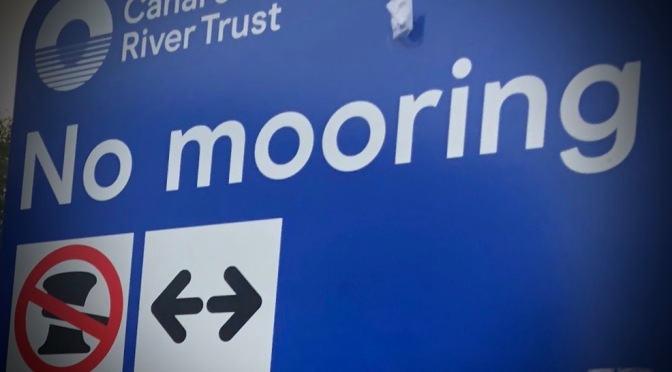
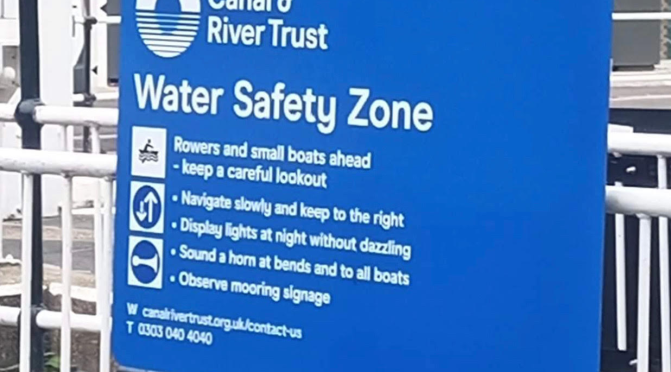
It’s been over two years since CRT decided to enforce ‘no mooring’ in areas of the ‘safety’ zones; their aim is to clear boats away from parts of the River Lea, yet boaters are continuing to resist. Boaters on mass are ignoring CRT’s ridiculous ‘no mooring’ sites. Thanks to collective boater action, the ‘safety zones’ have clearly failed. For more information about the safety zones: https://nbtalondon.co.uk/3049-2/
NBTA London needs your support to carry on our work. Please get in touch here if you would like to volunteer with us. Alternatively your donations are vital to us supporting boaters with their legal case work, campaign banners and other printed material as well as events. You can help us with your donations online here
Elmbridge Council on the Thames want to bring in a Public Spaces Protection Orders (PSPO) to fine boaters up to £400 for staying for more than 24hrs.
The council was made to re-consult after NBTA amongst others pointed out that boaters weren’t able to fill in the consultation due to not being notified about the consultation.
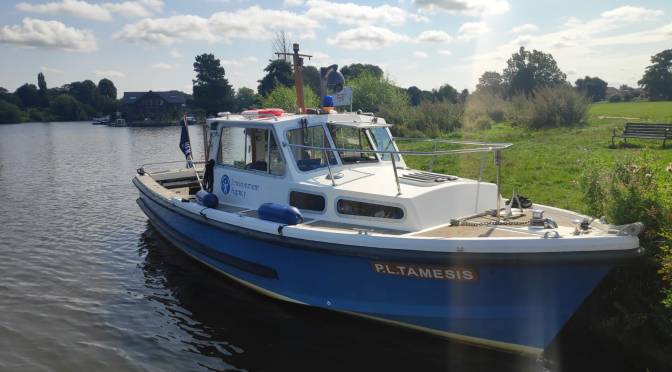
EA enforcement boat moored at Elmbridge on the Thames
We as NBTA met with the council to discuss solutions to the issues they raised in the PSPO. At one point in the meeting the council reps admitted the issues they have weren’t the ones mentioned in the PSPO but the fact that boats moor there longer than 24hrs. We asked if there was a more reasonable time that the council would be happy with boats staying. They weren’t interested in engaging with this question.
The council has now concluded the consultation and has decided to go forward with PSPO. A boater is taking legal action against the PSPO.
NBTA London needs your support to carry on our work. Please get in touch here if you would like to volunteer with us. Alternatively your donations are vital to us supporting boaters with their legal case work, campaign banners and other printed material as well as events. You can help us with your donations online here
In 2016, prior to launching the London Mooring Strategy, which was published in 2018, CRT and NBTA-London had round-the-table discussions about CRT’s thoughts on “pre-bookable” moorings. NBTA made it explicitly clear that if there were any “pre-bookable” moorings to be created, then they should be on the offside, and that tow-path moorings should never be chargeable.
Instead, CRT proceeded to make use of any vacant offside space not yet used for mooring for “long term”, or “residential” moorings, rather than increasing mooring space for visitors who were willing to book ahead, often making deals with third parties who owned the offside land. Two such set of moorings is at Broadway Market on the Regent, which in particular impedes navigation in what was already a very busy part of the London network, whilst overlooking the opportunity to create “pre-bookable” moorings; the other being Matchmakers on the River Lea, where the installation of those moorings meant CRT with their ‘safety’ zones are trying to enforce a ‘no mooring’ site on the towpath.
Yet, this is taken from CRT’s website:
“It’s really important that navigation is maintained and that it’s not impeded by moored boats. The inner London waterways are very busy with many different types of boater: liveaboard, leisure, freight, and business craft as well as increasing numbers of unpowered craft. This measure is intended to ensure that there is clear navigation for everyone in these busy areas.”
Their policy for safe navigation goes into the ether, however when it comes to the possibility of monetising new moorings, such as those on the offside at Broadway Market on the Regent.
Broadway Market, Regents Canal. Pic by Flickr/@scratch_n_sniff
Seven years following CRT’s first discussions with NBTA, CRT have now taken away several “casual”, “visitor” or towpath moorings, making them “pre-bookable”, and furthermore, have started charging extra. Usually, a CRT licence includes the right to moor on any towpath without extra charge, but CRT are turning 1.1km of London’s regular towpath into new ‘Chargeable’ Moorings that would cost an additional £25 extra a day. CRT’s argument for doing so is to make it ‘fairer’ for past-time and full-time liveaboard boaters alike to have a chance of mooring up in popular parts of the canal network. When we checked the facts behind the manipulated CRT survey on how successful the Paddington Basin chargeable moorings are, a Freedom Of Information Request reveals that these moorings have only been used 25% of the time – the rest of the time they remained empty and unused.
The latest moorings to be eradicated from public, free-for-all use are in Little Venice and Paddington Basin, but this is just the beginning .
On reading the T&Cs for what CRT call “pre-bookable”, but are actually chargeable moorings, included in these T&Cs are “planned” eco moorings on the Regent at Kings Cross and on Sweetwater in the Olympic Park on the Lee Navigation, strongly implying that these eco moorings may also become chargeable. NBTA also infer from this that the existing eco moorings on the Regent at Angel may become chargeable too, not just “pre-bookable”.
Aside from being financially exclusive and therefore fundamentally unfair in the first place, the quantity of chargeable moorings is not proportionate to the needs of boat owners. Lots of these bookable, chargeable mooring spaces will either be paid for by boaters who can’t find public towpath mooring since CRT have reduced those spaces, or they will remain empty because people a) can’t afford them, and b) don’t want them. If they remain largely empty, this may then be a great excuse for CRT to turn them into private moorings – as was the case at Here East moorings on the River Lee.
CRT announce itinerant boat dwellers will pay higher licence fees than others
Just before this newsletter went to press, the Canal and River Trust (CRT) announced that it plans to charge boats without home moorings more than boats with home moorings.
The implications of this are devastating. CRT will now be able to use boat licence fees as a way of removing the travelling boat dweller community from the waterways. It is more important than ever that we join together as a united community to stop CRT in their tracks. We will be sending round a ballot to all members of the NBTA to ask for your input on what action we take next. If you are not already a member, please sign up now to contribute to this vital decision. We have also organised an online meeting to coordinate our fight back. Please join us on Monday 9th October at 7pm. The access details for the meeting can be found on page 3. We hope to see you all there.
NBTA London needs your support to carry on our work. Please get in touch here if you would like to volunteer with us. Alternatively your donations are vital to us supporting boaters with their legal case work, campaign banners and other printed material as well as events. You can help us with your donations online here
CRT admits to spending up to £250k on trying to stop boaters from mooring in the ‘Water Safety Zones’ on the River Lea. A Freedom of Information request shows that as of 31 May 2023, the Trust has spent anything up to £249,680.09 in the two WSZs on the Lower Lea at Hackney/Tottenham and at Broxbourne. All the while, trying to up licence fees and divide the boating community. CRT should stop wasting money on preventing people mooring in these so-called ‘Safety Zones’.
NBTA London needs your support to carry on our work. Please get in touch here if you would like to volunteer with us. Alternatively your donations are vital to us supporting boaters with their legal case work, campaign banners and other printed material as well as events. You can help us with your donations online here
After CRT ignored repeated requests to provide evidence that boats moored in the ’Safety Zones’ were a danger to navigation, NBTA-L commissioned its own independent assessment. The report, carried out by a qualified and experienced Risk Assessment professional, concluded: ‘Boats moored in this area cannot be considered an additional risk as they comply with national standard practice(…) Mooring restrictions at these sites are not necessary’.
It goes on to suggest that it’s more important for craft – including row boats – to manage their speed effectively to avoid any potential incidents. This upholds NBTA’s long held view that CRT’s ’Safety Zone’ policy has never been about safety, but aims instead to make life difficult for boaters, which could ultimately drive many off the water and out of their homes.
NBTA London needs your support to carry on our work. Please get in touch here if you would like to volunteer with us. Alternatively your donations are vital to us supporting boaters with their legal case work, campaign banners and other printed material as well as events. You can help us with your donations online here
Elmbridge Council is seeking consultation over a proposed Public Space Protection Order (PSPO). The PSPO would, among other things, give the Council powers to issue fixed penalty notice (FPN) fines of up to £400 for mooring on the Thames for longer than 24 hours. The affected sections of river maintained by the Council would include Albany Reach, Cowey Sale Open Space, Ditton Reach and City Wharf, Hurst Park Open Space, and Cigarette Island. Also proposed are restrictions on fishing, camping, and lighting of open fires such as BBQs.
This is not the first time that Elmbridge Council has proposed restrictions on boat moorings. In 2019, the NBTA responded to proposals by the Council for an extended PSPO that would cover areas moored on by itinerant liveaboard boaters. There is an existing PSPO in Walton-on-Thames town centre, in effect since March 2021.
Up to £400 fine for mooring on Albany Reach and Cigarette Island
According to guidance from the Local Government Authority, a PSPO gives councils the authority to “prohibit specified activities, and/or require certain things to be done by people engaged in particular activities, within a defined public area”. They are intended to target behaviour considered anti-social in particular, such as drinking in or littering of public areas. PSPOs can be in place for up to three years after which they are reviewed. There is no limit on the number of renewals of a PSPO.
PSPOs are intended to address specific behaviours which are having or are likely to have a detrimental effect on the quality of life of those in the locality. Elmbridge Council’s order proposes restrictions on “unauthorised” mooring, which the Council and Environment Agency define as mooring for longer than 24 hours in a location. This is not of itself damaging to quality of life for people in the locality. As the NBTA to the Council’s 2019 PSPO consultation, “there is nothing inherently anti-social in mooring a boat that is your home on a river bank… the simple act of mooring a boat on a river bank does not of its nature have a detrimental effect on quality of life.”
The Council’s proposal claims that “boats moored without permission” has led to “increased littering and noise pollution”. Restricting the mooring of boats on the Thames does not, however, address the question of “unregistered” boats as all boats, regardless of their permission on the waterways, will be penalised by such an order. The Council should instead address littering and noise pollution directly, rather than liveaboard boaters as a proxy. As Surrey Live reported in 2020, some liveaboard boaters with licences have been confronted along the canal, in an “atmosphere of enforcement” where any distinction between “legitimate” and “unauthorised” moorings is eroded.
Indeed, organisations such as civil and human rights group Liberty have criticised the powers behind PSPOs for the “vague definition of what can be criminalised [that is] ripe for abuse”, with many councils issuing fines for homelessness and rough sleeping. According to BBC and the Manifesto Club, Councils have issued fines under PSPOs for unauthorised cycling, spitting, school drop-offs, begging, and putting up an A-frame, as well as instituting curfews for under 16s. The existing PSPO in force in Walton-on-Thames town centre prohibits riding “cycle, skateboard, scooter or hoverboard in a dangerous or anti-social way”, which seems gives Councils the scope to choose what is considered “anti-social”. There is a danger that Council’s wield the power of PSPOs to criminalise any behaviour of their choosing, in this case the mooring of boats.
Above all, such mooring restrictions will have the greatest impact on the most vulnerable in the boating community, displacing individuals and potentially criminalising them for attempting to live on a boat. Avoidance of negative impact on vulnerable communities is explicitly called for in the LGA guidance. The consultation webpage states that an Equality Impact Assessment has been conducted, but the assessment has not been provided and there is no guarantee that at-risk boaters have been taken into consideration.
If Elmbridge Council is concerned about anti-social behaviour in its borough, we suggest that the Council address those precise behaviours. Restrictions on mooring specifically target liveaboard boaters, and especially the most vulnerable in our community. The consultation is closing on 11th June 2023. The Council has not yet implemented the proposed PSPO.
NBTA London needs your support to carry on our work. Please get in touch here if you would like to volunteer with us. Alternatively your donations are vital to us supporting boaters with their legal case work, campaign banners and other printed material as well as events. You can help us with your donations online here
A volunteer organisation formed in 2009 campaigning and providing advice for itinerant boat dwellers on Britain’s inland and coastal waterways






 National Bargee Travellers Association - London Branch