Category Archives: Newsletter

Trigger Parry’s Broom

Anyone who takes the time to read Canal and Rivers Trust’s (CRT) regular cure for insomnia – the Boaters’ Update – will know that the Trust likes to go on about how they are in charge of a 200 year old system, naturally giving the impression that they are doing an outstanding job of it. But this raises a couple of questions – can the system really be called 200 years old, and are they doing an outstanding job?

Have you ever thought about how old everything really is? Take for example one of the most iconic pieces of canal infrastructure – locks, and in particular lock gates. Lock gates have a life span of…25 years, so you definitely won’t be using any 200 year old lock gates in the near future. The same goes for the towpaths which now support a lot more traffic than the original towpaths were designed for (the Regent’s Canal towpath goes all the way back to…1979)…and the metal armco piling which holds the canal in… definitely not 200 years old. I’m sure you can think of other things. It really is Trigger’s Broom from the British comedy, Only Fools and Horses made real! (“with 17 heads and 14 handles; how can it be the same broom” …)

Damage at Toddbrook Reservoir Dam

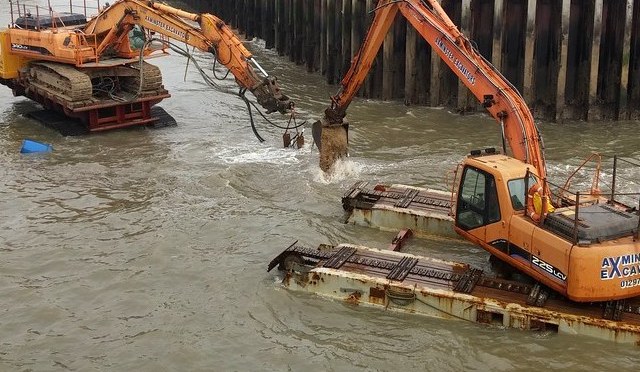
But what about where truly old things need looking after? Well CRT are bigging-up their impending work on the Toddbrook reservoir dam in the Peak district. The dam was completed in 1840. In 2016 one of the spillways, which had been added in 1970, started to collapse following a week long deluge of rain. The reservoir was full to the brim and the town of Whaley Bridge had to be evacuated for six days as the 80 foot tall dam – which held back over one and a quarter billion litres of water – was at risk of breaching. While the poor design and build of the spillway was central to the collapse, CRT’s poor maintenance and reporting systems were identified as major contributory factors. Of course, no mention of this is made in your latest Boaterzzzzzzzzzzzzzzzzzz Update.


NBTA London needs your support to carry on our work. Please get in touch here if you would like to volunteer with us. Alternatively your donations are vital to us supporting boaters with their legal case work, campaign banners and other printed material as well as events. You can help us with your donations online here



Something in the Air

The Environment Act 2021, which became law on 9th November, will remove the partial exemption for vessels from the Clean Air Act 1993.

Local authorities will now have the power to apply their Smoke Control Areas to vessels moored within the areas, under Section 73 and Schedule 12 of the Act. CRT and other navigation authorities have been asked to provide contact information for boat owners to local authorities where they need it to enforce Smoke Control Areas.

There is an exemption for smoke which is created to propel the vessel or to generate electricity. There is no exemption for heating. Local authorities can now impose fines of at least £175 for breaches of Smoke Control regulations.

Friends double moored whilst frozen in near Kensal Cemetery, Winter 2017

There is a danger that this will be used as a tool to remove boats from areas where the local authorities are opposed to boat dwellers, or where local residents are hostile to liveaboard boaters. Tower Hamlets Council have already started harassing boaters. Notices from the council have been issued to boaters about their engines which go much further than is stated in the new Act. NBTA London has sent a complaint to the council, telling them they are going further than new Act gives them ability to do.

The new Act has opened the door to more attacks on our community.

We must stand together.

Please get involved in NBTA: more people involved means we can do more to defend our way of life.

Get in touch if you’d like to join us, we’d love to hear from you.

Absolutely Shameless

Oh look, an (allegedly senior) member of Lea Rowing Club (LRC) taking an angle grinder to the grab bars which can help people who have fallen into the river get out safely.

LRC has been unapologetic in pushing for CRT’s implementation of the “safety zones” – in fact they were the ones who came up with the deranged scheme in the first place.

But actually useful pieces of safety infrastructure there to help everyone don’t seem to matter to these overly entitled hypocrites. Could it be that their interest in “safety” has more to do with their desire to not share the river with other users?

Around The Bend

Canal and River Trust (CRT) are attempting to bring in yet another restriction to all boaters, including boat dwellers without a home mooring, which will prohibit mooring nationwide on any bends or near bridges, regardless of whether it blocks navigation or not.

This proposal has not gone through any consultation process, but has been underhandedly tagged on to CRT’s “No Mooring” strategy that we are currently experiencing predominantly on the River Lee. The new restriction of no mooring on bends or near bridges refuses to take in to account the safe mooring on the bends of wide waterways such as the River Lee and parts of the Grand Union Canal.

It is the view of NBTA London that if safe navigation is not impeded by mooring on a bend or near a bridge, then to restrict mooring is simply reducing the possibility of liveaboard and leisure boaters alike from stopping in an available and perfectly feasible mooring.

Banning boaters from perfectly safe casual moorings on the bends of wide waterways begs the question of whether already existing, online long term moorings, located on bends or under bridges, and from which CRT derives income, will be removed.

Of course this won’t happen.

Just another example of CRT’s hypocrisy when it comes to attacking our community.

Scraping the Bottom

The Canal and River Trust (CRT) is preparing to launch an assault on the rights of boaters. Specifically, their rights to moor on large stretches of the historic River Lea, a river which has been populated by boat owners of all flavours dating back to the Bronze Age.

They are pursuing this strategy in the name of safety: they claim moored boats are a hazard to the users of the waterway. We do not agree. In fact, it is CRT themselves who are allowing the River Lea to become a dangerous place. They are allowing it to become dangerous through a lack of care, a lack of investment and a lack of sense. There are too many places which are too shallow, which make it impossible to moor close to the bank or even moor at all, in some places it even makes it hard to navigate.

The Lea has not been properly dredged for many years, 11 to be precise – and that was just the Lower Lea. Waltham Town Lock to Kings Weir hasn’t been done since 2009 and doesn’t even have a record of when above Waltham Town Lock has been done last.

And why, 11 years ago was the cost of dredging the Lower Lea deemed acceptable? The answer is simple, the City of London and by extension British Waterways did not want important, international visitors to the Olympic park to have to contend with the putrid smells and depressing sights of the nearby river which had been neglected. At the time, Simon Bamford, General Manager of British Waterways (BW) in London, is quoted as saying ‘[water] quality on the River Lee Navigation has been an issue of concern for many years, affecting local residents, wildlife, boaters and other waterway users’.

The reason for the poor quality? To put it quite simply, a deluge of raw sewage overflows brought down from Deephams Sewage Works in north London. 11 years later and that issue has not gone away! Together with the 2018 Lower Lea river oil spill, the Lower Lea is fast becoming a toxic mess that is hazardous not only to the humans that spend time within its proximity, but also the animals that call it home.

If safety was a real issue for CRT, rather than removing places where we can moor, they should be looking at positive actions which would get wide support, like dredging.

Newsletter Article: LAUNCH OF NEW CASE WORKER GROUP

NBTAL

NBTA Newsletter Mast

The London branch of the National Bargee Traveller Association (NBTAL) has launched a new case-worker group in a bid to help London boaters who are affected by enforcement and the new Canal and River Trust (CRT) policy on refusing licences.

How can they help?

The case worker group keeps up to date with pooled knowledge of the current implementation of the new enforcement policy and the legal framework under which the policy sits, and can give assistance on ‘how far is far enough’ questions, re-licensing, sighting data queries, benefits, disability allowances and adjustments and other related advice.

Enforcement policy  & ‘restricted’  licences

After a trial period when the new policy only affected new boaters on their first licence, CRT has recently announced that the new enforcement policy came into action for all boaters on the 1st May. Anyone having their licence renewed after that will fall under the new policy. CRT have stated that if a licence is renewed after the 1st May, they will look back over the previous year and make a decision as to whether you fit their current definition of “moving far enough and often enough”. If the boater fails this test they will refuse to renew their licence and will tell the boater to take a home mooring or remove their boat from the waters. If the boat isn’t removed and
is a live-aboard, then the next step is they will likely take the boater to court for having no licence and to seize the boat and remove it from the canal.

For an unspecified trial period, CRT are offering temporary 3 or 6-month “restricted” licences to affected boaters so they can “mend their ways”. This offer of restricted licences is “while boaters get used to the new regime”.

Fears

The NBTAL fears that in the future, CRT will simply refuse to renew licences with no restricted trial period offered. At a recent Canal User Group meeting, an NBTAL member asked the London enforcement manager how long the trial period would last and what happens afterwards and was told that “boaters would always be warned before we refuse to renew their licence.”

After a request from the NBTA, CRT have stopped charging premium rates for these “restricted” licences and the cost is now pro-rata to the full licence.

Volunteer case workers

Case workers can be  contacted by email and are also available for a chat through a special helpline on 07974 298 958

pan1

Download the NBTA London Newsletter July here

Newsletter Article: BOATERS ADVICE

pan1WHAT DO I DO IF CRT REFUSES TO RENEW MY 12 MONTH LICENCE?

Licences

CRT’s new enforcement policy  has meant many boaters have  had renewal of their 12 month  licence refused and a 6 or 3 month license offered instead.

How far is ‘far enough’?

CRT stated on 6th March: “Whilst this means that we cannot set a universal minimum distance for compliance, we can advise that it is very unlikely that someone would be able to satisfy us that they have been genuinely cruising if their range of movement is less than 15-20 miles over the period of their license. In most cases we would expect it to be greater than this.

We will be advising those boaters without a home mooring whose range of movement falls short of this distance that their movement needs to increase or we may refuse to renew their licence.”

The policy is now three months old and hundreds of boaters have been affected.

Help!

If you are affected by this new enforcement policy, the first thing to do is:

Obtain your sighting data from CRT and check its accuracy. This is
the log they have of your movement during the previous licence period.

Subject Access Request

We’ve had recent reports that CRT will only provide your sighting data in response to a Subject Access Request under the Data Protection Act 1998.  However, do try asking nicely for it as SAR’s can take up to 40 days. If CRT refuses to provide your data, email London Enforcement Manager Simon Cadek:  Simon.Cadek@canalrivertrust.org.uk

Clearly mark the email as a ‘Subject Access Request’ and ask for your sighting data and any other information that CRT holds on you. CRT can lawfully charge you up to £10 for this.

Should I accept a restricted licence?

When faced with the ‘option’,  you can either take the 6 or 3 month licence offered by CRT in time to get the prompt payment discount (if not paying by direct debit), or you can complain. If you are unhappy with being offered a restricted licence, we strongly advise you to make a formal complaint about the lack of warning and
opportunity given to remedy the situation and the retrospective application of this policy.

Make yourself heard

To lodge a Level 1 complaint,  use the template provided on the Kanda website or contact the NBTA caseworkers for help.

Download the Canal and River Trust’s “MAKING A COMPLAINT” guide here.

Refusing a licence

We believe if you take the restricted licence, during that time CRT will expect you to travel in excess of a range of 15 to 20 miles or they won’t renew it without a home mooring. If  you feel you will be unable to comply with this distance then DO NOT accept the license and seek legal help through nbtalondon@caseworker.com

It can be challenged through the courts. CRT’s new enforcement policy is highly unlikely to be considered lawful if you sit tight, are prepared for the stress of a court case and you have complied with the legislation and moved a reasonable amount at least every 14 days, as the the law (The 1995 British Waterways Act) does not specify a minimum distance that must be travelled to comply.

Download the NBTA London Newsletter July here

TOWPATH GATHERING


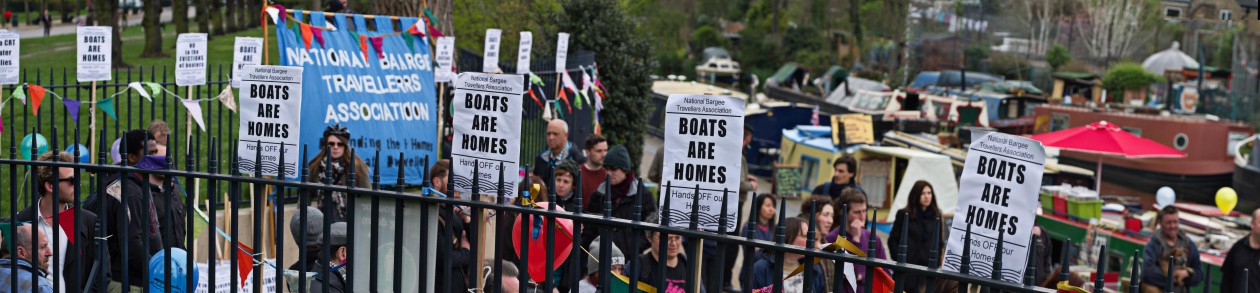
SunIMGP6546day 19 April, NBTA hosted a family-friendly Towpath Gathering outside Victoria Park to celebrate the boating community whilst making a stand against CRT’s draconian new enforcement policy and recent licence refusals. Attracting over 200 people, the event sent a positive but pressing message – our colourful community is under threat.

IMGP7023Boaters, supporters and local residents were given an insight into boating life with a floating marketplace where all were welcome to step onboard. From origami workshops, a museum, the Jam Butty and a record store, to live music, poetry and clown performances, visitors marvelled at the unique and eclectic mix of boaters, able to learn about the everyday lives of boat dwellers.

Speakers from NBTA explained the injustice and illegalities of CRT’s new measures, alongside speeches from Focus E15, Local Residents Association, Action East End and Radical Housing Network. Heartfelt words from individual boaters reiterated the seriousness of our campaign to stay on the waters, in an all-encompassing representation of who we are and why we refuse to be penalised
for “not moving far enough”.

IMGP6390As the event drew to a close, there was a real sense of achievement and pride. The boating community is undeniably considered special and is treasured by many, proven by the extensive support from all who attended the event and all the stories shared.

Download the NBTA London Newsletter July here