Boats are Homes, National Demo

Boaters march to protect their homes!

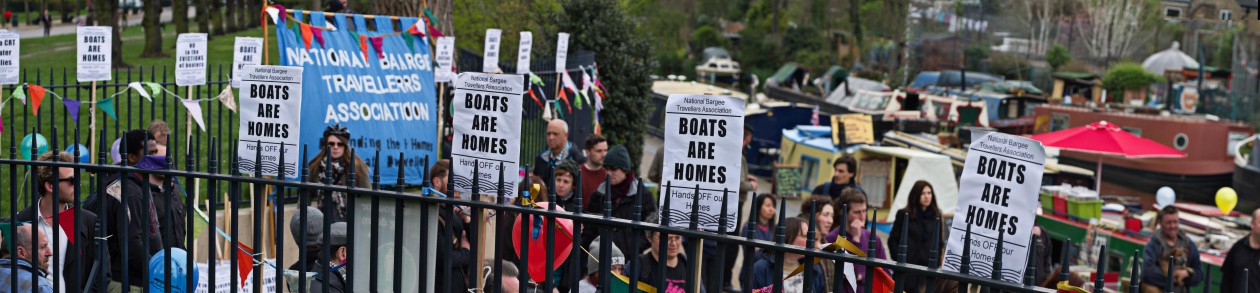
Last Saturday (16th April), just over 200 boat dwellers marched to Downing Street to hand in a petition against the Canal and River Trust’s (CRT) policy that threatens travelling boat dwellers (boats without a home mooring) with restricted licenses and even eviction. Along with protesting against evictions, we are demonstrating over the need for more mooring rings and more facilities such as water taps and sewage points.

boats demo 2

CRT’s policy was introduced in May 2015 and attempts to restrict licenses and evict boat dwellers without a home mooring for not travelling far enough or travelling in a pattern of movement not to CRT’s liking. To add insult to injury, CRT does this without stating a minimum distance or pattern of movement that they believe would satisfy them. Instead CRT has continued to enforce this policy inconsistently.

The British Waterways Act 1995 is the law that governs boats without a home mooring on CRT waters but this policy goes beyond this Act. The Act does not contain any requirements to travel a minimum distance or to follow any specific pattern of movement. The Act clearly states that boats without a home mooring must be navigating and must not stay in one place for longer than 14 days.

The petition, Boats are Homes, has been signed by more than 29,000 people. The petition asks the government to put pressure on CRT to end their policy and stop the unnecessary eviction of boaters.

boats demo

The National Bargee Travellers Association (NBTA) has a growing number of cases where boat dwellers are being threatened with eviction by CRT. Since the policy was introduced (in May 2015) to March 2016, 1,130 boats without a home mooring were given a restricted licence. During the first 6months of the policy in London alone, almost 1 in 4 boats without a home mooring (295/1225)were given a restricted licence. Boaters on a restricted licence are more likely to be evicted , have their home taken away from them and effectively be made homeless by CRT.

The number of boats without home mooring has declined since the start of CRT’s policy. CRT has stated that there were nationally 5,600 boats without home a mooring at the start of their policy and in a recent statement, CRT state that this is now around 5,000. The NBTA believe that this reduction of boat without a home mooring is down to this policy.

Living on a boat was once a peaceful way of life but now it has become a stressful and difficult existence. The threat of homelessness through this policy increases the more it is enforced by CRT and at a time when people, especially in London are facing a desperate housing crisis.

A spokesperson for National Bargee Travellers Association said

“Due to Canal River and Trust’s (CRT) policy, people are leaving their way of life as travelling boat dwellers. Many in our community feel that the CRT is trying to force us off the waterways. We are under increasing strain due to the CRT’s policies.”

“CRT doesn’t have a set distance or way we must move. They deal with us inconsistently, refuse and restrict our licences without giving us clear reasons and threaten people with eviction.”

‘However, today we have shown that we will stand together. We will not let us be picked off one by one.”
We are fighting for our homes and our way of life.’

boat demo 3

Boaters protest for facilities

Boaters already affected by a lack of water, rubbish and toilet facilities across the UK are protesting as more facilities are removed in London.

stone towpath 4

A tow-path gathering on Sunday 27th March at Stonebridge in Tottenham bore witness to increasing frustration amongst boaters in London. Through the day almost 70 members of the community and local residents battled the wind and rain to come together to discuss their options, in a situation where the necessities for living a decent life on the water are being taken away, and boaters feel that their plight is ignored.

Boaters pay substantial license fees to the Canal and River Trust (CRT) and rely on them to provide water taps, rubbish points and toilet facilities. Access to facilities however, is now being removed and restricted, and boaters are increasingly forced to endure primitive and unsanitary conditions.

CRT made a surplus of £39.4 million in 2014/15, these figures were taken from the 2014/15 Annual Report, and it is noted that they hold a reserve fund of £660 million. CRT can easily afford to install more facilities for boaters, but earlier this year, CRT demolished water tap, toilet facilities and rubbish point at Waltham Cross.

CRT are now restricting the opening hours of the toilets and showers further down the Lee in Stonebridge, despite attempts by the National Bargee Travellers Association (NBTA) to negotiate with CRT to try to prevent this.

Facilities have been removed on the River Lee before, and with planned redevelopment at Hackney Wick, there are fears that this will only continue to get worse.

With areas being privatised, facilities being removed and a population that has grown, many boaters feel they are being pushed out by CRT.

The event at Stonebridge was also a celebration of the boater community, and included music, crafts, public speakers and homemade food.


FB_IMG_1459376894538
Enter a caption

FB_IMG_1459376841448


Public Statement in Support of Bargee Travellers

The travelling boat dweller community (Bargee Travellers) is under pressure from navigation authorities and some local authorities to abandon their boats and their way of life. The Canal & River Trust (CRT), which manages 80% of Britain’s inland waterways, has imposed draconian policies that threaten many with eviction. How far boat dwellers travel and their pattern of movement are being used by CRT to evict boaters. At the same time CRT is removing an increasing number of mooring spaces. CRT is also selling off parts of the towpath, again reducing the number of mooring spaces. At the same time CRT is reducing the maximum stay time in some places from 14 days to as little as 48 hours or 24 hours. These actions by CRT have put undue pressure on many boat dwellers and have forced some to stop living on the waterways.

On waterways managed by the Environment Agency (EA) and other navigation authorities where in some cases riverside land is owned by local authorities, much the same is happening. Boat dwellers are being evicted from these waterways. Some local authorities have passed by-laws making it illegal to moor for longer than 24 hours. The EA has recently imposed a 24 hour time limit for mooring on the majority of its land.

In some places, evictions have paved the way for new luxury waterside flats. Many of the attacks are on par with the gentrification that is happening on land. However, boat dwellers also face added difficulties in accessing education, healthcare and employment, in a system that does not cater for their needs. Even on the waterways boat dwellers’ needs are not met. There is a chronic shortage of water taps, places to empty boat dwellers’ toilets and rubbish points.

We, the undersigned, demand that navigation and other authorities stop these attacks on the travelling boat dweller community.

We fully support stopping the evictions of boat dwellers affected by these attacks.

We also request that all boat dwellers needs for access to healthcare, education and employment are met as far as is reasonably possible.

We request that facilities such as water taps, places to empty boat dwellers’ toilets and rubbish points are provided to at least suit the needs of boat dwellers.

Back to the Future: The ‘New’ Overcrowding Enforcement Policy

There is a lot of talk on the cut about CRT’s new policy on cruising distances – boaters worried that they will lose their homes, others unsure if next time they apply for a licence if they will be allowed to continue their way of life. This attack from CRT takes the form of a new policy but there is nothing new about it.

An essential right of our community is to be able to live on the inland waterways without a home mooring. For many of those waters, this right is enshrined in the British Waterways Act 1995 (section 17(3)(c)(ii) if we are being precise) with the condition that we navigate the waters and don’t remain in any place for longer than 14 days unless it is reasonable to do so. This right, which defines us as continuous cruisers and allows the waters to be our homes, was almost not ours to have as it was opposed by British Waterways (BW) – the predecessor to CRT.

During the debates and deliberations which led up to the British Waterways Act 1995, BW argued that the canals were overcrowded and that tough action was needed to solve this ‘problem’ – sound familiar? BW fought hard for this, but they were beaten back and the law contained a right for our community to exist.

Defeated, BW went off to lick its wounds. By 2003, it had regained its courage and decided to try and attack our community once again. A policy was trialled which required boaters to move minimum distances (where have I heard that before?). Those navigating the waterways were expected to travel 120 lock-miles (if you travel 3 miles and go through 2 locks that’s 5 lock-miles) every three months without turning round at any point.

In a bid for legitimacy, BW consulted on this plan but failed to include the views of continuous cruisers. A pair of boaters challenged this by running their own consultation, travelling up and down the cut talking to hundreds of people to understand the impact that this extreme policy would have on their lives and well-being. The results showed that the rules would be devastating. Many boaters refused to follow the rule and pressure from local groups built against BW who dropped the policy.

BW once again took their time before attacking again in 2010. This time they proposed to define ‘neighbourhoods’ with a requirement to move from one to the next every 14 days and only turning round if it was impossible to navigate further. This was planned on the Kennet & Avon and on the Rivers Lee and Stort which were to be carved into 6 pieces. Huge portions of these neighbourhoods were to have 7 days mooring restrictions, including the whole of the River Stort! Once implemented, Stage 2 of the place would have been to extend this to the Regent’s Canal. The reason – to deal with overcrowding, of course.

The boaters of the Lee and Stort responded to this attack by forming the original ‘London Boaters’ group. Working together with other canal users including cyclists, and residents    to build support and then attending public meetings in their hundreds to form strategy and fight the plans, the group forced BW to shelve their proposals in 2011.

So we arrive back where we started: CRT’s ‘new’ policy – with its minimum distances to deal with ‘overcrowding’ – in fact smells pretty old. It is the same old story…but we know how the story can end. Time and time again, our community has been attacked and every time we work together to defend each other and each time we have won. If we stand together and act, this time will be no different.

nbta timline

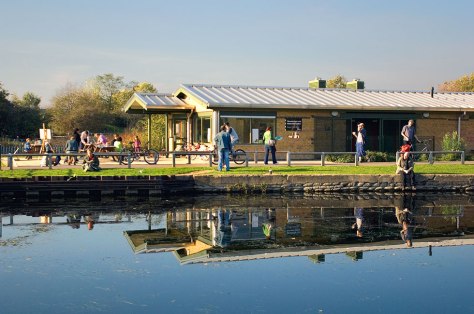
Stonebridge Towpath Gathering

Sunday 27th March at 12 noon

Stonebridge Lock, Tottenham, Lock 16 on the River Lea

Canal and River Trust (CRT) is planning to restricted the use of the toilets showers at Stonebridge lock. Their plan is to restrict the opening times of the toilets and showers to only when the Stonebridge cafe is open*. This will put extra strain on our ever decreasing number of facilities and it could give CRT more confidence in shutting down the Stonebridge facilities altogether as they have threaten in the past.

There has been a long history of threats as well as resistance to the closure of Stonebridge so lets not let them get away with it now!

watersideCentreStonebridgeLock

NBTA London has been talking with CRT to try and stop them making these restrictions. However, CRT has refused our proposals. Therefore, we must act.

We are organising a protest against CRT’s plans by holding a vibrant celebration of the boater community and for the protection of Stonebridge. There will be music, an open mic, speeches, crafts and much more.

Come along, bring others, lets show CRT our voice and take back our facilities!

It will be at Stonebridge Lock, Tottenham, Lock 16 on the River Lea on27th March at 12 noon.

*Stonebridge cafe is open 8am-5pm on Tuesday-Friday; 8am-6pm on Saturday and Sunday; and closed Monday.

For CRT, distance isn’t enough

As many of you know, last May the Canal and River Trust (CRT) rammed through a policy which would restrict or refuse licences to people who they claimed hadn’t moved ‘far enough’. The statement they gave to say how far is far enough was very vague. They said,

“[it’s] very unlikely that someone would be able to satisfy us that they have been genuinely cruising if their range of movement is less than 15-20 miles over the period of their licence. In most cases we would expect it to be greater than this”.


So, is 21 miles enough or 25 miles or even 100 miles? They’re not telling us how far, but they are happy to say. ‘YOU’RE not moving far enough’ leaving boaters uncertain as to what they have supposedly done wrong, creating unnecessary stress and anxiety.

We can see no clear limit to adhere to and CRT seems to be imposing different limits on a case by case basis. This has become clearer over time, with more and more people getting a restricted licence when they had travelled far in excess of 20 miles. We also noted that over this period, we have never seen CRT say to any able bodied person that doing 15 miles in the licence period was fine. So in effect the 15-20 mile range became at least 20 miles.

 
At the same time as the distance that CRT is demanding is increasing, the time in which they believe you must do the distance is decreasing. We had thought that when CRT stated the 15-20 miles range, that it was referring to the 12 month licence period. As in, at least 15-20 miles over a year licence and 7.5-10 miles over a 6 month licence and so on. However, we found CRT demanding people on 6 month restricted licences to do at least 20 miles over the 6 months. Why apply the same range to a year licence as to 6 month licence? It seems that they chose the 15- 20 mile range because they were starting with a number they could get away with publically but where they are able push it further, when dealing privately with individual boaters, they did.

We quite often find that CRT believed 20miles isn’t enough. Through the NBTA’s caseworker group, which offers help and advice to boaters facing reduced licences and eviction, we have found people who had done 30 miles and even 100 miles and still had CRT on their backs. For CRT, distance isn’t enough, it’s how you travelled over that distance too. If they think you have travelled around a certain area for ‘too long’ then they have said that it doesn’t matter that you have travelled over 50 miles, for example. In some cases, they try to get away with enforcing a certain pattern of movement, what they call a ‘continuous journey’.

 
With one case we were helping, a boater was refused a licence and threatened with eviction by CRT after travelling approximately 60 miles on a 6 month licence. Why? Because they didn’t like that at one point in his journey he did a U-turn to get some coal. CRT made it out that his travel pattern was incorrect because he lacked a ‘continuous journey’. Nevertheless, after a petition and 6 days of campaigning, CRT backed down and we got his licence back. CRT pushed their luck – but we pushed back and we won. You can read about that victory here. https://nbtalondon.wordpress.com/2015/12/04/boater-eviction-stopped/

This isn’t the only time we have helped someone get their licence back. However, many people are under enforcement. From May to October, CRT has issued 826 restricted licences. A large proportion of these are in London and of the 1,225 boats in the city without a home mooring, 295 boats were given restricted licences between May and November 2015. That’s 24%, almost 1 in 4 boats without a home mooring in London. Also during this period,  10 boats have been removed and four are at seizure point with a further four planned and awaiting removal and another 11 in planning. With hundreds of boaters currently on restricted licences, there is fear of even more evictions in the future. As Simon Cadek, Enforcement Supervisor for London at the London Waterway Forum in October 2015 said,

“It’s only the beginning of the policy”.

Many in our community already feel the pressure of this policy already. The idea that this is ‘only the beginning’ worries many of us, however, it is also only the beginning of us stopping their policy. We must step up the campaign by coming together as travelling boaters. We must stop CRT case by case. Each time someone is under attack we must support them, we must campaign for them and, if necessary, even stop evictions. However, we can’t just deal with the effects of the policy, we must get rid of the policy. We will do this by using the press to show up CRT on this issue. We must also reach out to the non-boater groups and individuals, so CRT are shown to be on their own in their want for a policy which threatens so many of us. One way we will do that is by marching with others for secure homes for all on the People’s Assembly demonstration on the 16 April. On that day we will hand in a petition to Parliament, already over 20,000 strong and growing, demanding that the Government pressure CRT into getting rid of their unjust policy. We hope you will join us.

 
For more details on the demonstration go here: https://nbtalondon.wordpress.com/2016/02/17/boats-are-homes-national-demonstration-2/

For the petition, go here and please sign and share it:https://you.38degrees.org.uk/petitions/boats-are-homes-prevent-the-eviction-of-boat-dwellers

 
To contact a London caseworker; email nbta.london.caseworker@gmail.com or ring/text 07974 298 958

Boats are Homes pic boat

BOATS ARE HOMES, NATIONAL DEMONSTRATION

There is demonstration to demand that the Canal and River Trust (CRT) stops evicting or threatening to evict travelling boat dwellers based on their pattern of travel or distance traveled. It is also to stop the reduction of the 14 day rule, to stop the sale of our waterways and to demand the maintenance of the waterway banks, to install more mooring rings and more facilities.

On the Saturday 16 April at 12.30am in Central London, Gower Street / Euston Road, London NW1

Boats Are Homes - Towpath Gathering April 2015
Boats Are Homes – Towpath Gathering April 2015 taken by David Roberts

For more info read on.

It’s coming up to a year since Canal & River Trust (CRT) rolled out its policy of refusing to renew or shortening the licence periods of boaters without permanent moorings who CRT deem not to have travelled in the ‘correct’ manner. Many in our community have been affected by the threat of losing our homes and some boat dwellers have already been evicted by CRT.

CRT has not just gone after boaters who have travelled in a very small area. CRT has also shortened or refused to renew the licences of boat dwellers who have travelled up to 100 miles. It seems CRT’s aim is to get rid of a certain number of boat dwellers without a home mooring and they are not too bothered about who they get rid of.

There is already a law that states we mustn’t stay longer than 14 days in one place. We don’t need CRT making up unlawful extra ‘rules’. We must step up the campaign to stop CRT restricting or refusing to renew the licences of boaters whose travelling pattern is completely lawful.

In addition to this, CRT has reduced the stay times in some areas from 14 days to as little as 24 hours. They have concreted over canal banks making it impossible to moor in large areas of London and other urban areas, have failed to maintain the canal bank and in some cases CRT even plan to sell off stretches of waterway contrary to assurances given to Parliament in 2012.

CRT made a surplus of £39.4 million in 2014/15 and hold a reserve fund of £660 million. CRT can easily afford to install more facilities for boaters and repair waterway banks that are currently impossible to moor on. Instead, CRT has taken away or failed to repair water taps, sewage and rubbish disposal facilities.

Boat dwellers will be joining the People Assembly demo which one key demand is for housing on 16th April 2016 to demonstrate that our community deserves better. We will not be alone. We will march with others demanding decent housing. We will hand in a petition to Parliament demanding that the Government pressures CRT to stop its attack on boat dwellers without a home mooring.

We plan to take a picture of all the boat dwellers on the march to bring to another demonstration at CRT offices a few weeks after. We demand:

Stop Evictions of Boat Dwellers!

Defend the 14 day rule!

Stop the Sale of our Waterways!

Maintain the Waterway Banks and More Mooring Rings!

More Facilities!


This is the petition which we will be handing in

https://you.38degrees.org.uk/petitions/boats-are-homes-prevent-the-eviction-of-boat-dwellers

It has more than 23 000 signatures, please sign and share it. Let’s get 25 000 signing it!

For the facebook event;https://www.facebook.com/events/503828719817975/


Please contact secretariat@bargee-traveller.org.uk or 07710160340 for more information

What to do if you been given a restricted license

A ‘restricted’ licence is part of the Canal and River Trust’s (CRT) new enforcement policy that was introduced and rolled out early in 2015 to cover all boats with no home moorings. The restricted licence is a licence for 6 months, as opposed to the possible full 12 months licence, and is basically a ‘last chance’ warning from CRT that they do not believe that a boater is complying with their new guidance and enforcement practice. The Canal and River Trust (CRT) issue restricted licences to a boater if they think a boater has done something ‘wrong’ like “not moving far enough” or “shuffling” based on their monitoring of the boats movements over the previous licence period. The our caseworkers believe that restricted licences are dangerous to boaters as the boater could eventually lose their home altogether. We advise people to challenge them if they think they have been treated unfairly.

The NBTA and some lawyers have stated that CRT can legally issue licenses that are less than a full year licence. This is because the law doesn’t state how long a license period has to be. However, if you accept and pay for your restricted license it doesn’t mean you have agreed that what CRT says is ‘wrong’ is wrong. Especially if you follow it up with a complaint to CRT. However, having a restricted licence can make it more likely that CRT will refuse you a licence next time you want to have your licence renewed.

Successfully challenging a restricted licence depends on a) CRT not breaking its own policies and procedures and b) proving to CRT that their sighting data is wrong or incomplete. A complaint about getting a restricted licence acts as an ‘appeal’. There is no other formal appeal process for boaters being given restricted licences.

The first thing is find out the reason why CRT has given you a restricted licence. It should say the reason on the email/letter they send you. If it doesn’t say the reason(s) or it is not clearly stated, you need to email or send a letter to CRT asking what the reason(s) that they want to give you a restricted licence. Make sure you only contact CRT using either email or letter so that everything is documented. It makes everything else easier. If you have a problem understanding what CRT is saying, then you can email nbta.london.caseworker@gmail.com or ring 01615431945  and caseworker can help you.

So far we know that CRT restricts licences for boaters they think have done one or more of the following:

Click on those that apply to you for the helpsheet and template letters.

The main point is to find out what CRT have accused you of and to find evidence to prove them wrong or that their conclusions are unreasonable. Was your overstay reasonable where they say it was unreasonable? Have they got your sightings wrong and said that you travelled less than you have or/and have they said you have had a different travel pattern than that which you had? To prove this to CRT you must have evidence to back up your claims. Therefore, ask them to give you your sighting data. A good person to email to get sighting data is information.request@canalrivertrust.org.uk. More detail on what evidence you may need can be found in the links above.

As well as the possibility of CRT getting something wrong about what you did, they might not have given you a ‘fair warning’ before giving you a restricted licence.

CRT has enforcement procedures that claim to give boaters a ‘fair warning’ before enacting any enforcement action. Below is the CRT procedures for giving a restricted licence. This information has been put together from what NBTA has been sent from CRT and what CRT has put out online. It may be useful to collect evidence to show CRT has not given a ‘fair warning’ before giving you a restricted licence. If CRT has not given you ‘fair warning’ then, we recommend that you request that they therefore take to you out of enforcement as they have acted outside of their own rules.

Here are some things that might be useful to argue that CRT hasn’t given you a ‘fair warning’:

  • CRT’s Head of Customer Services, Ian Rogers has written that “CRT will get in touch about six weeks before the licence renewal date, if we’ve any concerns about a boater’s past cruising pattern.” Link here for full article Ltr_Pamela Smith_NBTA_Level 1 Complaint_26.10.2015 (1). So has CRT done that with you?

If CRT hasn’t done one or more of things then write them a letter/email to say that they haven’t given you a fair warning before issuing you a restricted licence action on you. Click here for a template  fair warning letter.

CRT might take it more seriously if you make a formal complaint. If your complaint goes far enough in the complaints procedure then it will go to the ‘independent’ Waterways Ombudsman. Click here for a template complaint letter Level 1 Complaint_Restricted licence. And here is CRT’s complaint procedure https://canalrivertrust.org.uk/contact-us/making-a-complaint

And a help sheet for writing complaints click here Advice about CRT enforcementv2 14-3-15

All of this might get your full licence back if you have a case where CRT has broken its own policies and procedures and you have good amount of evidence to back that up. However, CRT still might not reverse its original decision even after you have proven to them that they are in the wrong. Nevertheless, we still suggest that you should try it because it is possible for you to win and it can put you in a better position if you ever need to go to court. If you would like any help with any of this, you can contact a caseworker by emailing nbta.london.caseworker@gmail.com or ring 01615431945.

If CRT has acted incorrectly to you and you have shown them that and they are still saying they will restrict your licence, then the next course of action can be a campaign. A campaign could show that CRT has acted incorrectly even in their own policies and procedures. This could get your full licence back because CRT doesn’t want to seem to be an illegitimate and unreasonable organisation. If you have got to this point, email nbtalondon@gmail.com.

Please tell us how things go with CRT as the more we know about how CRT reacts to boaters, the better our advice can be. Email  nbta.london.caseworker@gmail.com or ring 01615431945.

Ludo 1

A Ludovic Pujol drawing

CRT says you have stayed longer than 14 days in one place

Canal and River Trust (CRT) does sometimes get people’s sighting data wrong. The first thing you should do is get all the sighting data that CRT has on your boats movements. To do this email the following email address to request your sighting data: information.request@canalrivertrust.org.uk. Here is a template letter request-sighting-data (2). To understand what CRT sightings mean, use this link below. Click on a lock or a bridge to see what the code is and work it out from there:

https://canalrivertrust.maps.arcgis.com/apps/MapTools/index.html?appid=b46e3e0bda4a44a0be267df7674139a5

If CRT has got your sighting of overstay wrong, then email them saying they have got it wrong and show them the evidience that they are wrong. Here is a template letter Sighting data is wrong.Evidence can include the following but are not necessary exclusive to:

  • Log book of where your boat was

  • Dated pictures of your boat in an area

  • GPS of your boat

  • Receipts from local shops/ boat yard etc

  • Tube/train tickets from the local area

  • Witness statements

CRT might have your overstay right but you might have been reasonably overstaying. The British Waterways Act 1995 states that a boat without a home mooring must not stay longer than 14 days unless reasonable. Therefore, you could have overstayed and it might have been reasonable. What is reasonable is up for argument. However, there are some reasons that are considered reasonable, here is some the NBTA knows about:

  • illness/disable/pregnancy that effects you moving your boat
  • boat is broken down
  • adverse weather conditions
  • you would have disturb a bird’s nest if you moved
  • canal or river works that prevent you moving
  • close relative has die and this has effected moving your boat

First establish the time period CRT is saying you overstayed. Ask CRT for your sighting data, email information.request@canalrivertrust.org.uk as above.

Secondly have a look at the reasons above and see if they fit into your overstay. If so, you can argue that you were reasonably overstaying. However, if you have overstayed more than 14 days in one place and you are unable to prove your overstay is reasonable then you don’t have a good case to stop CRT restricting your licence or refusing you a licence. This is because the law clearly states you must not stay in one place longer than 14 days.

Thirdly, if you believe your overstay is reasonable, then you need to find evidence to prove your overstay was reasonable. Evidence can be different depending on the type of reason of overstaying.

For illness/disable/pregnancy that effects you moving your boat, get a letter from your doctor saying how your illness/disability/pregnancy affects you moving your boat and that you were unable to move at the time of the overstay. Write description of how your illness/disability/pregnancy makes it more difficult for you to comply with the 14 days rule. Then send a copy to enforcement (list of email addresses are on the NBTA London website) and welfare officer sean.williams@canalrivertrust.org.uk. For more information click here https://nbtalondon.wordpress.com/2015/10/16/full-advice-sheet-for-disabled-elderly-and-pregnant-boaters/.

If the overstay was because your boat was broken down, write down when it first broke down, for how long and what was wrong with it. Evidence can include; receipts of work done or/and parts, also pictures of the work being done, email communication between you and work person or shops you bought the parts from. If the work is slowed down due to lack of funds, show CRT a copy of your bank account and how much the parts or labour cost. This might show that you were not able to get the work done sooner.

Adverse weather conditions can be proved by using the Met Office weather reports but pictures of your boat in the flood, wind, ice etc. can also help.

It is a criminal offence to intentionally damage or disturb a wild bird’s nest or dependent young of such a bird and anyone doing so could be fined or even jailed under the part 1 of 1981 Wildlife and Countryside Act. Therefore, if you know that moving your boat will damage or disturb a bird’s nest before you move and you still move your boat and damage the nest, you are breaking the law. This means it is reasonable reason not move because it would damage or disturb the nest. You must wait until the nest is no longer in use. If your overstay is because of that, then having a dated picture of the bird on its nest is evidence. Send the picture with an email explaining the situation to CRT.

If the reasonable reason is the canal or river works prevent you from moving then send them the proof. CRT sometimes puts details of its works on its website, https://canalrivertrust.org.uk/ . Have a look on there and send information to the enforcement officer you’re dealing with. Also, you can contact the customer.services@canalrivertrust.org.uk if they had works on at the point you believe they had works on. Forward the email they send back to you to the enforcement officer you’re dealing with.

CRT might take it more seriously if you make a formal complaint. Also if your complaint goes far enough in the complaints procedure then it will go to the ‘independent’ Waterways Ombudsman. Click here for a template complaint letter Level 1 Complaint_Restricted licence. And here is CRT’s complaint procedure https://canalrivertrust.org.uk/contact-us/making-a-complaint

And here is a help sheet for writing complains.

If you would like any help with any of this, you can contact a caseworker by emailing nbta.london.caseworker@gmail.com or ring 07459354163.

CRT says you don’t have the right travel pattern

There is nowhere in law which states any particular travel pattern you much travel in. However the Canal and River Trust (CRT) will sometimes use the way you have travelled to say if you are using your boat for navigation or not. If they think you have stayed too long in one area going in-between places or even just doing a u-turn, they might see you as in the wrong. However, CRT might concede to your argument if you can prove that they have gotten your pattern of movement wrong.

The first thing you should do is get all the sighting data that CRT have of your boat. To do this email the following email address to request your sighting data: information.request@canalrivertrust.org.uk. Here is a template letter request-sighting-data (2).

Then compare CRT’s sighting to where you believe you were. To understand what CRT sightings mean, use this link below. Click on a lock or a bridge to see what the code is and work it out from there:

https://canalrivertrust.maps.arcgis.com/apps/MapTools/index.html?appid=b46e3e0bda4a44a0be267df7674139a5

If CRT has got it wrong, email them saying they have got it wrong and show them the evidence. Here is a template letter Sighting data is wrong. Evidence can include the following but are not necessary exclusive to:

  • Log book of where your boat was

  • Dated pictures of your boat in an area

  • GPS of your boat

  • Receipts from local shops/ boat yard etc

  • Tube/train tickets from the local area

  • Witness statements

After submitting the evidence to CRT, they may then take your sightings into account and this might prove to them that you have travelled ‘in the correct manner’.

CRT might take it more seriously if you make a formal complaint. If your complaint goes far enough in the complaints procedure then it will go to the ‘independent’ Waterways Ombudsman. Click here for a template complaint letter for your restricted licence Level 1 Complaint_Restricted licence . And here is CRT’s complaint procedure https://canalrivertrust.org.uk/contact-us/making-a-complain

And a help sheet for writing complaints How to use CRT complaints procedureV2 26-2-15.

If you would like any help with any of this, you can contact a caseworker by emailing nbta.london.caseworker@gmail.com or ring 07459354163.

A volunteer organisation formed in 2009 campaigning and providing advice for itinerant boat dwellers on Britain’s inland and coastal waterways