A SMALL VICTORY FOR BOATERS WITHOUT HOME MOORINGS

A SMALL VICTORY FOR BOATERS WITHOUT HOME MOORINGS

Following lobbying by the National Bargee Travellers Association (NBTA), CRT stated on 23rd April 2015 that it will only charge boaters who have been forced to take a 3 or 6 month licence the 12-month fee pro rata instead of the advertised higher relative cost of its shorter licences. This follows a recent meeting between NBTA and CRT’s new Head of Customer Service when the NBTA raised the issue that boaters who were refused 12-month licences following enforcement action were being forced to pay a higher relative amount. Ian Rogers said “those people who find that CRT have only offered a 3 or 6 month licence will be charged a pro rata amount of the full licence fee”. The NBTA recommends that boaters who have been charged a premium for a shorter licence in these circumstances should make a formal complaint requesting a refund of the balance.

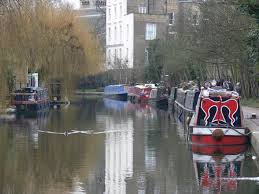
islington lock

The NBTA met privately with Mr Rogers but so far has not been invited to the regular meetings between CRT and other boating user groups. Contrary to recent allegations, the NBTA did not hijack or disrupt the CRT 10-year Strategy open meeting on 25th April. Some seven NBTA members were present at the meeting. At least eight others attended who had similar concerns to those raised by the NBTA. They each voiced disagreement with CRT’s new policy towards boaters without home moorings and the changes to the boat licence terms and conditions. The fact that so many unaffiliated live-aboard boaters as well as NBTA members took the trouble to attend shows the level of disquiet and anger about the effects of CRT’s policy changes on boat dwellers both with and without home moorings.

NBTA members attended the meeting in the hope of influencing CRT’s 10-year strategy to include reversing its unlawful new policy for boaters without home moorings and to raise other issues of concern about CRT’s actions. This also included handing out leaflets and alerting people that vulnerable boaters are still at risk of losing their homes. It rapidly became clear that there was no real opportunity for boaters without home moorings to influence the 10-year strategy and the meeting was little more than a public relations exercise.

NOTES FOR EDITORS

  1. For more information contact the NBTA, press@bargee-traveller.org.uk or 0118 321 4128.
  1. The NBTA is a volunteer organisation that campaigns and provides advice for itinerant boat dwellers on the UK’s inland and coastal waters.
  1. An example of the premium that a boater without a home mooring has been made to pay for being forced to take a 6-month licence is an additional £100 over 6 months for a licence renewed on 1st February 2015.
  1. This is one of the questions that the NBTA asked regarding CRT’s 10-year strategy, which sums up the organisation’s concerns:

In unlawfully setting a minimum distance and refusing to renew the licences of boaters without home moorings who don’t travel that distance, CRT is proposing to destroy lives against its strategic aim of “enriching lives”, by evicting boat dwellers and seizing boats. To apply this policy retrospectively adds further injustice.

CRT seems to be alienating all live-aboards, given what an enforcement officer recently described as “something in the pipeline” to deal with live-aboards on leisure moorings. The number of leisure boaters is inevitably going to decline due to their average age and higher retirement ages, and given the increasing demand among younger people for residential boating.

Why does CRT’s 10-year strategy not include welcoming continuous cruisers who travel within a local area, provided that they adhere to the 14-day rule, as that is the best way of attracting younger boaters?

  1. Boats can be licensed to use Canal & River Trust’s waterways without a permanent mooring under Section 17(3)(c)(ii) of the British Waterways Act 1995. This section states:

(ii) the applicant for the relevant consent satisfies the Board that the vessel to which the application relates will be used bona fide for navigation throughout the period for which the consent is valid without remaining continuously in any one place for more than 14 days or such longer period as is reasonable in the circumstances.

60 London boats on restricted licences and 25 boats seized as CRT’s enforcement policy begins to bite

60 London boats on restricted licences and 25 boats seized as CRT’s enforcement policy begins to bite

Simon Cadek, London Enforcement Manager gave a presentation at the CRT London Canal User Group meeting last Wednesday 15th April. A LNBTA member was present and made notes. The slides containing the figures will be available soon on the CRT website, but in the meantime here’s the lowdown. If I am not quite sure of the exact figure I have put a question mark next to it.

images536SBLGL

From my notes the figures where – out of 150? new first year licences coming up for renewal this year – 19 where given 3 month restricted licences and 41 given 6 month restricted licences. ‘Restricted licence’ is the exact term CRT used.

Also – 12 boats have been seized in London since January and 25 are about to be and (according to Cadek) “a lot more are heading that way.” No information was given as to why the boats were seized – whether its non cc ing, no licence or other BUT he did say that 371 boats in London are currently “in the enforcement process for non cc- ing” and 20? for overstaying.

The ‘restricted licences’ are a temporary measure “while boaters get used to the new policy”, so I asked what happens after the temporary measure? Will boats get any warning or will they just get their licences refused? Cadek answered – “boaters will always be warned before we remove their licences.”

Also from the meeting – a Little Venice resident had a go at the IWA representative because the jazz music stage on the pontoons next to the island at last year’s Canalcade killed all the baby swans nesting on the island.

Just to reassure you – no baby swans at all were killed during the making of Sunday’s London Bargee Traveller Association’s Towpath Gathering at Vickie park/regents canal.

Towpath Gathering aims to protect and celebrate London boating community

Towpath Gathering aims to protect and celebrate London itinerant boating community

In the face of increasing pressure on the London towpath boating community, the London National Bargee Traveller Association (LNBTA) are holding a Towpath Gathering by the Regents Canal in East London’s Victoria Park on Sunday 19th April from 12pm.

images3F6NCC8B

The Towpath Gathering will both raise awareness about the threats to the London boating community and celebrate the diverse and vibrant London towpath life. It will also bring together local communities in a fun, family friendly day that gives people the opportunity to take part in creative activities as well as talk to boaters about their way of life.

This is both an open air meeting and event that celebrates the boating community; giving people an insight into this community. Music, performance and talks will be provided by boaters themselves along with a floating marketplace featuring local trade-boats for people to step on the water and experience life aboard.

The event will have floating stages and stalls with music, poetry, arts and crafts, and will also be an opportunity for boaters, supporters and local residents to meet and discuss the Canal and River Trust’s draconian new enforcement policy and the refusal of full licences for boaters it deems “not to have moved far enough”.

A spokesperson for the LNBTA said:

“As legitimate and licenced boaters who live on their boats by the towpath, our way of life is currently being threatened as the Canal & River Trust have plans to impose draconian new changes to their enforcement policy. Under the new scheme boaters who are arbitrarily deemed by CRT to be “not moving far enough” are refused one year licenses and instead put on a costlier three or six month trial license unless they comply with new rules about moving within a range of “further than” 15 to 20 miles in the course of a year.”

“These new demands and enforcement process go beyond the CRT’s legal powers which are set out in the legislation. The British Waterways Act states that boats must move each 14 days but does not impose any distance or pattern. In forcing these new rules the CRT are attempting to extend the scope of their legal powers and establish a new precedent.”

“The fears are that the distance enforced on could be increased incrementally and threaten the viability of itinerant boaters who live by the towpath yet need to stay within the London area for work, school, college or family and caring commitments.”

– ENDS –

Notes to editors:

Event: The Towpath Gathering.

Date/time: 12pm Sunday 19th April 2015.

Location: Towpath near Canal gate entrance to Victoria park

If you wish to cover the event, or if you would like to be sent high resolution photographs and a release with quotes and comments after it has happened then see below for contact details:

Contact Details:

The London National Bargee Travellers Association (LNBTA)

General info: nbtalondon@gmail.com

For further info on the new licence and enforcement policy, check out the London NBTA fact and advice sheet  on:

https://nbtalondon.wordpress.com/2015/03/23/fact-and-advice-sheet-regarding-enforcement/

The National Bargee Travellers Association (NBTA)

A volunteer organisation formed in 2009 that campaigns and provides advice for itinerant boat dwellers on Britain’s inland and coastal waterways. This includes anyone whose home is a boat and who does not have a permanent mooring for their boat with planning permission for residential use.

NBTA General Meeting

This meeting is to decide what the NBTA does in general.

This will be on the Saturday 21 November at the Quaker Meeting House, 150 Church Rd, Watford WD17 4QB (near Watford
Junction Station). Registration starts at 9.30am, the General Meeting ends at 6pm. There are going to be breaks in-between, including lunch .

If you would like to come to the General Meeting, please book a place as soon as possible by emailing secretariat@bargee- traveller.org.uk or phoning 0118 321 4128. We need to keep the venue informed of the numbers so please let us know in advance if you wish to attend.

Further travel directions etc. will be sent out on booking.

Towpath Gathering – Victoria Park 19th April

Towpath Gathering – Sunday 19th April – 12 noon
Canal Gate, Victoria Park (Western-most entrance)IMGP6550

An open air meeting and celebration of the boat community. There will be music and speeches from the boater community, alongside trade boats, bunting, banners, balloons and placards… and much more.

This is during a time when the Canal & River Trust (CRT) plans to refuse full licences to lawful boaters who “don’t move far enough”.

Along with refusing licences, CRT plan to issue some boats with a more expensive and shorter 6-month licence, on the condition that CRT will only give full licences once the boater changes their ways.

For one reason or another many of us move around various parts of London, and that is our right. But CRT plans to set requirements that go beyond the British Waterways Act 1995. This Act clearly states how often boats should move, but does not state any minimum distance that we have to travel nor follow any specific cruising pattern beyond the stated 14 day limit.

We must not allow CRT to debilitate our community. Please show your support at the Towpath Gathering.

Like us on Facebook Like us on Facebook

Follow us on Twitter Follow us on Twitter

FACT AND ADVICE SHEET REGARDING ENFORCEMENT

London National Bargee Travellers Association

FACT AND ADVICE SHEET REGARDING ENFORCEMENT

Canal and River Trust enforcement powers

Currently the 14 day limit in the 1995 British Waterways Act should be the legal underpinning of any enforcement that CRT takes against boats without a home mooring. The main legal powers available to CRT amount to Section 17 (ii) of the BW Act, which states that CRT must license boaters with no home mooring as long as they use it “bona fide for navigation (for the period of the license) without remaining continuously in any one place for more than 14 days or such longer period as is reasonable in the circumstances.” In other words, boats without a home mooring have to move to a new place at least every 14 days.

How this works in practice is that CRT have the power to reasonably interpret the legislation and enforce boats that they consider to have broken it. At the end of the process CRT can apply to the County Courts for ratification – or permission – to use their section 8 powers to remove the boat from the waterways.

The enforcement process involves several stages and it is advisable to not ignore letters or emails and to try to negotiate with CRT to be removed from the process. The London NBTA can give further advice on this and there is special protection for livaboards, disabled, elderly and pregnant women. If court action is threatened, the London NBTA can assist the boater with finding proper legal representation.

The ‘new enforcement policy’ and non-renewal of licenses

https://canalrivertrust.org.uk/news-and-views/news/policy-outlined-for-boaters-without-a-home-mooring

The new enforcement policy circumvents the above process by using non-license renewal as an enforcement tool.The policy is new, appears to have administration glitches and teething problems, but is best encapsulated in the letter that was sent by CRT to all boaters without a home mooring that states:

“From 1 May 2015, when the licence for a boat that doesn’t have a home mooring comes up for renewal, we’ll look back at its cruising pattern to determine whether it’s appropriate to re-licence the boat again as a continuous cruiser.


If, at the time of renewal, we’re generally happy with a boat’s cruising pattern over the course of the previous licence period, then we’ll issue another continuous cruiser licence straight away. Of course, if during the period of the new licence we become concerned about the boat’s cruising pattern then we’ll let the boater know.


If we’ve any concerns about a boater’s past cruising pattern, we will get in touch about six weeks before the licence renewal date, to let them know which of the following two categories applies and what they need to do:


Category one


Boats that have hardly moved during their licence period won’t have their continuous cruiser licence renewed.


For the first few months after 1 May 2015, while boaters are getting used to this new approach, we’ll give those in this category another chance to establish an acceptable cruising pattern by issuing a three-month licence. If, after this three-month period, they still haven’t moved far enough then they’ll have to secure a home mooring before getting a new licence.


Category two


If a boat has been moving, but not enough to fully meet the requirements of our Guidance, we’ll only issue a six-month licence as a continuous cruiser. This will give the boater the chance to establish an acceptable cruising pattern. If, after this six-month period, they’ve still not changed their cruising pattern then they’ll have to secure a home mooring before getting a new licence.”

A frequently asked question

How far is “far enough”.

CRT refers boaters to their guidance for boats without a home mooring. Some boating organisations believe that this guidance is potentially unlawful because it appears to state that there is a minimum distance requirement, something that is not set in the legislation or subsequent case law (County Courts do not set precedent and the original intention was that the judge would determine ‘bona fide navigation’ from ‘place to place’ taking into account the context of the particular case in front of him/her). However, this distance requirement would need to be challenged in court, so for all practical purposes CRT appears to be enforcing on this:

“ (..) we can advise that it is very unlikely that someone would be able to satisfy us that they have been genuinely cruising if their range of movement is less than 15-20 miles over the period of their licence. In most cases we would expect it to be greater than this.”

https://canalrivertrust.org.uk/boating/licensing/enforcement/boaters-without-a-home-mooring-how-far-is-far-enough

It is important to note that CRT are clearly saying that 15-20 miles is not enough. That 15-20 miles range is NOT enough has been underlined by two recent public statements by CEO Richard Parry. The first was given in an article to the Financial Times (26/02/2015) in which Parry states:

“We welcome continuous cruisers, many of whom have a fantastic lifestyle travelling around the country. We don’t want evictions to happen, but in extreme cases if someone stubbornly refuses to comply (…)”

http://www.ft.com/cms/s/0/40ae3218-bd8c-11e4-9d09-00144feab7de.html#axzz3VEjgkawf

The second was given in an article in City Metric in which Parry states:

“I’m telling you that we believe, clearly, that it has to be more than 15 to 20 miles,” Parry has said. “How much more we’ll be debating forever.”

http://www.citymetric.com/horizons/more-and-more-londoners-are-living-boats-their-lifestyle-under-threat-new-regulations-853

What do I do about all this?

  1. For a start it’s important to keep records and dates of your movements. This isn’t strictly required by law, but as CRT data of your boats movements may be unreliable, it is probably a good idea.
  2. Move to a new place every 14 days unless there are good reasons not to – such as ill health or mechanical breakdown – and inform CRT’s local enforcement manager by phone and follow up email o0f your intention to stay longer.
  3. Obtain a copy of CRT’s sighting data on the movement of your boat and challenge it if it is wrong. It would be a good idea to do this two or three months before your licence is due to be renewed. Contact 0303 040 4040 or Sarina.young@canalrivertrust.org.uk
  4. If CRT contacts you and tells you they are only going to offer you a new licence with a reduced term of six or three months then challenge this. Reply to the letter by email to the address given on it. Be firm and polite and provide details of your cruising pattern and state that you believe this to be within the law. Ask for your CRT sighting data if you haven’t already got it. Ask why they have refused to renew a full license. State that you if you do not receive a satisfactory answer will be raising this as a formal complaint. If the reason is already given as ‘not moving far enough’, then ask how far they consider being far enough.
  5. CTR may also offer to give you ‘guidance’ on an individual cruising pattern. If this guidance is reasonable and you believe that you will be able to comply with it then it is your decision whether to accept this.
  6. If you do not accept CRT’s decision not to renew your licence for a full 12 month term because you believe that their interpretation that your cruising pattern over the course of the last year as not bona fide is unfair, or if CRT will not negotiate and are threatening to not renew your licence and you wish to continue living on your boat on CRT managed waterways, then you need to seek legal advice. London NBTA and the National NBTA can give you the contacts for a free legal advice line run by solicitors experienced in Canal and River law and section 8 cases in particular.
  7. You can also raise the decision as a formal complaint and have it reviewed. To do this follow the step by step guide given in this link: https://canalrivertrust.org.uk/contact-us/making-a-complaint

What happens if my licence is not renewed?

CRT will ask you to remove your boat from the water. Seek legal advice as above because if you live on a boat on the canal that is unlicensed, CRT will summon you to a County Court and ask the judge for permission to remove your boat from their waters. You may be liable for costs if permission is granted. Seek legal advice if you intend to go to court. In court you can challenge CRT’s decision not to renew your licence.
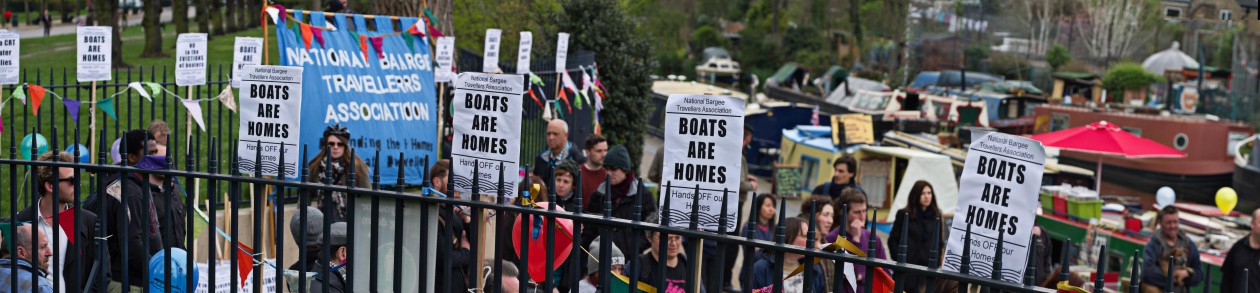
NBTA London campaign meeting – Kings Cross

The next National Bargee Traveller Association London meeting is on the Saturday 14 March at 3pm at the Star of Kings pub, 126 York Way, Kings Cross, London N1 0AX

canal boat

On the agenda is what should we do about the new licence terms and conditions and the new enforcement policy. We will be discussing monitoring and potential events and activism. Also we have been contacted by TV news crews about the new enforcement policy and this will be discussed too.

We will also be discussing the forthcoming legal advocates case officer training course and how to volunteer.

THE CONTINUOUS CRUISING CASE CRT COULDN’T WIN

NATIONAL BARGEE TRAVELLERS ASSOCIATION

 PRESS RELEASE                                                                                            22nd February 2015

                              THE CONTINUOUS CRUISING CASE CRT COULDN’T WIN

 The Canal and River Trust settled with a boater on a section eight case focusing on distance and kept the outcome confidential in a continuous cruising case last year, reports the NBTA.

The case of CRT v Wingfield (3NG01237) was heard by HHJ Pugsley in Chesterfield County Court on 3rd and 4th March 2014. The resulting court order included a confidentiality clause preventing anyone from disclosing the terms of the settlement.

boats ladbroke grove

 Mr Wingfield normally travelled between Loughborough and Newark, two places 36 miles apart by water. On Christmas Eve 2012 he travelled to Nottingham and got trapped in floods on the River Trent for two months. This meant he was targeted by an enforcement officer, who terminated his boat licence, even though Section 17(3)(c)(ii) of the British Waterways Act 1995 allows stays of longer than 14 days when it is “reasonable in the circumstances”.

 Nick Brown, Legal Officer of the National Bargee Travellers Association (NBTA) said “We believe that CRT settled with Mr Wingfield because they knew they could not win, given Mr Wingfield’s cruising distance and the fact his licence was terminated when he was trapped in floods”. He added “It is significant that the case was heard in full before CRT decided to settle. The Judge must have given a strong indication that CRT did not have a good case for terminating Mr Wingfield’s boat licence”.

 Mr Wingfield discussed his past cruises, the 2012-2013 floods and the enforcement action on Facebook and other forums in early 2013. Boaters advised him to contact the NBTA, who referred him to a solicitor.

 A letter from Nottingham County Court to the NBTA on 18th June 2014 stated “The Order of 4th March does specifically say that settlement was reached by the parties and that a copy of the settlement shall not be released to anyone other than the solicitors for the parties”. Normally CRT publishes the court orders it obtains in Section 8 cases on its web site here https://canalrivertrust.org.uk/publication-scheme/publication-scheme/court-action-to-remove-boats-from-our-waterways

NOTES FOR EDITORS

  1. For more information contact the NBTA, press@bargee-traveller.org.uk or 0118 321 4128

  1. The NBTA is a volunteer organisation that campaigns and provides advice for itinerant boat dwellers on the UK’s inland and coastal waters.

  1. Boats can be licensed to use Canal & River Trust’s waterways without a permanent mooring under Section 17(3)(c)(ii) of the British Waterways Act 1995. This section states:

(ii) the applicant for the relevant consent satisfies the Board that the vessel to which the application relates will be used bona fide for navigation throughout the period for which the consent is valid without remaining continuously in any one place for more than 14 days or such longer period as is reasonable in the circumstances.

  1. The case was transferred from Nottingham County Court to Chesterfield County Court due to pressures on Court time.

STATEMENT ON CRT’S NEW POLICY FOR BOATERS WITHOUT A HOME MOORING

NATIONAL BARGEE TRAVELLERS ASSOCIATION

PRESS RELEASE                                                                                       15th February 2015

STATEMENT ON CRT’S NEW POLICY FOR BOATERS WITHOUT A HOME MOORING

The National Bargee Travellers Association (NBTA) opposes Canal & River Trust’s new policy for boaters without a home mooring. Canal & River Trust (CRT) declared last week that from 1st May 2015 it will refuse to re-license all boats that “don’t move … far enough or often enough” to meet its Guidance for Boaters without a Home Mooring – unless they take a permanent mooring.

image

The NBTA will take whatever steps are necessary to defend bargee travellers against this new attack on the right to use and live on a boat without a home mooring. CRT is effectively proposing to evict thousands of live-aboard boaters without home moorings from its waterways. We invite anyone who is worried or concerned about this threat of mass homelessness to join us.

CRT receives significant income from moorings and this move highlights how the marina lobby has been pressurising CRT and complaining about boaters without home moorings. British Waterways Marinas Ltd (BWML), a wholly-owned subsidiary of CRT, has put a great deal of effort into gaining residential planning permission for berths which it can sell at a premium. In 2013-14 BWML generated over 1.7 million in income for CRT. The NBTA believes CRT’s new policy is designed to maximise BWML’s income by forcing boaters who can afford it into moorings. Marina operators have put considerable pressure on CRT including complaints about the number of boats without home moorings. Marinas are finding it harder to make a profit because the market is now oversupplied with leisure moorings due to CRT and [previously] British Waterways’ greed in encouraging the development of new marinas.

CRT claims that there is congestion in certain waterway areas which it implies is caused by overstaying boats without home moorings. However, there are long stretches of waterway around the country where boats cannot moor because of collapsed banks, shallow water and concreted towpaths. If there is a genuine problem with congestion, all CRT has to do is carry out basic maintenance so that moored boats can spread out. If boats are overstaying, CRT already has sufficient enforcement powers to deal with this.

It is not within CRT’s legal powers to enforce its draconian new policy. It sets requirements that go beyond what is stated in the British Waterways Act 1995. How often boats should move is clearly stated in the 1995 Act, but the law contains no requirement to travel a minimum distance or to follow any specific cruising pattern beyond the 14-day limit. CRT itself has not stated what distance it considers “far enough”. Indeed, in December 2012 CRT’s own Towpath Mooring Q and A conceded that CRT would be acting beyond its powers to set a minimum distance.

The 2013 judgement in the case of CRT v Mayers confirms that it would be unlawful for CRT to set a minimum distance that continuous cruisers must travel to comply with the law. HHJ Halbert stated that repeated journeys between the same two places would be “bona fide navigation” if the boater had specific reason for making repeated journeys over the same stretch of canal, and that any requirement by CRT to use a substantial part of the canal network was not justified by the 1995 Act because the requirement to use the boat bona fide for navigation is “temporal not geographical”.

The new policy is likely to include the publication by CRT of maps which purport to define the places boats without home moorings must move between in order to be in a different place. In drawing these maps CRT has interfered with centuries of history and geography by deleting the names of many towns and villages and absorbing them into other places. “Place” is not defined in the 1995 Act. Boaters without a home mooring are simply required not to remain continuously in any one place for more 14 days.

If you are subject to CRT enforcement, if you disagree with this policy or if you have had enough of CRT’s harassment of itinerant live-aboard boaters, join the NBTA in challenging CRT’s unlawful actions.

NOTES FOR EDITORS

  1. For more information contact the National Bargee Travellers Association, press@bargee-traveller.org.uk or 0118 321 4128
  1. The National Bargee Travellers Association (NBTA) is a volunteer organisation that campaigns and provides advice for itinerant boat dwellers on the UK’s inland and coastal waters.
  1. Boats can be licensed to use Canal & River Trust’s waterways without a permanent mooring under Section 17(3)(c)(ii) of the British Waterways Act 1995. This section states:

(ii) the applicant for the relevant consent satisfies the Board that the vessel to which the application relates will be used bona fide for navigation throughout the period for which the consent is valid without remaining continuously in any one place for more than 14 days or such longer period as is reasonable in the circumstances.

  1. The judgement in the case of CRT v Mayers is online here http://www.bargee-traveller.org.uk/?page_id=23

National Bargee Travellers Association

30, Silver St, Reading, Berkshire, RG1 2ST

0118 321 4128

secretariat@bargee-traveller.org.uk

http://www.bargee-traveller.org.uk

Why localised agreements on distance and place are dangerous

Voluntary agreements between boating groups and  the Canal and River Trust can be legally significant to the detriment of all boaters, says London NBTA.

There have been cases in the past where the Canal and River Trust has put pressure on local boater community organisations and boaters representative meetings to ‘fix’ the definition of ‘place’ in the 14 day limit legislation and to define the amount of distance a boat needs to move to avoid enforcement. logo Currently the 14 day limit in the 1995 British Waterways Act should be the legal underpinning of any enforcement that CRT take against boats without a home mooring. The main legal powers available to CRT amount to Section 17 (ii) of the BW Act, which states that CRT must licence boaters with no home mooring as long  as they use it  “bona fide for navigation (for the period of the license) without remaining continuously in any one place for more than 14 days or such longer period as is reasonable in the circumstances.” In other words, boats without a home mooring have to move to a new place at least every 14 days.

However, CRT often act to undercut this basic rule. One of the ways they have done it in the past is by supplementing ‘guidance’ to the rule, by agreeing definitions of distance and place with both individual boaters and groups of boaters and, it appears, more recently by adding terms and conditions to the boat licence that are potentially beyond what the law says is required. Currently, in the London area, we have had the trial ‘place’ maps proposed and rejected by Boaters groups involved in CRT ‘Better Relationships Meetings’, and – more recently – by agreeing individual bespoke ‘cruising plans’ with boaters who are threatened with enforcement and having their license terminated. The problem is that such agreements and possibly long standing and unchallenged licence terms and conditions, – even though they may be localized and agreed by both parties – can have an knock on effect on legal cases and could affect all boaters.

The following hypothetical case study could illustrate why: Boaters on the river Ooze and CRT have a nice cup of tea together and a local voluntary agreement is made that boaters need to clock up at least 24 miles a year with no return to any given place more than twice a year. Places are voluntarily defined, marked on a map and are roughly about a mile long.

However, Boater A, on narrowboat ‘Kropotkin’, does not agree with voluntary agreements about distance, 24 miles is too far for her because she has no car, just a bicycle, and has to get her child to primary school and hold down a part time job anyway. she decides to ignore the voluntary agreement, she wasn’t invited to the meeting anyway, and follows her usual pattern. In one year, she moves 12 miles, moving at least every 14 days, logs her movements and returns to one place three times.  

Unfortunately, she gets enforced, and CRT applies to the County Court for confirmation that their section 8 powers to remove the boat may be exercised in the circumstances, to allow them to haul her boat out of the canal. Boater A (or their lawyer) argues that the guidance is voluntary and she chose to ignore it as she didn’t consider it to be a fair interpretation of the 1995 BW Act and would also have found it hard to get her kids to school. CRT’s lawyer argues to the judge that their interpretation of the BW 1995 Act Section 17 (3)(c)(ii), – AKA ‘the 14 day rule’ –  in this particular case, is an extremely reasonable one, is actually less than the act requires and is based on the voluntary agreement made between themselves and “reasonable” boaters on the River Ooze. Other “reasonable” boaters, they say, some of whom have kids, are abiding by this voluntary agreement with no problems, but boater A is a troublemaker and is abusing both the law and the goodwill of the other boaters, they say. If the judge does not grant the order, they say, he will be disregarding the wishes of the “reasonable” boaters and endangering CRT’s ability to manage the canal. (yes I know claimant goes first – but give me a narrative break!)

The judge considers the arguments and grants the order. Boater A can either appeal or loses her home. She may even be chased by CRT for costs. If she appeals and loses, then, depending on the wording of the judgement and the rank and self-importance of the judge, the guidance may even set legal precedent. This legal precedence can then ‘fix’ the interpretation of the legislation for County courts and be used by CRT lawyers as a very very strong steer in other appeal cases, and not just on the river Ooze, but nationally.

According to a senior lawyer experienced in boaty legal cases, this case study “illustrates the danger of the knock on effects of local voluntary agreements.” He added that: “A county court or high court decision is strictly speaking, not a precedent, albeit it may be ‘persuasive’. CRT like to try and rely on BWB v Davies (a previous court case that explored distance and place) even though that is only County Court and the judge specifically refused to pass comment on the continuous cruising guidance. ”

London NBTA is compiling research on bespoke individual agreements made with individual boaters under threat of non-licence renewal or other penalties. Please get in touch with us in confidence at NBTA London  nbtalondon@gmail.com if you are in this situation.

A volunteer organisation formed in 2009 campaigning and providing advice for itinerant boat dwellers on Britain’s inland and coastal waterways