March on CRT’s offices! Stop the surcharge!

Canal and River Trust (CRT) which manages most of inland waterways in England and Wales are marginalising travelling boat dwellers by planning to levy a ‘surcharge’ to boaters for not having a home mooring. CRT are trying to destroy our nomadic way of life. Let’s come together to oppose the surcharge on our community.

National protest to march on CRT’s boss Richard Parry’s offices in Central Birmingham on Saturday 25 November at 12 noon! Fight CRT’s divisive licence fee hikes!

Get ready to march in protest!

Join us on the march, meet at City Centre Gardens in Birmingham

If you can, bring boats and moor them outside their offices.
Let us know if you want to be involved:

 stopboatlicencediscrimination@gmail.com

The facebook event for the march:

Protest against surcharges for itinerant boaters | Facebook

It follows a massive campaign meeting on 8th October where approx 300 attendees throughout the meeting.

This is showing a strong opposition to CRTs Licensing boats without home mooring surcharge, and lots of productive discussion and ideas.

Download leaflet for protest here:

Transport to the protest

Car share whatsapp group

Here is a group for discussing and organising car shares to the Birmingham protest:

https://chat.whatsapp.com/ILqAoOiuJEw2VvqxpMUeNQ

If you don’t have whatsapp, email us on stopboatlicencediscrimination@gmail.com

Coach from London

Please get a ticket for a coach to Birmingham from Hackney here:

https://buytickets.at/nbtaprotestsurcharge/1048376

Next general campaign meeting

Next general campaign meeting is on the Monday 20 November at 7pm

The online meeting can be accessed online via:

https://8×8.vc/nbta/nbta

Alternatively, you can use these dial in details:

+44 330 808 1706

PIN: 45925961#

Get involved in the campaign working groups

If you want be added the licencecampaign@lists.riseup.net campaign email list or be added to the campaign WhatsApp groups, ask us to add you by emailing: stopboatlicencediscrimination@gmail.com


NBTA London needs your support to carry on our work. Please get in touch here if you would like to volunteer with us. Alternatively your donations are vital to us supporting boaters with their legal case work, campaign banners and other printed material as well as events. You can help us with your donations online here


LICENCE DISCRIMINATION: The Canal & River Trust’s plan to eradicate a whole way of life!

Itinerant boaters have yet again become moving targets for CRT, this time with the excuse being financial – the weight of their budget shortfall is to be somehow paid for by surcharging the licence of boaters without home moorings an escalating amount over 5 years. With only 2% of CRT income coming from boaters without permanent moorings, the new surcharge is relatively inconsequential for them, but potentially life-changing for a largely marginal community of itinerant boaters, some of whom face being priced off the waterways they call home. Dividing boaters into multiple sub-groups, and setting us against each other regarding who should subsidise the other, doesn’t raise finance, but rather helps them rid the waterways of the undesirable, financially insecure travelling boaters they resent having to accommodate. Boaters are coming together, resolved to defend our way of life and demand the continuation of one licence for all.

It’s not about the money.

Are CRT serious about their finances, or the canals, at all? It is simply not feasible, or financially sound, for boaters without home moorings to subsidise canal use for those who can afford home moorings. To illustrate the short-sightedness and imbalance of this proposal, an alternative annual 1% increase above inflation across all boat licences would generate more income – AND without heartlessly and knowingly driving many pensioners and low-income earners who live on boats without home moorings into hardship and poverty. An increase of 2% across all licence holders would raise double the revenue!

In fact, it’s more likely that this initiative will lose money on balance – unaffordable licence costs lead to more defaulting and unlicensed boats – criminalising their inhabitants and costly Section 8 1983 British Waterways Act  ‘canal eviction’ proceedings – at £10,000.00 each by latest estimates.

We believe this is discrimination.

A brief look at the past suggests this is part of a longer history of discrimination. For decades, waterways management have been trying to rid the navigation of  itinerant boaters:

  • In the Bill which became the British Waterways Act 1995, British Waterways (the state-owned predecessor of CRT) wanted it to be a criminal offence to keep a boat on the waterways without a home mooring. 
  • In 2002 in an attempt to encourage itinerant boaters onto moorings, they proposed a licence for boats without home moorings at 2.5 times the normal licence price. 
  • Enforcement strategies to make boaters travel 120 different lock-miles every 3 months without turning back were entertained in 2003
  • In 2005 the proposed increase for boats without a home mooring was 147%. 
  • In 2008, proposals to increase the tariff by £150 were again successfully challenged.
  • Rather than implement an increase in 2017 which would be “fairer and less complicated” in charging us more, they halved the early payment discount, put a surcharge on wider boats and have been replacing miles of moorable towpath into chargeable moorings and introducing over-zealous ‘safety zones’ ever since. 

Why have their efforts always failed? Because, aside from being  discriminatory, impractical and unpopular, they are also unlawful. Section 17(3)(c)(ii) of the British Waterways Act 1995 enshrines in law  “the right of all licence holders to use and live on a boat without a home mooring”. The licence comes first, not the circumstance in which you use it. 

They’ve had more than enough time, and knowledge to prepare for this.

They’ve always known government funding was going to end, and they’ve had much longer than planned – and more funding – to transition to a self-sustaining model. Instead of using the time to make best use of their sizeable endowment from the state, they have mismanaged and wasted their resources, outsourcing key functions at massive cost, asset-stripping and prioritising ostensibly charitable initiatives that don’t make financial sense, such as public volunteering and failed fund-raising. Using the upcoming reduction in funding and their inability to respond ethically to rising boat numbers on the canals, they’re disingenuously playing the victim, and using it as pretext to turn on their old punch bag yet again – itinerant boaters.

CRT is making unsubstantiated claims about the impact of our way of life.

Claims regarding itinerant boaters enjoying “greater utility in use of the network” and “greater impact on ageing infrastructure” are not backed up by any evidence and do not reflect real experiences of the waterways – demonstrating further CRT’S disconnection from the realities of the public infrastructure they are responsible for.

There is no proof itinerant liveaboard boaters put more strain on the network’s facilities than other boaters. In fact, seasonal and leisure boaters with home moorings – and to a greater degree holiday hire boaters – are likely to have an equal or heavier toll on facilities and infrastructure, as they lack experience and treat the waterways as someone else’s problem when things aren’t looked after. Many also travel further, and with more people on board, which also takes its toll..

In addition – due to inconsistent availability and frequent malfunctioning of CRT facilities – we often use private facilities for water, waste disposal and rubbish. We are not enjoying the services we already pay for, and are aware of proposals to reduce services further.

We’re an asset to the waterways in ways that CRT refuse to acknowledge.

Evidence and simple logic suggest facilities are better off with us using them year-round – (such as preventing the wood in lock gates drying out and cracking and steel mechanisms rusting during winter) and regularly reporting wear and tear, and often even doing maintenance ourselves (removing fallen trees or cutting back foliage in under-maintained areas).

Looking further back, much of the waterways network was un-navigable in the 70s and 80s – it was predominantly itinerant boaters who opened it up and now keep it moving. We bring safety and community to previously no-go areas of cities and the countryside. We’re a unique

feature of canals across the UK, and a part of the ecosystem, keeping the canals alive – without us they would be desolate and falling into disrepair.

CRT hide behind public misunderstanding of their ‘charitable’ status, and manipulated data from a flawed public survey. 

Data from CRT’s own ‘consultation’ survey which they used to justify this licence surcharge showed that – despite the biased and misleading way questions were phrased – still a majority of 60% of boaters chose options which did NOT include charging boats without home moorings more – they have manipulated the results to make a case for a discriminatory tariff on our way of life.

What do they really want?

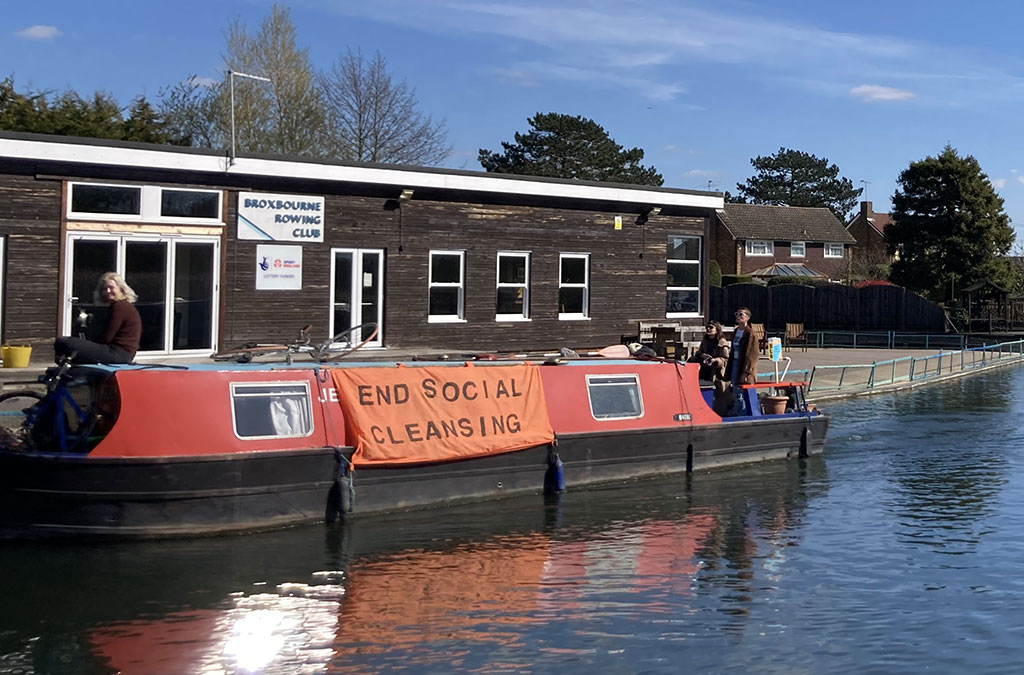
CRT (and BW before them) seem to wish to socially cleanse and curate the waterways for luxury, leisure, affluent mooring cost premiums, especially in urban areas, turning them into un-navigable leisure resorts for walkers and cyclists only. This in the context of wider social dispossession, underfunding of public services, and widening inequality – with the poor and marginalised subsidising the rich and secure.

What do we want?

We’d like recognition of the value itinerant boaters contribute to the waterways, decent services for the money we already pay, and one set of increases applied equally and fairly to all. 

Generating finance fairly ought to be within the remit of a charitable trust. The proposed surcharge and its rationale are insincere political manoeuvres designed to segregate and marginalise travelling boaters, with no serious concern for canal management finances at all.
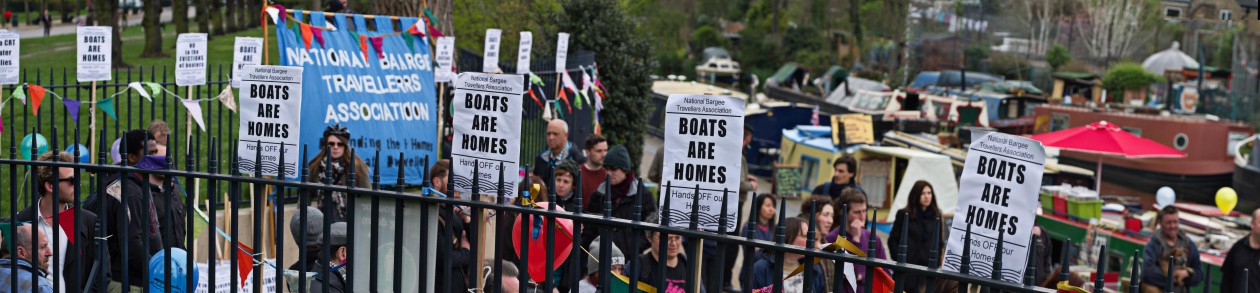
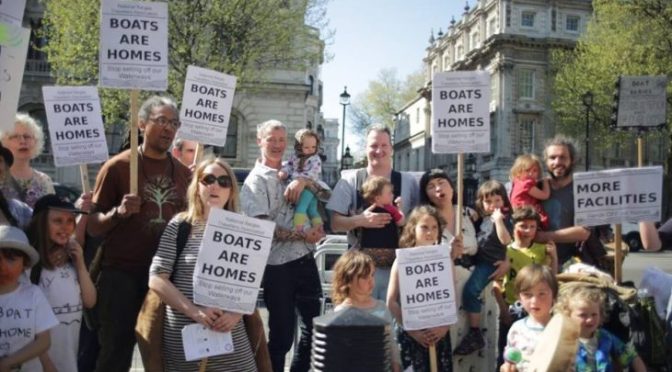
Call To Fight CRT’s Divisive Licence Fee Hikes

CRT have been putting up our license fees over the last two years and they plan to further increase this over the next five years.

Our licenses went up 8% in 2022, 9% in 2023, and they now plan to put them up another 6% on that already vastly inflated figure in 2024 – an increase 23% in just three years, with further increases planned.

On top of this CRT are introducing a ‘surcharge’ for boats without a home mooring from April 1st 2024. This differential pricing based on your mooring status is part of a thinly veiled objective to price itinerant boaters off the water.

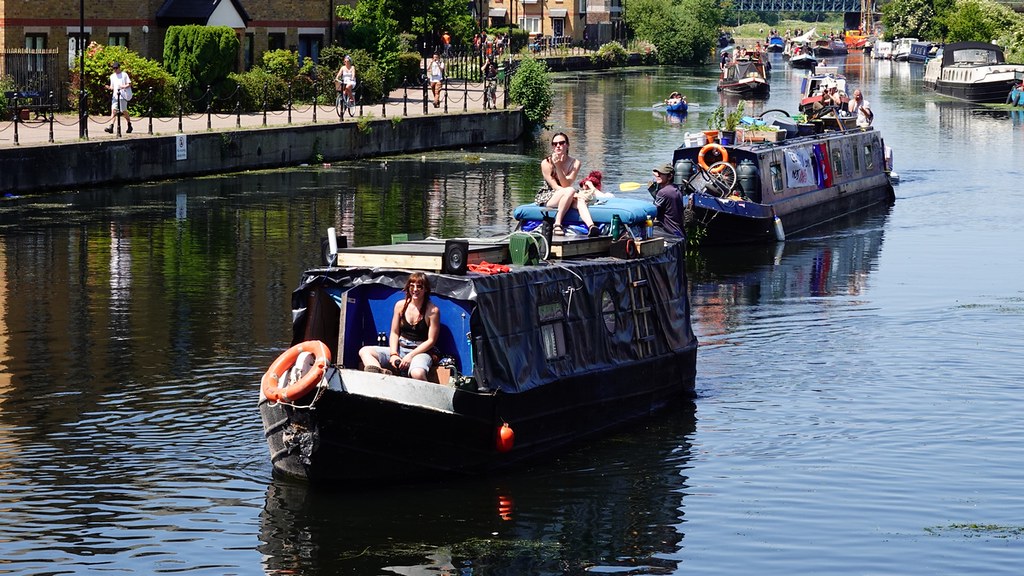
Lower Lea, hackney 2022

CRT claims that this differential licence proposal is the ‘fairest’ way to reduce their current financial problems and maintain the crumbling waterways infrastructure. But those financial problems and the precarious nature of the waterways are due to their mismanagement. Whether it’s spending money on vanity projects such as a new logo or paying subcontractors hundreds of thousands of pounds to enforce their ill-conceived mooring schemes, CRT’s finances are in tatters because of their own negligence.

When it comes to claims of ‘fairness’ it doesn’t take long to see that for CRT, ‘fairness’ is just a deceptive term they use to hide their real agenda – marginalising, penalising and eliminating boaters without a home mooring. Whenever they talk about ‘fairness’ it is always a preamble to making our lives more difficult.

CRT have proved that they cannot be trusted; they cannot be trusted with their finances, they cannot be trusted with keeping the waterways system maintained and they cannot be trusted with our wellbeing.

We believe this to be the largest orchestrated attack on our way of life in years and we are going to stand strong and oppose it vociferously. We want you to stand with us.

Join the NBTA to have your say. Tell us if you oppose CRT’s latest proposal and if so, what you are prepared to do to fight it.

Get involved in the licence campaign working groups

The WhatsApp community with all the licence campaign working groups can be found here:  https://chat.whatsapp.com/DtsGWzLyUMR7QdBiWGZ8QI

If you want to be added to the campaign email list, please email us and ask to be added: stopboatlicencediscrimination@gmail.com

Itinerant boaters win right to £600 Government energy grant, but thousands still left out in the cold

After the great efforts of the National Bargee Travellers Association (NBTA) and others campaigning for the Government’s energy grant, many itinerant boat dwellers on Canal & River Trust (CRT) waterways are now entitled to £600 each. However, a large proportion of the boating community is still being ignored.

On 17th August 2023, the Department for Energy and Net Zero (ESNZ) and CRT announced that 7,000 liveaboard boaters without a home mooring would receive a £600 voucher redeemable for cash.


The NBTA were the first to get in touch with the Government to highlight the fact that many boaters were missing out on the energy grant that was meant to be available to all households in the UK. They went on to work together with the National Association of Boat Owners (NABO), Friends, Families and Travellers, Derbyshire Gypsy Liaison Group, London Gypsies and Travellers, and the Canal & River Trust in campaigning for the grant which includes £400 for Energy Bills Support Scheme – Alternative Funding and £200 for Alternative Fuels Payment – Alternative Funding. CRT only started talking to the Government about this issue months after the NBTA began their campaign, and that was only after NBTA and other boaters put pressure on CRT to do so.

To be entitled to the voucher, you must have held a licence as a “continuous cruiser” for a minimum of one day between 27th February 2023 and 31st May 2023 on Canal & River Trust waterways. If you sold your boat during this period then you will still get the grant retrospectively. No receipts will be necessary.

ESNZ have informed the NBTA that vouchers will be sent (in order of preference) to:

– An email address;
– If no email address, then by SMS to the registered phone number;
– If no email or phone number, by post to the registered postal address.

There is no fourth option.

Many have now received an email with the voucher that pays the money directly into their bank accounts. The money can also be withdrawn as cash at a PayPoint retailer.

This win was the result of a concerted effort by dedicated people who took up the fight for inclusion and their efforts are hailed by the wider community. “Together, boaters have fought hard for our community and won a victory here,” says a spokesperson for NBTA. “This grant is not a gift from the government, but the result of concerted action and pressure to hold them to their word. The NBTA celebrates that effort and demonstrates what communities like ours can do when we come together and organise for recognition and protection of our way of life.”

Earlier this year, a group of boater activists led a flotilla of boats from Braunston to London on a 15-day journey south to draw attention to the issue and pressurise the Government to follow through on their promise to provide financial support during the spiralling cost-of-living and fuel crises in the UK. The boats moored in Paddington Basin around 1pm on Saturday June 10th and were greeted by a group of supportive boaters in the area, many of whom had also been campaigning.

On 19th June 2023, the boaters handed a petition into Downing Street calling on the government to reverse the exclusion of itinerant boat dwellers and others without a fixed address from receiving the energy grant. The petition was started by the NBTA and gathered just short of 5,500 signatures.

Flotilla boater Kim Marshall handing in the petition at Number 10

The flotilla and petition hand-in were supported by the NBTA, who have been campaigning for the inclusion of itinerant and off-grid communities since the beginning. NBTA Chair Pamela Smith said: “The fact that boaters travelled half-way across the country to deliver the petition shows the strength of feeling that continues to animate our community on this issue. The government may think that by ignoring us we’ll simply go away, but they’re wrong.” She continued, “Not only has the failure to include boaters and others without a fixed address led to immense hardship this winter gone, it’s contributed to a real and enduring loss of boaters’ trust in the government to deliver for them on a basic level. Boaters will continue to make their anger about this rank unfairness known to their representatives, whether via legal proceedings, continuing to lobby their MPs or when they next have the opportunity to go to the polls.”

Ministers first announced on 26th May 2022 that “every household” would receive at least £400 off their energy bills. But it turned out that only households with a domestic electricity meter qualified. No provisions were made for the many thousands of people in the UK who live off-grid for whom the increased cost of living has placed an immense financial burden, just like many others in this country.

Many itinerant liveaboard boaters are on low incomes or pensions, with 48% earning less than £20k per year. With rampant inflation, stagnating wages and the cost of fuel and food skyrocketing, many are struggling to make ends meet. Most rely on diesel engines to navigate, bottled LPG gas to cook and heat water, and other forms of fuel to heat and light their boats. Many boaters have found their finances dramatically impacted by the cost of fuel to stay warm during the colder months and with no government assistance until now, some are still struggling to recover from last winter.

This win follows on from NBTA’s success in late 2022, when they forced the Government to agree to include residential boaters with home moorings in the grant scheme. Now, over a year after the Government’s initial announcement, another group of boaters have finally received money off their energy costs.

However, while the extension of the voucher scheme is a step in the right direction, it only helps itinerant liveaboard boaters who were licensed as itinerants on CRT water in February, March, April or May 2023: 7,000 people out of a liveaboard boater population many thousands more.

So, this is not the end of our fight. Many people – including itinerant boaters on non-Canal & River Trust waters, some live-aboards with a home mooring, and those living itinerantly on land – remain excluded, despite the grant being promised to every household in the UK. Of 900,000 people thought to be eligible for the grant, around 700,000 are still in limbo. The NBTA will continue to communicate with the government in support of and in solidarity with these communities to ensure that the government truly delivers on that promise.

Boaters have been asked to make sure their contact details are up-to-date on the CRT database by 21st September 2023 *new date* as the Department for Energy and Net Zero would be using CRT’s database to determine who should receive the funds. Vouchers will then be received in week commencing 25th September. Payments will be made until 23rd November 2023.

If you miss out because you were not licensed by CRT during this period, or for any other reason, and you think you are eligible for Legal Aid, please contact the NBTA by e-mail or phone.

Risk Assessment Confirms River Lee ‘No Mooring’ Zones are ‘Not Necessary’

The Canal & River Trust’s (CRT) failing ’Water Safety Zones’ scheme on the River Lee has been dealt another blow after a risk assessment confirmed that the expensive and unpopular zones are ‘not necessary’.

Once referred to by CRT as ‘Water Sports Zones’, these designated areas on both the Lower and Upper Lee – close to the Lea Rowing Club in Hackney and Broxbourne Rowing Club in Hertfordshire – are a part of CRT’s strategy to remove the number of places where boaters can moor, and to force the itinerant liveaboard community off the water.

Initially CRT had plans to get rid of 550 mooring spaces along the River Lea, where boaters have the right to moor for up to 14 days at a time. Following a sustained campaign of resistance from the boating community (many of whom have continued to moor on the sites despite harassment and failed attempts at enforcement) CRT relented on the full threatened 550 mooring spaces. However, they continue to try and eliminate 295 mooring spaces.

CRT have been unable to provide a clear reason for these ‘No Mooring’ Zones, and despite constant requests have not released any assessment that explains why these sites should be ‘No Mooring’. The National Bargee Travellers Association (NBTA) finally ran out of patience and commissioned an independent risk assessment at three of these ‘No Mooring’ Zones themselves. This assessment, carried out by a qualified and experienced IOSH and IIRSM Risk Assessment professional at three of the ‘No Mooring’ Zones, concludes the following:

‘Boats moored in this area cannot be considered an additional risk as they comply with national standard practice(…) Mooring restrictions at these sites are not necessary’.

The resulting verdict goes on to suggest that it is more important for craft – including row boats – to manage their speed effectively to avoid any potential incidents.

The ‘No Mooring’ Zones policy is designed to make life difficult for many boaters, and could ultimately drive them off the water and out of their homes.

Daniel Prada is an itinerant liveaboard boater who has been moored on and off on the ‘No Mooring Zones’ this year, including on one of the sites the risk assessment covers. He said:

“It’s clear to me that this has never been about safety. The Lower Lee is one of the widest waterways in the whole of CRT’s South East waterway region and I’ve never seen any issues with the navigation at all because of moored boats. Honestly, this just feels like another way for the CRT to put pressure on boaters and make our life more difficult. This is my home – it’s where I’m raising my daughter. To have CRT try and force me out of it just makes me more resolved to defend it so that the waterways can remain a place for everyone.”

CRT has recently put out a series of announcements regarding their money issues, blaming everyone but themselves for the holes in their finances. However, a Freedom of Information request shows that as of 31 May 2023, the Trust has wasted anything up to £249,680.09* on the Water Safety Zones – much of it spent on outsourced enforcement contracts with companies like District Enforcement.

Marcus Trower, of NBTA London

Marcus Trower, of the London branch of the National Bargee Travellers Association (NBTA), has also been continuing to defy the ‘No Mooring’ Zones. He said:

“The NBTA has continuously tried to engage with the CRT to address legitimate safety concerns, but this risk assessment confirms what we knew all along – that the so-called ‘water safety zones’ have never been about safety, and have always been about trying to erase our community from our homes, impoverishing the waterways as a result. Boaters have mounted an incredible resistance to this dishonest, wasteful and fundamentally doomed policy for years, ever since it was first announced. The news that CRT has been lying about their intentions all along, and wasting hundreds of thousands of pounds – which we provide through our licence fees – in the process will only galvanise our community further. CRT needs to stop mismanaging both their finances and the waterways in general, and get their house in order. We will continue to resist, protest and push back at any and all further attacks on the boater community with all means at our disposal.”

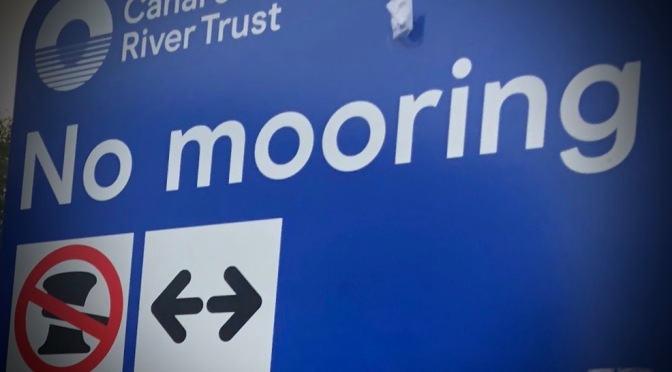
No Mooring Sign in the ‘Safety Zones’ covered by boaters with a bin bag

The campaign of resistance against the ‘Water Safety Zones’ continues in full swing. Many boats continue to ignore the ‘no mooring’ signs and resist CRT’s campaign of harassment, and in May of this year hundreds attended the NBTA Spring Fayre – a celebration of the boater community held at one of the key sites that the CRT is trying to erase boaters from in Hackney.

*CRT caveats this figure, saying it is the total spend in the ‘Water Safety’ Zones, and so may cover costs relating to other Trust activities. However, after the recent spate of new ‘No Mooring’ signs erected in both areas, this number will certainly have risen since May already.

Freedom of information request here:

https://www.whatdotheyknow.com/request/third_party_contractors_safety_z#banner


NBTA London needs your support to carry on our work. Please get in touch here if you would like to volunteer with us. Alternatively your donations are vital to us supporting boaters with their legal case work, campaign banners and other printed material as well as events. You can help us with your donations online here


NBTA FIGHT BACK AGAINST LICENCE FEE CONSULTATION

In February earlier this year, the Canal and River Trust (CRT) sent out an email announcing their upcoming “Consultation on future boat licence pricing”. The preliminary email stated that the purpose of the consultation was “to gather feedback on boat licence pricing over the next ten years to help support the long-term future of the 2,000 miles of waterways”. Three weeks later, boaters started to receive the invitation to the consultation from a company called DJS Research, who CRT had employed to undertake the process. In our invitation, we were told in no uncertain terms that CRT will be raising the boat licence fee “by more than the rate of inflation for the foreseeable future” and what CRT supposedly wanted from us was to help them find the “fairest way to apply these increases”. 

Reeling from the shock of being told our licence fees will increase yet again, we cautiously opened the survey only to discover an extremely leading, divisive and biased set of questions, heavily aimed at raising the licence fee for boats without a home mooring specifically. Knowing that this consultation went out to all boaters, those with and without home moorings, the consultation felt very much like it was pitting boater against boater. 

In two out the first three questions, it was suggested that the licence fee for boats without home moorings should rise. A third question focused specifically on whether it is more or less reasonable to charge higher fees for “continuous cruisers”, with no option of saying “not reasonable in the slightest”. The questions in this survey were clearly implying that boats without home moorings should be priced differently to boats with home moorings. CRT may as well have asked: “Should we raise the licence fee for: a) continuous cruisers; b) boats without home moorings; or; c) itinerant boat dwellers?”.

As such, the NBTA saw the potential results of this consultation as a direct threat to our community, so we produced a set of suggested answers to all the questions. Our suggestions aimed to provide answers that would not divide boaters and instead encourage every boater to stand together in the face of rising fees, the opposite to what CRT seemed to be driving at with their questions. Our campaign was nationwide; information leaflets detailing the threat of the consultation were distributed across the CRT network, and we had a huge social media outreach drive. We hope that we managed to reach boaters everywhere, and thwart the very biased views CRT were pushing.

This consultation seemed to be yet another part of CRT’s continued assault on the itinerant boat dweller community and their bid to force us off the waterways. and of course there is their history of attempting to raise licence fees for itinerant boaters specifically (you can read about these in detail here). When the numerous aspects of this sustained effort are considered, it is not hard to see a pattern emerge. CRT have taken away facilities, mooring rings and bollards, and mooring spaces (only to replace them with bookable moorings in some cases), and of course there is their history of attempting to raise licence fees for itinerant boaters specifically (see the history article in this newsletter for more details). Itinerant boat dwellers have been targeted by CRT for decades, and if they get away with pricing boats without home moorings differently to those with home moorings, they will be able to price itinerant boaters out of existence.

The results of the consultation are now due to be published in October 2023. If CRT decide to use their survey to justify a decision that has harmful consequences for our community, we will show them that that would be more trouble than it’s worth.

The NBTA would like to thank everyone who filled in CRT’s leading and divisive survey. Thank you to everyone who helped encourage others to fill it in, to the people who put it on social media, to those who chatted to people, and especially to the people who handed out the ‘Don’t let CRT price us off the water’ leaflet across the CRT network. Together, we are a strong community who will not be bullied off the waterways.


NBTA London needs your support to carry on our work. Please get in touch here if you would like to volunteer with us. Alternatively your donations are vital to us supporting boaters with their legal case work, campaign banners and other printed material as well as events. You can help us with your donations online here


CRT ACCOUNTABLE TO WHOM?

Along the waterways, there are signs claiming the Canal & River Trust relies on donations to do its work. A quick look at their annual report shows donations account for a relatively small amount of the Trust’s income, at 3% for 2021/22. Boat licences and moorings, however, make up a fifth of the Trust’s annual income, at £44.5m for the last financial year.  

Income and expenditure are recorded in millions (not thousands or pounds), projects are listed in the abstract without breakdown of costs, charts show vague approximations without quantifying true percentage. In the 176 page report; the word “boater” is mentioned only 8 times, “licence” 6, “mooring” 10. 

The Canal & River Trust (CRT) is known to most if not all boaters who live on or use the waterways through London and beyond. The Trust operates as a charity and as such has charitable objectives, including to “preserve, protect, operate and manage inland waterways for public benefit… [and] improve the conditions of life for socially and economically disadvantaged communities who live nearby”.

The Trust may be best known among boaters for introducing more chargeable moorings, forcing through so-called “Water Safety Zones” that reduce available mooring spaces to boaters without a home mooring, and attempting to hike licence fees for boats without home moorings (again). It comes as no surprise, then, that the “financial strategy of the Trust is to maximise net income from all sources.”

So where exactly does CRT get its funds, and how does it spend the money? 

Despite being a charity, and claiming to rely on donations, charitable giving from the public accounts for only £6.5m (3 percent) of CRT’s income. They spend £41.6m on fundraising. 

£38.8 million came from charities in the form of grants from Historic England, the Active Travel fund, National Lottery, Green Recovery Challenge Fund and local Levelling up funds among others, often directed towards specific projects.  

£300,000 was left to them in peoples’ wills.

Tax exempt on income and profits from investments, a large portion of the Trust’s annual earnings comes from return on its investment portfolio. Value has increased 26% over the past five years, from £800m to over £1.1bn (yes, billion). With “ground rents [being] very resilient holdings over the long term”, last year, returns contributed to a third of CRT’s income. In fact, the submission to the Charity Commission shows an additional £76.7m of investment gains were retained for future use. While the Trust looks around for places to squeeze out a penny, they might also consider digging a little deeper into their own pockets. 

While external contractors are listed for reservoir inspection and property surveys, the cost of outsourced contracts is not. CRT has around 1,700 employees on the payroll and 3,700 volunteers, with 83 of its staff earning over £60k. Of those top earners, 10 earn more than £100k and 2 earn up to £250k… with community, volunteer and corporate groups removing “hundreds of tonnes of environmentally damaging litter and fly-tipping”, perhaps money might be better spent on bins.

A break-down of expenditure by region would be illuminating, as would some acknowledgement in the annual reporting of the fact that the CRT is the de facto local authority for several tens of thousands of people who live on boats as their primary residence.  As they make improvement to reservoirs, water pumps, towpaths, tree clearing, dealing with contamination and pollution, bridges, slipways and aqueducts and are concerned with the upkeep of towpaths for the 9 million reported fortnightly visitors, bins and taps have no mention at all. 

Additionally, NBTA London has recently submitted a Freedom of Information (FOI) request to CRT for the disclosure of spending on “Water Safety Zone” enforcement. With no apparent risk assessment or basis in evidence, could resources and effort be better spent elsewhere? 

Boaters will be most familiar with the Trust’s licencing income stream, which made up £44.5m in the financial year ending 2022. Of this, around half comes from licences, rather than mooring permits and trade. You would expect the Trust to take more of an interest in the wellbeing of liveaboard boaters, given they contribute a fair sum to the Trust’s balance sheet. While an aim of the Trust is the improvement of conditions of life for those in the vicinity of its waterways, its proposed increase in licence fees appears to care less for those who live on them. 

Trawling their high-level corporate finance and accounting jargon, boaters do not seem to figure in their calculations much at all. As their strategy is to “maximise net income” with the promise of being “unrelenting in their efforts to generate funds” it is likely the Trust will find other ways to pass on rising costs to boaters. The Chief Executive reported to the Board earlier this year that boater satisfaction remained on a downward trend. Making life better by water, perhaps, but harder if you live on it.


NBTA London needs your support to carry on our work. Please get in touch here if you would like to volunteer with us. Alternatively your donations are vital to us supporting boaters with their legal case work, campaign banners and other printed material as well as events. You can help us with your donations online here


CRT UP TO THEIR OLD TRICKS AGAIN

So this year CRT pulled out of their bag of tricks, one of the favourite waterways authorities questions: ‘Should people without a home mooring pay more than those with?’ And without much warning they actioned this into their new surprise survey. It’s not the first time CRT or their predecessor British Waterways (BW) brought this question out. Within the last 21 years they have bought it out four times.

In the Bill that became the British Waterways Act 1995, BW wanted it to be a criminal offence to keep a boat on BW waterways without a home mooring. However, with an almighty pushback we instead got an Act which gave us the legal right to exist on BW waterways. This was quite a setback for BW, it had for the 20-30 previous years been making life on the water harder. Now it was law that they had to licence our boats as long as we followed three basic criteria. Therefore, BW and following them CRT had to come up with some inventive ideas to deal with their persistent pest – the travelling boater.

They tried a few different tactics in their attempts to eliminate our community from the waterways, from reducing mooring stay times to taking away moorable banks to outlandish enforcement strategies such as 2003’s plan to make our travelling boaters travel 120 different lock-miles every 3 months without turning back. Some plans were beaten back, others weren’t. So far each time BW and CRT have proposed that boats without home moorings should pay more; it has been successfully resisted.

In early 2002, BW stated that they believed the licensing system was “felt by many to be unduly complicated”, in a document entitled ‘A fresh look at BWs craft licensing structure:

Consultation Paper for Boaters May 2002′. They proposed a more complicated tiered licensing system where they would increase the licence fee for a boat without a home mooring to 2.5 times that of the normal licence fee. In their document they even argued, ‘there is a compelling argument for a ‘pay as you go’ system’.

Later that year, after doing a bit a consultation they published ‘A fresh look at BW’s craft licensing structure: Consultation update’. Here BW put boats without home moorings into four categories: genuine continuous cruisers, bridge-hoppers or short range cruisers, static “live aboard” boats and boats awaiting a mooring. Just for clarification, BW considered bridge-hoppers or short range cruisers were people who “moved less than 50 km in any three month period”. They were concerned that if they charged boats without home moorings more then they would harm the “genuine continuous cruisers” as well as the other types of categories they’d coined without home moorings. Therefore, they proposed that boats without home moorings who moved within a range in one region “pay a district mooring fee equivalent to the lowest priced BW permanent mooring in the area where your craft is normally kept or used”. Under pressure, this idea was also discarded.

In a 2005 document entitled ‘Licence Fee Consultation June 2005’ BW proposed to increase the licence fee for boats without a home mooring by 147%. It was identified in a report by BW entitled ‘Fee Structures for Boat Licences in England and Wales White Paper’ in the same year, that if implemented it would have raised £1million from only 1,360 boat licence holders.

A group called the Continuous Cruiser Action Group was set up to coordinate boaters responses to the consultation.

A section of boaters organised themselves against it and set up a campaign mobile phone group. Some of the organised boaters travelled across the nation and painted the phone number on locks asking people to get involved. The phoneline became inundated with texts of people wanting to do something. If BW didn’t back down the plan was to send text messages for people to meet at a list of different lock pinch points and do a go slow flotilla to cause disruption. BW backed down so the resistance plan didn’t need to implemented. At the time in 2006, the Continuous Cruiser Action Group made a statement saying, “just because all has gone quiet, it isn’t over”. They weren’t wrong.

In early 2008, hire boat company Wyvern Shipping circulated a petition calling on BW to make continuous cruisers pay a higher licence fee. In January 2008, Sally Ash BW’s then Head of Boating had received a letter from the Association of Pleasure Craft Operators (APCO), the hire boat companies’ trade body, threatening a drop in BW’s licence income if BW increased the cost of hire boat licences.

In September 2008, BW issued a consultation document to the User Groups entitled ‘Boat Licence Fees – For information and comment on by Waterway User Groups’. This document included a proposal to increase the licence fee for boats without home moorings by £150 in comparison to the published tariff. BW also proposed to introduce higher licence fees for widebeam boats. However, once again boaters organised and beat these plans back.

Then in 2017, CRT announced that the licence fees system was “outdated” with the ridiculous lie that licence fees have never been reviewed. They argued that licence fees were “complex”, “unfair”, “outdated” and that their consultation into the fees would be “cost neutral”. This so called cost neutral consultation had three stages and had to change research company for the third stage.

We in the NBTA were involved in each part of the consultation. All the way through this process, CRT attempted to divide boaters, putting forward the question again about charging boats without home moorings more than those with. Therefore, we spent this time preparing to be ready to ballot our members for a licence fee strike if we had to. We weren’t going to let CRT price us off the water!

Again, it didn’t come to that. CRT decided not to take us on at that time. So they decided to halve the early payment discount, pick on wider boats and further made a statement saying they would think about how to deal with the London waterways problem; separately. This thinking has led CRT to plan to implement chargeable moorings on 1.1km of London’s regular towpath. In a meeting between NBTA and CRT this year, CRT revealed that they still haven’t implemented this plan because they haven’t been able to hire someone suitable to manage the project. While that plan is still apparently to be implemented, CRT has reached back into the bag of tricks and found the same old question, once again hoping for different reply.

As in the past, we must show the waterways authorities we aren’t a community that they can push around and do whatever they want with. We aren’t a social problem that needs culling, our way of life is worth defending and together we can beat them back! Please get involved. If you think the lifestyle of travelling without a fixed address should continue to be defended, then join us here: https://nbtalondon.co.uk/about/welcome-to-the-nbta/ or email nbtalondon@gmail.com.

Featured image by David Mould on Flickr


NBTA London needs your support to carry on our work. Please get in touch here if you would like to volunteer with us. Alternatively your donations are vital to us supporting boaters with their legal case work, campaign banners and other printed material as well as events. You can help us with your donations online here


Elmbridge moorings under threat from Council’s proposed Public Space Protection Order

Elmbridge Council is seeking consultation over a proposed Public Space Protection Order (PSPO). The PSPO would, among other things, give the Council powers to issue fixed penalty notice (FPN) fines of up to £400 for mooring on the Thames for longer than 24 hours. The affected sections of river maintained by the Council would include Albany Reach, Cowey Sale Open Space, Ditton Reach and City Wharf, Hurst Park Open Space, and Cigarette Island. Also proposed are restrictions on fishing, camping, and lighting of open fires such as BBQs.

This is not the first time that Elmbridge Council has proposed restrictions on boat moorings. In 2019, the NBTA responded to proposals by the Council for an extended PSPO that would cover areas moored on by itinerant liveaboard boaters. There is an existing PSPO in Walton-on-Thames town centre, in effect since March 2021.

Up to £400 fine for mooring on Albany Reach and Cigarette Island

According to guidance from the Local Government Authority, a PSPO gives councils the authority to “prohibit specified activities, and/or require certain things to be done by people engaged in particular activities, within a defined public area”. They are intended to target behaviour considered anti-social in particular, such as drinking in or littering of public areas. PSPOs can be in place for up to three years after which they are reviewed. There is no limit on the number of renewals of a PSPO.

PSPOs are intended to address specific behaviours which are having or are likely to have a detrimental effect on the quality of life of those in the locality. Elmbridge Council’s order proposes restrictions on “unauthorised” mooring, which the Council and Environment Agency define as mooring for longer than 24 hours in a location. This is not of itself damaging to quality of life for people in the locality. As the NBTA to the Council’s 2019 PSPO consultation, “there is nothing inherently anti-social in mooring a boat that is your home on a river bank… the simple act of mooring a boat on a river bank does not of its nature have a detrimental effect on quality of life.”

The Council’s proposal claims that “boats moored without permission” has led to “increased littering and noise pollution”. Restricting the mooring of boats on the Thames does not, however, address the question of “unregistered” boats as all boats, regardless of their permission on the waterways, will be penalised by such an order. The Council should instead address littering and noise pollution directly, rather than liveaboard boaters as a proxy. As Surrey Live reported in 2020, some liveaboard boaters with licences have been confronted along the canal, in an “atmosphere of enforcement” where any distinction between “legitimate” and “unauthorised” moorings is eroded.

Indeed, organisations such as civil and human rights group Liberty have criticised the powers behind PSPOs for the “vague definition of what can be criminalised [that is] ripe for abuse”, with many councils issuing fines for homelessness and rough sleeping. According to BBC and the Manifesto Club, Councils have issued fines under PSPOs for unauthorised cycling, spitting, school drop-offs, begging, and putting up an A-frame, as well as instituting curfews for under 16s. The existing PSPO in force in Walton-on-Thames town centre prohibits riding “cycle, skateboard, scooter or hoverboard in a dangerous or anti-social way”, which seems gives Councils the scope to choose what is considered “anti-social”. There is a danger that Council’s wield the power of PSPOs to criminalise any behaviour of their choosing, in this case the mooring of boats.

Above all, such mooring restrictions will have the greatest impact on the most vulnerable in the boating community, displacing individuals and potentially criminalising them for attempting to live on a boat. Avoidance of negative impact on vulnerable communities is explicitly called for in the LGA guidance. The consultation webpage states that an Equality Impact Assessment has been conducted, but the assessment has not been provided and there is no guarantee that at-risk boaters have been taken into consideration.

If Elmbridge Council is concerned about anti-social behaviour in its borough, we suggest that the Council address those precise behaviours. Restrictions on mooring specifically target liveaboard boaters, and especially the most vulnerable in our community. The consultation is closing on 11th June 2023. The Council has not yet implemented the proposed PSPO.


NBTA London needs your support to carry on our work. Please get in touch here if you would like to volunteer with us. Alternatively your donations are vital to us supporting boaters with their legal case work, campaign banners and other printed material as well as events. You can help us with your donations online here


Boaters’ Spring Fayre greeted by glorious sunshine and supportive residents!

On Sunday 14th May we held our Boaters’ Spring Fayre ‘Ain’t No Party Like an S bend Party’ in glorious sunshine on the River Lea towpath of North Millfields Recreation Ground. The location is one of the key sites of the ‘Water Safety Zones’ that the Canal and River Trust (CRT) is trying to erase boaters.

The event was one of the largest events we have organised, with close to a thousand boaters, locals and allies of the itinerant boater community gathered in a powerful show of support and solidarity against CRT’s ongoing attacks on the itinerant boater community. We saw speeches from boater activists about the ongoing campaigns to defend the rights of itinerant boaters, alongside speeches in solidarity from Millfields Waste Depot Hackney Unite the Union rep, London Renters Union, Travellers Pride and Acorn, and a whole host of performances from both boater and land-based musicians. 

Initially CRT had plans to get rid of 550 mooring spaces along the River Lea where people can moor for up to 14 days at a time. Following the magnificent resolve and resistance of the boating community through a series of campaigns, events and challenges to the policy, CRT relented on the full threatened 550 mooring spaces, but continue to try and eliminate 295 mooring spaces, including the entirety of the Clapton ‘S Bend’. Yet despite the CRT’s efforts, including hundreds of thousands of pounds wasted on outsourced enforcement contracts to harass and intimidate boaters, Sunday saw the towpath lined with a brilliant array of boats, stalls and stages where the boater community celebrated their life on the water with music, food, speeches and information on the campaign provided by a whole team of NBTA activists. We raised much needed funds and awareness  to continue our campaign with generous donations from the public, and a flood of sign-ups to NBTA communications.

Marcus Trower, NBTA London branch secretary and one of the event’s organisers said:

 “This event perfectly encapsulated why itinerant boaters will never back down in the face of CRT’s attempts to bully us off the waterways. Hundreds of people have come out together today because of the joy, community and life that boaters bring to the water. We’ve had huge numbers of locals expressing horror at the idea that the CRT wants to erase us from these areas, with many non-boaters signing up to get involved in ongoing campaigns. We’ve had boaters from all across the UK showing up to share memories and experiences of time spent on the River Lea, building our community even further. We’ve had dedicated NBTA activists contributing their time, effort, skills and creativity to making the day a resounding success, and laying the groundwork for future events. All of this goes to show that the boater community and our allies will stay strong against the CRTs boat cull – not just for our own sakes, but for the sake of the local communities who stand in solidarity with us to celebrate and defend life on the water.”


Following on from this event, and the joyful reception we got from local residents, we encourage you to continue to support our campaign in disobeying the ‘no mooring’ zone by continuing to moor in these areas for up to 14 days at a time.  NBTA London Caseworkers are here to support you if needed. 

A volunteer organisation formed in 2009 campaigning and providing advice for itinerant boat dwellers on Britain’s inland and coastal waterways