Tag Archives: Canal

CRT Expresses Clear Desire to Change the Law

Seemingly out of the blue, late last December, the Canal and River Trust (CRT) announced a commission to review licensing. Attached to the press release was a ‘Terms of Reference” to the commission that clearly outlines their intentions to remove itinerant boat dwellers from inland waterways. It explicitly states that CRT views the community of boat dwellers without home moorings as a problem, advocating for changes to the law to address this ‘problem’. The document claims that the community has “created challenges for the Trust both from an operational, financial, and reputational perspective” and that in dealing with these so-called ‘challenges,’ CRT is seeking changes to the law, pointing to its issues with the Human Rights Act 1998, the Equality Act 2010, and the British Waterways Act 1995 —the very legislations that enshrine our community’s legal protection to exist.


In this document, CRT announced it has appointed an ‘independently led’ commission to review a future legislative framework for how boats on its waterways are licensed. Currently, the rights of itinerant boaters to live on the waterways are underpinned by Section 17(3)(c)(ii) of the 1995 British Waterways Act, which provides that a vessel may be licensed without a permanent mooring as long as it is “used bona fide for navigation throughout the period for which the consent is valid without remaining continuously in any one place for more than 14 days or such longer period as is reasonable in the circumstances.”

It is not just what the document does say that’s alarming, it’s what it doesn’t say too. There is no mention of the many positive aspects of itinerant boating: we ensure the network remains ‘operational’ with itinerant boaters flagging and fixing issues with locks, towpaths, facilities, and the cut itself; we keep each other and non-boaters safe in places that were once seen as no-go areas; and we act as unpaid but willing tour guides/tourist attractions/security guards for the many visitors to the UK’s canal network each year. Numerous things can be said about itinerant boaters’ positive impact, but the document is truly desolate on that front. The document also does not mention any other class of boater (apart from liveaboard) or waterways user……it is us they’re after!

Despite the NBTA sending the commission a response laying out facts which show the invalidity of the Terms of Reference, Commission has already ratified CRT’s document. This is worrying. It may be a sign that a conclusion has already been reached. The Commission has had multiple meetings and has put out a survey, making it clear what is seen as the problem. The commission is expected to run until at least September 2025, when its recommendations will be considered by CRT’s board of trustees.


In the meantime, the NBTA will keep a close eye on the commission and engage whenever possible, relaying information when useful and raising questions on your behalf. After the commission, CRT may well go to Parliament to try to get a new damaging law. We are currently lobbying MPs and Peers to generate support in Parliament to remove the threat. All MPs and Peers engaged so far are very
supportive. It may also help to put together a portfolio of positive boater action. If you want to add to the ‘Better with Boats’ portfolio, please email us at nbtalondon@gmail.com.


If you want to be involved in lobbying MPs or generally in this campaign, please email nbtalondon@gmail.com


You can read the CRT ‘Terms of Reference’ and NBTA’s response to it: https://bargee-traveller.org.uk/nbta-response-to-crt-commission-terms-of-reference-to-review-law-and-policy-on-boat-licensing/#:~:text=The%20Canal%20%26%20River%20Trust%20%28CRT%29%20announced%20that,National%20Bargee%20Travellers%20Association%20%28NBTA%29%20to%20the%20ToR.

Boaters’ Big Bash

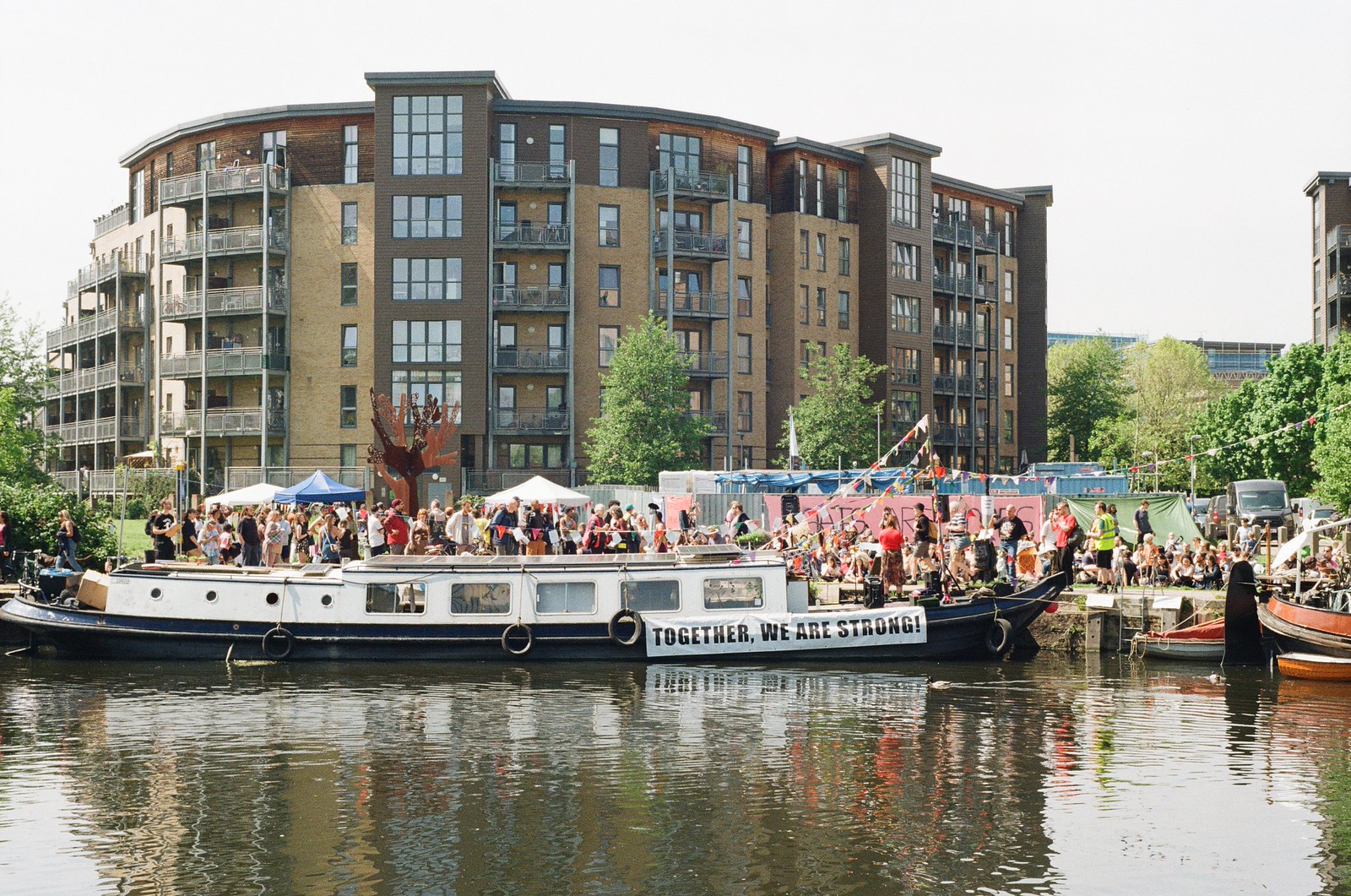
National boater event on Saturday 14 June. Come to the Boaters’ Big Bash; it will have food, stalls, children’s activities, speeches, live music, and acts from the boaters, oh and bunting…

Saturday 14th June starting 12 noon, W2 5TF near Westbourne Park, a little west of Paddington on the Paddington Arm, Grand Union Canal, London

what3words///intelligible.dome.until

Edit Post “Big national boaters’ event” ‹ National Bargee Travellers Association – London Branch — WordPress

The Campaign for the Energy Grant

As we head into winter, the cost of living on a boat increases massively for many of us, with paying for coal, gas, or diesel to heat our homes. Some of us may forage for free wood to burn. However, this option is now threatened when moored within ‘clean air zones’ due to bans on burning foraged wood.

In the last few years the cost of fuels to heat our homes has dramatically risen. In some cases costs have doubled. But it hasn’t just been boat dwellers that have felt the cost of heating homes exponentially rise. The whole of the UK has seen a great increase in the cost of heating and energy in general. In 2022 in response to this crisis, the government decided to pay £400 towards energy costs for most homeowners. At first however, many households, including boat dwellers, were left out.

Along with non-NBTA members, and other Traveller organisations, we lobbied different MPs across the country. We also lobbied CRT to get them to put pressure on the government. NBTA also met several times with the civil servants, responsible for the Energy Bills Support scheme, including with the deputy director-general of the Department for Business, Energy, and Industrial Strategy.

Many of us sent emails to CRT demanding they do something as well. Then CRT started to talk to the government and made at least one press release stating that boats without home moorings should also get the grant.

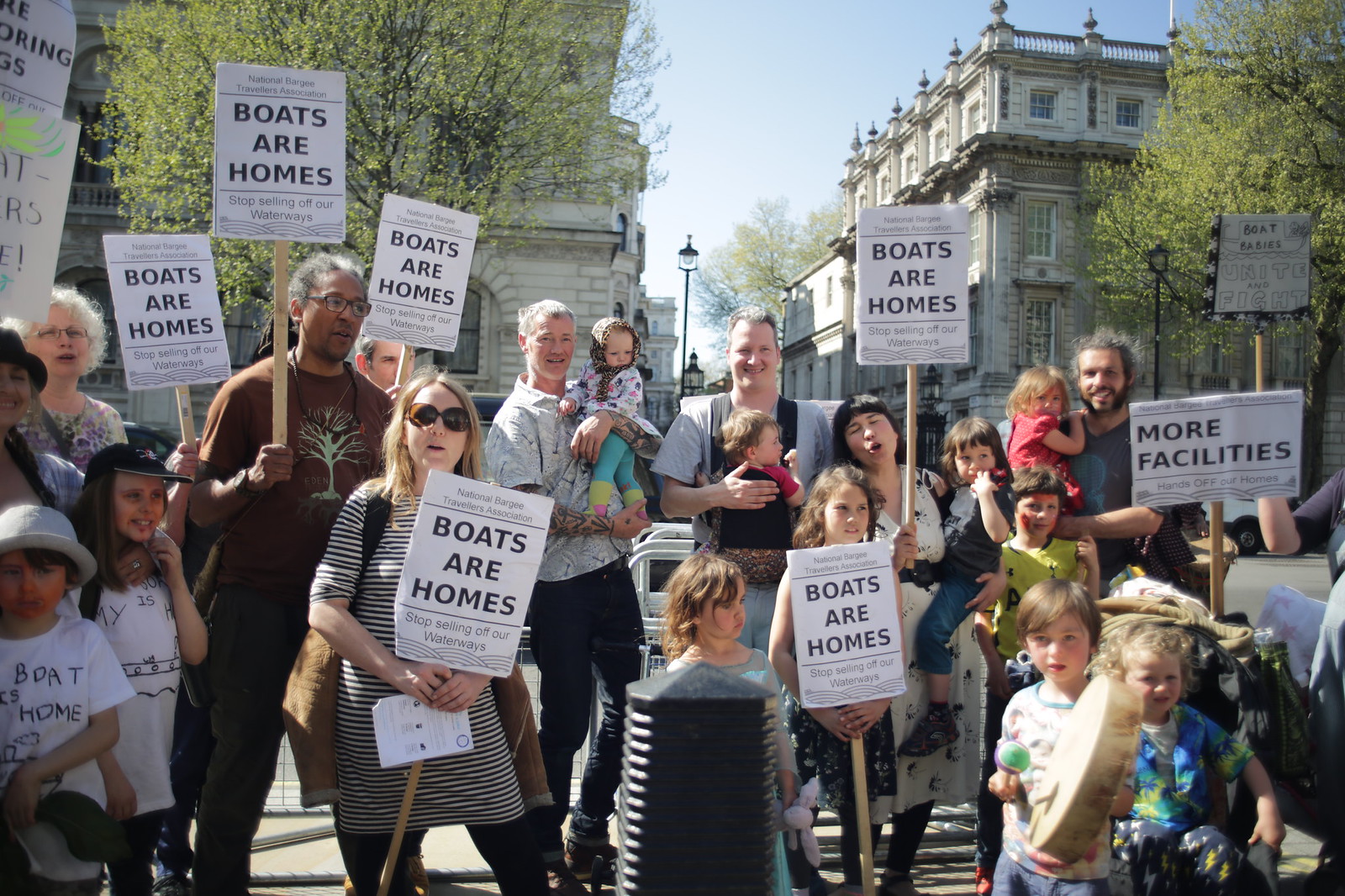
Into the summer of 2023 we continued with our campaign including boats with banners and also handing a petition into 10 Downing St. Along with all this, a few boaters without home moorings on CRT waterways started legal action for discrimination against the government on the basis of being left out of the scheme. Two weeks after the solicitor put the papers into court, the government announced that they would pay both energy grants worth £600 to each boat licenced on CRT waterways without a home mooring.

Although we should have got the grant from the beginning, with a campaign, political and legal pressure, we won. This shows that whilst it’s never guaranteed, sometimes our collective effort can have a huge payoff.


NBTA London needs your support to carry on our work. Please get in touch here if you would like to volunteer with us. Alternatively your donations are vital to us supporting boaters with their legal case work, campaign banners and other printed material as well as events. You can help us with your donations online here


Chargeable Moorings Remain Underused, However the Price Has Been Reduced for Winter

It’s been over a year since Canal and River Trust (CRT) started introducing chargeable moorings as part of their plan to bring down boat numbers in London.

So far only part of the plan to bring in 1.1km of chargeable moorings to London has been implemented but already these changes have had a great impact on boaters who move through these areas of London.

In the CRT’s London Mooring Strategy, the length of chargeable moorings in London could go up to 1.5km in the next year.

CRT claimed to have consulted boaters in 2022 on the need for such moorings but it has not provided the results of this consultation. Notably, their 2022 “Issues & Challenges Report” did not mention a shortage of moorings, instead it highlighted boaters concerns about disrepair and lack of facilities.

Little Venice chargeable moorings in August 2024. Once brimming with life, now desolate.

Chargeable moorings were first introduced here in 2019, but they were priced at £10 to £12 a night. Despite low demand at that price, CRT has significantly raised the price, leading to even more space in central London being wasted, empty of boaters.

According to a Freedom of Information (FOI) request submitted in June 2024, only 1,203 bookings were made between October 2023 and May 2024 (out of a possible 7,224 bookings), indicating that the moorings were used at just 17% capacity.

The FOI revealed that CRT earned a gross income of £36,532 from these bookings on an average of just over £30 per night. We believe this is barely enough to cover the cost of administering prebookable moorings.

The rationale for them is to enable people to book a berth without having to find somewhere to moor on their own in central London. However, the data tells us that the demand is simply not there: only 16.5% of the availability has been utilised.

Rather than improving access to the capital, the charges have effectively priced many existing boaters out of central London, leaving prime locations empty. As a result, many boaters must now cruise for a full day to find a mooring, or risk being fined.

There is a knock-on effect of leaving these locations empty too: those who cannot afford to pay are forced to moor in now even more crowded areas, making a trip through London even more precarious for boaters with or without a home mooring.

Vandalised chargeable mooring sign in London

The situation has also worsened safety concerns for boaters and local residents, as these once-bustling sections of towpath have been deserted, leaving them more vulnerable to crime.

Others may opt for a River Only license, staying on the Lee and Stort as London’s main canal network becomes too expensive, a move that will reduce CRT’s revenue further.

The decimation of London’s boating community and the safety that it brings to the canal here means those boaters from outside London whom CRT are trying to entice with their pricey prebookable moorings are likely to avoid the capital altogether.

A subsequent FOI in October 2024 revealed that three Mooring Rangers, tasked with managing these moorings, cost CRT £104k annually, far exceeding the (assumed) £73k annual income from the moorings. This suggests CRT may even be operating this policy at a loss. It is an illogical policy that is costing boaters and CRT, with no clear benefit to either.

In November 2024, CRT decided to reduce the price of these chargeable moorings – from between £25 and £35 per night to £20 per night – as a result of NBTA London’s campaigning.

We look forward to seeing whether the reduced price has any positive uptick in the number of bookings made, or if there is in fact NO case for charging per night for mooring on the public towpath at all.

Due NBTA London campaigning CRT has also agreed to stop charging to moor in Camden and says they no longer plans to roll out more chargable moorings across London including Uxbridge, Kensal, Broadway Market and Victoria Park. However, CRT has remained committed to charging boaters to be able to moor in Little Venice, Paddington Basin, Kings Cross and Angel.

NBTA believe these mooring spots should be open for anyone boating through London, as is the norm across the entire canal network, and that the privatisation of public spaces should continue to be resisted.


NBTA London needs your support to carry on our work. Please get in touch here if you would like to volunteer with us. Alternatively your donations are vital to us supporting boaters with their legal case work, campaign banners and other printed material as well as events. You can help us with your donations online here


The True Cost of the Licence Fee Increase

The Canal and River Trust (CRT) has introduced a “glide path” with incremental and differential licence pricing through to 2028, which includes a significant surcharge on boats without a home mooring. The previously clear pricing structure has been replaced by online calculators, which obscure the true cost for boaters. Is this deception by design?

Starting in April 2024, these boats will face a 5% surcharge in the first year, on top of planned standard above inflation increases, which have already risen by 18% from 2022 to 2024. For narrowboats without a home mooring, this year’s total increase will be 11%, while widebeams (10ft and 14ft) will see increases of 25% and 39%, respectively.

NBTA volunteers attended events across the country and leafletted beside CRT stalls to raise public awareness about the licence fee surcharge.

Looking ahead, CRT expects standard licence fees for narrowboats with home moorings to rise by 31% by 2028, based on a projected consumer price index (CPI) of around 4%, plus an additional 1.5%. That’s before any surcharge. CRT’s aim is to increase revenue by an average of CPI plus 3%, but most of the burden will fall on boats without a home mooring and larger vessels. By 2028, narrowboats without a home mooring could face a total increase of 61%, while 10ft and 14ft widebeams might see rises of 97% and 130%, respectively. These figures are minimum estimates.

Additionally, CRT only provides five-year projections (2023-2028), despite operating under a 10-year financial plan, leaving future price increases uncertain. In 2022, CRT raised licence fees twice, and they may increase them further in the coming years depending on inflation. Current estimates assume 4% CPI plus 1.5% added by CRT for the next five years.

If CRT manages to extort the surcharge on boats without a home mooring this year, the future looks increasingly unpredictable and financially insecure.


NBTA London needs your support to carry on our work. Please get in touch here if you would like to volunteer with us. Alternatively your donations are vital to us supporting boaters with their legal case work, campaign banners and other printed material as well as events. You can help us with your donations online here


Some wins over Chargeable Moorings

Canal and River Trust (CRT) backs down over some of the chargeable moorings.


Following campaigns from the NBTA London, the CRT have scrapped charges to moor on the Camden visitor moorings, and reduced prices over winter across all chargeable moorings in London. High-profile media coverage the other week – including in The Telegraph – reported that the moorings were “punishingly expensive,” privatising the canals and turning once-busy spots into a “ghost town.”


CRT imposed the charges on sites initially meant to be “eco-moorings”, despite all surveyed groups of waterway users responding negatively to the proposal. Freedom of Information requests by the NBTA showed that existing chargeable moorings were only booked 16.5% of the time during the first six months of the year, making once vibrant stretches of the canal deserted and unsafe. Plans for more charges in Victoria Park, Broadway Market and Cowley are now looking unwise for CRT.
The NBTA London welcomes the roll-back, but won’t stop pushing for an end to discriminatory policies, including scrapping all chargeable moorings and the surcharge on continuous cruiser licences.


If you want to protect a thriving boat community from being pushed off the waterways, take action now and stop the rest of the chargeable mooring.

Boats are moored in protest against the chargeable moorings

Meet the boaters defying the new no mooring signs

Ali pictured on her boat

Ali was moored at Daubeney Fields. She works for a food and farming charity which advocates for land redistribution and community grow projects. Ali has been on the water for three years. “I’ve been involved in the protest movement against the new CRT restrictions for about a year and a half now, since the safety zones campaign started. I consciously seek out places where the new no mooring locations are. I speak to my neighbours about the restrictions, so that everyone in the community knows about them. And I think it’s important to show up physically against CRT’s attempts to gentrify the waterways even more. These are perfectly great moorings and the idea that they could become paid for or private moorings is really shocking. It’s been a hard year for everyone and the fact that space and land access is going to be restricted is really disgusting.”

“We must take a stand to protect our way of life or they will do everything they can to get rid of it.”

Marcus

Dee, Michelle and their son Io were moored offside at Daubeney fields. They have been on the water for just over a year. Mychelle is a baker. Dee is a gardener and has been clearing up the bankside where they are moored to make a lovely space for their son and other children to play.  “It is a good spot to moor and it doesn’t cause any obstruction to anybody; there’s no reason for it not to be moored on. It’s a good spot to be.  “The fact that it is a no mooring spot hasn’t really changed our minds about mooring here to be honest. If there was a real reason, like if it felt dangerous, then we wouldn’t moor here, obviously. But there’s no reason. Usually, families moor along here and our son will hopefully start school locally too.”

Lud by his boat

Lud “I work in a cleaning and maintenance job on a dock restoration site by the river. I’ve been on the water since 2016 and I fell in love with boating life and its people. I’m resisting the ‘no mooring zones’ because I think they are not fair to boaters who live on their boats and there’s nothing to justify them.”

Ben and Pru were moored at Matchmaker’s Wharf. They have been on the water for about three years. “We got a notice from the enforcement guy saying that we are wrongfully moored – there are no signs to tell us that we shouldn’t moor here and we haven’t received an email updating us about where we can and can’t moor. “CRT tried to put a load of water safety zones in and then realised that they hadn’t consulted anyone apart from the rowing groups.  In a few years it will be impossible to moor in London and it will become just a rich city for rich people. It’s a subtle cultural genocide. They want to take us away.”

Jade and Ted were moored by the Green Bridge (Mandeville St).

Jade & Ted “There is no logic to what CRT are trying to implement. What they say it is about and what it is actually about are two different things. Safety is important, but this is nothing to do with safety”

Matthew was moored on the bend just above the Princess of Wales. He is a musician and he fits out sailaways to sell on. “I love the river and I love the people on it. I think (the safety zones) are absolutely ridiculous really. Boaters made the canal and rivers habitable again, haven’t we? We have a lot to do with the regeneration of the canals in London. The rowers don’t own the river . This is our life, for them it’s just a hobby.  It’s really backward thinking and there’s a definite disconnect between us and CRT.”

Jay was moored near a bridge on the Filter Beds. Jay works in theatre, but has just quit his job and is going to cruise to Bristol at some point soon. “I didn’t realise that I was on a no mooring section. I’ve not heard anything, and I’ve been here a week. I think its just CRT saying that boaters are creating a problem, but we’re not. It’s kind of bullshit isn’t it? I don’t think mooring here makes any difference compared to mooring there, or mooring there (pointing to mooring spaces nearby).”

“In a few years it will be impossible to moor in London and it will become just a rich city for rich people. It’s a subtle cultural genocide. They want to take us away.”

Ben & Pru

Amy was moored near a bridge on the filter beds. “I don’t think (the safety zones) are needed. I think it is an unnecessary crackdown on numbers of boats in some of the widest parts of the river. The restrictions are unnecessary and I plan to ignore them for as long as possible.”

Marcus and his son aboard their boat

Marcus was moored by the electricity bridge on the offside. He is home schooler and plumber and has lived on the water for 10 years. “Over the years Canal and River Trust has been taking places where it has been possible to moor away. We must take a stand to protect our way of life or they will do everything they can to get rid of it.”

MARCH ON CRT OFFICES! on Saturday 26th March at 1pm Park Square in Regents Park NW1 4LH, nearby tube stations are Great Portland Street and Regent’s Park.

More info here: March on CRT offices

Facebook event here: https://bit.ly/boatshomes26

Undercutting London’s boaters

London’s waterways have received significantly more attention and usage of various forms in more recent years. Following decades of decline, London’s boaters have played a significant role in the reclamation and revitalisation of these spaces. However, this contribution seems increasingly undesirable by the authority that manages the waterways.

Since 2012, the Canal & River Trust (CRT) have assumed guardianship of 2000 miles of the UK’s canals and rivers from the state-owned British Waterways (BW). As a not-for-profit charitable trust, the CRT have placed an increased emphasis on wellbeing in their agenda for their waterways’ users.

There has been a notable increase in and heterogeneous uses of the River Stort, Lee Navigation, Regent’s Canal, Hertford Union Canal, and the lower Grand Union Canal. Cyclists, walkers, joggers, rowers, and kayakers are all user groups that the CRT appear happy to see using the waterways in increased numbers, but not all increases in usage seem to be so welcome.

The general trend of increased usage has brought a range of advantages, including an increased diversification of users of the waterways, yet this has occurred during a period of increased economic and social strain for many living in London. London’s housing crisis has led a relatively small proportion to search for viable living arrangements away from the increasingly unaffordable rental costs ‘offered’ by the housing market, joining the existing communities of liveaboard boaters on the cut.

According to the CRT’s National Boat Count, boat numbers were rising for a period in the London area. However this increase in use appears less welcomed by the CRT when compared to the increase in leisure uses of the estate they manage, despite liveaboard boaters paying licensing fees to the CRT, yielding them a growth in income revenue from boaters.

The CRT do not have legal powers to stop or restrict the number of licensed boats on the water, and as such are seeking “creative solutions to help manage growing boat numbers […] to address [the] challenges” this brings them. In lieu of the limited powers the CRT possess, it is difficult to envisage any “creative” solutions that would be equitable across the wide range of boaters that live on London’s waterways, such as introducing surcharges or fees for certain uses of the canals. However, this is occurring in spite of the CRT’s own 2020 data showing a 2.2% reduction of boats in the region.

The apparent need to manage the volume of liveaboard boats in London is not a new struggle for boaters. Back in 2010, BW said that were “more boats moored along the Lee than are desirable” and attempted to zone London’s waterways into “neighbourhoods”. Due to the anger and push back from boater communities, this plan was eventually dropped.

The National Bargee Travellers Association (NBTA) has described the CRT’s 2018 London Mooring Strategy (LMS) as “a strategy to help clear London’s waterways of boat dwellers and turn it into a London waterway leisure and business park. It is the perfect recipe for gentrification of the waterways.” Amongst other issues, the LMS includes a reduction of mooring time available for boaters at 22 sites, with increased surveillance and enforcement on the sites with reduced time limits.

The LMS has not been completed, yet the CRT are currently conducting a new survey to help them strategise new ways to manage the “very high and increasing” boat population. However, the CRT are yet to provide supporting information for the assumed problems caused by the volume of boats, or substantiating data on the apparently negative efficacies of an increased liveaboard population.

The current survey appears flawed in a range of ways, particularly as it is strewn with leading questions. As an example, they ask “In your own words what would you want the Trust to do to manage boat numbers in busy areas?” This assumes that the volume of boats is a problem, but are more boats a problem? More boats means more boaters, and as such a more vibrant and neighbourly community, helping to increase safety for all users of the waterways. Framing an increase in the number of boats as a problem evades other opportunities for the CRT to support thriving liveaboard communities by increasing the facilities offered.

It is also noteworthy that the majority of the survey is collecting qualitative data. This is welcome, as it provides an opportunity for participants to offer detailed, subjective understandings of their experiences of living aboard. However, whilst by no means impossible, such rich data can be difficult to generalise from in the development of an organisational strategy, and can lead accusations of cherry picking data and quote mining.

The global pandemic has created further tensions for the CRT and their wellbeing agenda. The initial lockdown saw posters erected to encourage “local” usage of towpaths, without any clarification of what that meant, causing confusion and anxiety for cyclists, walkers, and boaters alike. As soon as the lockdown was lifted, new posters replaced the old ones, and these actively encouraged the use of the use of towpaths for leisure purposes.

However, much of the towpath is difficult or impossible to navigate whilst staying two metres- or even one metre- from other users and boats. This exposed people to unnecessarily high risks, particularly moored boaters that were enduring the increased risk while remaining aboard their homes.

As with so many other examples of authorities exerting their political agenda in the dehumanising process of managing properties and estates, the lives of those impacted by this ‘management’ are treated with neglect and disdain. As the CRT seeks to offer leisure facilities and develop greater commercial enterprise on the waterways, the lives and rights of liveaboard boaters are treated as an unfortunate hangover of the historic canals of London.

The London branch of the NBTA continues to fight the increasing gentrification of London’s waterways and is planning further action to protect liveaboard boaters and to ensure that the waterways remain for the use of everyone, not just for those with access to resources or for business to expropriate money from a public asset.

#stoptheboatcull