When Canal & River Trust (CRT) come up with a new policy or strategy, they have a favourite word to cover up the subtext: fairness. Safety Zones – fairness; extortionate pre-bookable moorings – fairness; converting casual moorings into restricted time visitor moorings – fairness; the licence surcharge for itinerant boaters – fairness. But who loses out each time? Who is targeted? Which part of the boating community is further marginalised whenever CRT talks about fairness? It is, of course, boaters without a home mooring.
But the subtext doesn’t stop with CRT. NBTA members & volunteers speak to a lot of people; members of other boating organisations, boaters and the public on the towpath when we are leafleting and delivering newsletters, people at our public events and of course at events like Cavalcade where we engage with the public and aim to undermine CRT’s spin that they are some kind of beneficent society. And sometimes we are asked “what is your solution?”.
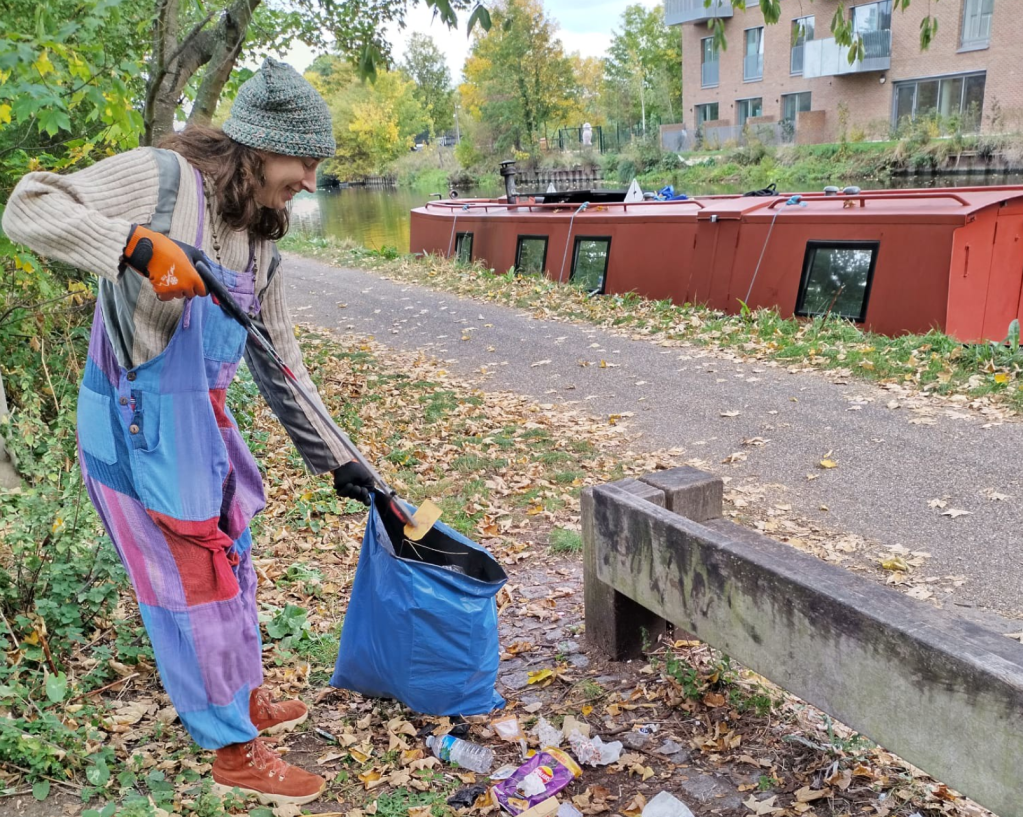
Boaters recently got together to clear up litter in Tottenham
What are we supposed to do to come up with this “solution”? Stop campaigning against the “Safety” Zones? Stop campaigning against the removal and monetisation of casual moorings? Stop campaigning against the licence surcharge?
Stop campaigning for the interests of parents who need to send their children to school, or people with physical and mental health issues who need adjustments to their expected cruising plans?
The fact is that these “what is your solution” questions are very rarely made in good faith. They are an attempt to deflect away from CRT’s attacks on our community and down a cul de sac where they can blame us for not coming up with the answers, framed within an acceptance of CRT’s claims that we are the problem. For these people, when they talk about a solution, they mean a solution to us, itinerant boaters.
So what could our reply be when we are asked about solutions? CRT need to stop blaming us; to stop marginalising us; to stop discriminating against us, and then, and only then, can we talk about the bigger picture.
Following Richard Parry’s announcement that he would be leaving his role as CEO, Canal and River Trust have selected serial charity CEO Campbell Robb as his replacement. Previously CEO of housing charity Shelter and currently criminal justice, housing and education charity Nacro, Robb has long experience of running organisations attempting to paper over the cracks of a failing British state. Perhaps that why he was chosen.
Canal and River Trust’s previous CEO Richard Parry as previously featured on NBTA London
As when Parry took up the role shortly after the foundation of CRT, a certain amount of optimism was expressed at the announcement. Robb’s experience in the “social justice” third sector has been cited as evidence that boaters without a home mooring could get better treatment from the Trust. That would be nice, but given the stuff coming out of the licence review, even if that were his intention – and there is no evidence that it is – such a change in the well entrenched culture of CRT seems unlikely.
In law, there is no designated authority responsible for providing sanitation facilities for boaters. Unfortunately, our community has experienced first-hand that the CRT cannot be trusted to support us in this way, with poorly maintained boater facilities falling into ongoing disrepair or disappearing entirely. Wanting to avoid the weekly chore of lugging a cassette up the towpath—only to find the elsan broken—or taking a long detour to a pump-out, many boaters have turned to separating (composting) on-board loos for both ecological and convenience reasons.
Boater’s compost toilet – Image: Facebook Group/”Compost Toilets for Boats and Off-Grid Living”
Circular Revolution was born in 2021 with the aim of providing boaters with a reliable and sustainable solution to manage their separating loo ‘waste’. C.R. believes that, with the right resources, we boaters want to care for our shared environment and that, with our knowledge of the community and the waterways, we are best placed to do so. The core C.R. service collects dry material from separating loos on boats across London on a monthly or fortnightly basis by e-cargo bike and processes the amassed material into soil conditioner—transforming ‘waste’ into a valuable resource.
C.R. became a Co-operative Community Interest Company (CIC) in 2023, meaning the business is owned and controlled by its members to meet their shared needs. Their aim is to showcase to the UK that a successful, grassroots alternative to the broken-by-design traditional sanitation industry is possible—and that we boaters can be at the forefront of leading this shift.
They are also working hard to make their service accessible to all who want to use it, including introducing sliding-scale drop-off points and running a volunteer scheme where people can contribute a small amount of their time in return for a monthly subscription.
At the Big Boaters Bash we organised in summer the NBTA London Chair, Ian McDowell did a speech and here it is below:
‘When Canal & River Trust (CRT) come up with a new policy or strategy, they have a favourite word to cover up the subtext: fairness. Safety Zones – fairness; extortionate pre-bookable moorings – fairness; converting casual moorings into restricted time visitor moorings – fairness; the licence surcharge for itinerant boaters – fairness. But who loses out each time? Who is targeted? Which part of the boating community is further marginalised whenever CRT talks about fairness? It is, of course, boaters without a home mooring.
But the subtext doesn’t stop with CRT. NBTA members & volunteers speak to a lot of people; members of other boating organisations, boaters and the public on the towpath when we are leafleting and newsletters, people at our public events and of course at events like Cavalcade where we engage with the public and aim to undermine CRT’s spin that they are some kind of beneficent society. And sometimes we are asked “what is your solution?”
What are we supposed to do to come up with this “solution”? Stop campaigning against the “Safety” Zones? Stop campaigning against the removal and monetisation of casual moorings? Stop campaigning against the license surcharge? Stop campaigning for the interests of parents who need to send their children to school, or people with physical and mental health issues who need adjustments to their expected cruising plans?
The fact is that these “what is your solution” questions are very rarely made in good faith. They are an attempt to deflect away from CRT’s attacks on our community and down a cul de sac where they can blame us for not coming up with the answers, framed within an acceptance of CRT’s claims that we are the problem. For these people, when they talk about a solution, they mean a solution to us, itinerant boaters.
So what could our reply be when we are asked about solutions? CRT need to stop blaming us; to stop marginalising us; to stop discriminating against us, and then, and only then, can we talk about the bigger picture.’
As itinerant boaters face the double threat of license surcharges and extortionate ‘pre-bookable paid towpath moorings’, it is worth reminding ourselves that when we faced similar challenges in the past, our protests were successful.
In 2010, British Waterways (who were later succeeded by CRT), introduced ‘local mooring strategies’ in London and the West end of the Kennet and Avon. They claimed that ‘more boats are moored along the river Lea than desirable’ and tried to implement a set of rules that would make it near impossible for most itinerant boaters to live in these areas.
British Waterways, in an attempt to make the river Lea less popular for boaters, tried to define the word ‘place’ in the following statute: the vessel ‘will be used bona fide for navigation throughout the [license period] without remaining continuously in any one place for more than 14 days or such longer period as is reasonable in the circumstances.’ (BW Act 1995, Section 17)
They claimed that a ‘place’ is the same as a neighbourhood and then defined enormous stretches of the waterways as one neighbourhood. In London, the entire length of the river Stort became two ‘neighbourhoods’ (and almost entirely seven day mooring only); all waterways in London south of the North Circular became one neighbourhood, including Limehouse cut and the Hertford Union; the Lea north of the north circular was split into three neighbourhoods.
Having redefined the meaning of the word ‘place’, British Waterways declared that itinerant boaters had to move to a new neighbourhood each 14 days and would have tospend an equal amount of time in each neighbourhood across the licence period.
Against this unfair attempt to cleanse the river Lea of itinerant boaters, hundreds of boaters protested. It was at this time that London Boaters, originally a protest group, formed. They got information about the changes out to residents, rowers, canoers, cyclists and surveyed boaters and towpath users. They encouraged responses to the consultation and demonstrated that, far from being unwanted on the Lea, itinerant boats were welcome.
London Boaters also challenged the legality of BW’s proposals and worked with other boating organisations such as NABO (National Association of Boat Owners) and RBOA (Residential Boat Owners’ Association). They conducted their own research which challenged BW’s unsupported claims about congestion and examined the likely impact of the proposals, which would increase homelessness and put pressure on local housing waiting lists. They showed that the changes would prevent boaters accessing education, employment and health care.
Eventually, in September 2011, British Waterways realised the game was up and announced that it was dropping its plans for London. But, they were implemented by the newly formed Canal and River Trust in a 12 month trial in 2014 on the K&A.
On the K&A, similar to the ‘neighbourhoods’ idea, they set a maximum length of time that could be stayed on each stretch of the canal. They also planned to implement a charge of £25 a day for staying longer than stated on a less-than-14 day visitor mooring and introduced a 20 mile minimum distance. If boaters couldn’t abide by these draconian rules, CRT offered ‘roving mooring permits’ (£800 a year for a 60ft boat) which enabled the boater to move every 14 or 28 days. While CRT eventually conceded that the ‘roving mooring permits’ were illegal , many of these requirements will be familiar to itinerant boaters across the country as they have since been rolled out in guidance to all boaters. The parallels between the new ‘constant-cruiser’ surcharge and the ‘roving mooring permits’ might also be noted. BW backed down in London because boaters dedicated a huge amount of time and energy to fighting their cause, but CRT re-used the same ideas on the K&A some years later and are re-using them again now in the introduction of the itinerant boater surcharge and the pre-payable visitor moorings in London. We must stick together and stay united in our opposition to their incessant attacks on our way of life – attacks which have been defended against before and can be defended against again.
NBTA London needs your support to carry on our work. Please get in touch here if you would like to volunteer with us. Alternatively your donations are vital to us supporting boaters with their legal case work, campaign banners and other printed material as well as events. You can help us with your donations online here
It’s been over a year since Canal and River Trust (CRT) started introducing chargeable moorings as part of their plan to bring down boat numbers in London.
So far only part of the plan to bring in 1.1km of chargeable moorings to London has been implemented but already these changes have had a great impact on boaters who move through these areas of London.
In the CRT’s London Mooring Strategy, the length of chargeable moorings in London could go up to 1.5km in the next year.
CRT claimed to have consulted boaters in 2022 on the need for such moorings but it has not provided the results of this consultation. Notably, their 2022 “Issues & Challenges Report” did not mention a shortage of moorings, instead it highlighted boaters concerns about disrepair and lack of facilities.
Little Venice chargeable moorings in August 2024. Once brimming with life, now desolate.
Chargeable moorings were first introduced here in 2019, but they were priced at £10 to £12 a night. Despite low demand at that price, CRT has significantly raised the price, leading to even more space in central London being wasted, empty of boaters.
According to a Freedom of Information (FOI) request submitted in June 2024, only 1,203 bookings were made between October 2023 and May 2024 (out of a possible 7,224 bookings), indicating that the moorings were used at just 17% capacity.
The FOI revealed that CRT earned a gross income of £36,532 from these bookings on an average of just over £30 per night. We believe this is barely enough to cover the cost of administering prebookable moorings.
The rationale for them is to enable people to book a berth without having to find somewhere to moor on their own in central London. However, the data tells us that the demand is simply not there: only 16.5% of the availability has been utilised.
Rather than improving access to the capital, the charges have effectively priced many existing boaters out of central London, leaving prime locations empty. As a result, many boaters must now cruise for a full day to find a mooring, or risk being fined.
There is a knock-on effect of leaving these locations empty too: those who cannot afford to pay are forced to moor in now even more crowded areas, making a trip through London even more precarious for boaters with or without a home mooring.
Vandalised chargeable mooring sign in London
The situation has also worsened safety concerns for boaters and local residents, as these once-bustling sections of towpath have been deserted, leaving them more vulnerable to crime.
Others may opt for a River Only license, staying on the Lee and Stort as London’s main canal network becomes too expensive, a move that will reduce CRT’s revenue further.
The decimation of London’s boating community and the safety that it brings to the canal here means those boaters from outside London whom CRT are trying to entice with their pricey prebookable moorings are likely to avoid the capital altogether.
A subsequent FOI in October 2024 revealed that three Mooring Rangers, tasked with managing these moorings, cost CRT £104k annually, far exceeding the (assumed) £73k annual income from the moorings. This suggests CRT may even be operating this policy at a loss. It is an illogical policy that is costing boaters and CRT, with no clear benefit to either.
In November 2024, CRT decided to reduce the price of these chargeable moorings – from between £25 and £35 per night to £20 per night – as a result of NBTA London’s campaigning.
We look forward to seeing whether the reduced price has any positive uptick in the number of bookings made, or if there is in fact NO case for charging per night for mooring on the public towpath at all.
Due NBTA London campaigning CRT has also agreed to stop charging to moor in Camden and says they no longer plans to roll out more chargable moorings across London including Uxbridge, Kensal, Broadway Market and Victoria Park. However, CRT has remained committed to charging boaters to be able to moor in Little Venice, Paddington Basin, Kings Cross and Angel.
NBTA believe these mooring spots should be open for anyone boating through London, as is the norm across the entire canal network, and that the privatisation of public spaces should continue to be resisted.
NBTA London needs your support to carry on our work. Please get in touch here if you would like to volunteer with us. Alternatively your donations are vital to us supporting boaters with their legal case work, campaign banners and other printed material as well as events. You can help us with your donations online here
The Canal and River Trust (CRT) has introduced a “glide path” with incremental and differential licence pricing through to 2028, which includes a significant surcharge on boats without a home mooring. The previously clear pricing structure has been replaced by online calculators, which obscure the true cost for boaters. Is this deception by design?
Starting in April 2024, these boats will face a 5% surcharge in the first year, on top of planned standard above inflation increases, which have already risen by 18% from 2022 to 2024. For narrowboats without a home mooring, this year’s total increase will be 11%, while widebeams (10ft and 14ft) will see increases of 25% and 39%, respectively.
NBTA volunteers attended events across the country and leafletted beside CRT stalls to raise public awareness about the licence fee surcharge.
Looking ahead, CRT expects standard licence fees for narrowboats with home moorings to rise by 31% by 2028, based on a projected consumer price index (CPI) of around 4%, plus an additional 1.5%. That’s before any surcharge. CRT’s aim is to increase revenue by an average of CPI plus 3%, but most of the burden will fall on boats without a home mooring and larger vessels. By 2028, narrowboats without a home mooring could face a total increase of 61%, while 10ft and 14ft widebeams might see rises of 97% and 130%, respectively. These figures are minimum estimates.
Additionally, CRT only provides five-year projections (2023-2028), despite operating under a 10-year financial plan, leaving future price increases uncertain. In 2022, CRT raised licence fees twice, and they may increase them further in the coming years depending on inflation. Current estimates assume 4% CPI plus 1.5% added by CRT for the next five years.
If CRT manages to extort the surcharge on boats without a home mooring this year, the future looks increasingly unpredictable and financially insecure.
NBTA London needs your support to carry on our work. Please get in touch here if you would like to volunteer with us. Alternatively your donations are vital to us supporting boaters with their legal case work, campaign banners and other printed material as well as events. You can help us with your donations online here
Canal and River Trust (CRT) backs down over some of the chargeable moorings.
Following campaigns from the NBTA London, the CRT have scrapped charges to moor on the Camden visitor moorings, and reduced prices over winter across all chargeable moorings in London. High-profile media coverage the other week – including in The Telegraph – reported that the moorings were “punishingly expensive,” privatising the canals and turning once-busy spots into a “ghost town.”
CRT imposed the charges on sites initially meant to be “eco-moorings”, despite all surveyed groups of waterway users responding negatively to the proposal. Freedom of Information requests by the NBTA showed that existing chargeable moorings were only booked 16.5% of the time during the first six months of the year, making once vibrant stretches of the canal deserted and unsafe. Plans for more charges in Victoria Park, Broadway Market and Cowley are now looking unwise for CRT. The NBTA London welcomes the roll-back, but won’t stop pushing for an end to discriminatory policies, including scrapping all chargeable moorings and the surcharge on continuous cruiser licences.
If you want to protect a thriving boat community from being pushed off the waterways, take action now and stop the rest of the chargeable mooring.
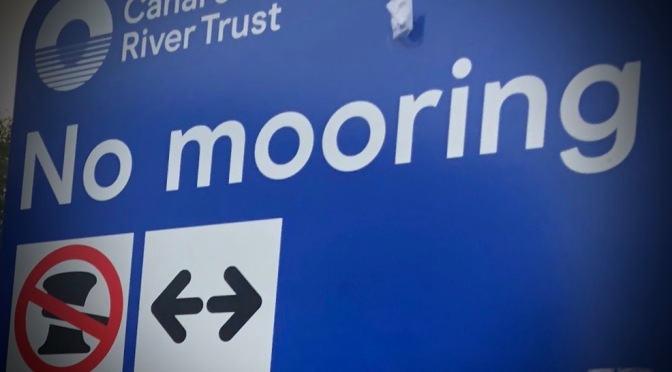
It’s been over two years since CRT decided to enforce ‘no mooring’ in areas of the ‘safety’ zones; their aim is to clear boats away from parts of the River Lea, yet boaters are continuing to resist. Boaters on mass are ignoring CRT’s ridiculous ‘no mooring’ sites. Thanks to collective boater action, the ‘safety zones’ have clearly failed. For more information about the safety zones: https://nbtalondon.co.uk/3049-2/
NBTA London needs your support to carry on our work. Please get in touch here if you would like to volunteer with us. Alternatively your donations are vital to us supporting boaters with their legal case work, campaign banners and other printed material as well as events. You can help us with your donations online here
The process of privatisation can be witnessed in various stages on London’s canal network. As visitor moorings become pre-bookable and chargeable moorings become private, the absence of boats on significant lengths of towpath in Central London is testament to the financial exclusion of boaters from these areas.
In 2016 NBTA made it explicitly clear in talks with CRT that public moorings should not be converted to private use. In August 2023, chargeable moorings at Rembrandt Gardens and Paddington Basin doubled in price overnight from £12 to £25. 80m of previous visitor moorings in Paddington Basin and 160m in Little Venice were converted to chargeable also at £25 a night, effectively £50 for two nights with a midday turnaround. Beyond the financial means of most boaters.
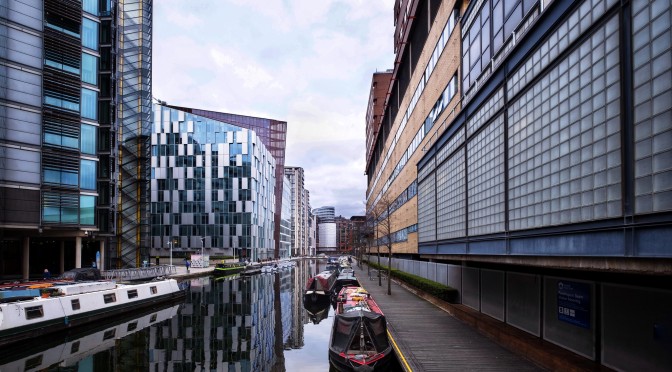
Paddington Basin
A Freedom of Information Request reveals pontoons in Paddington are used at half-capacity 49% of the time, bookings made across 1,200 days generated £16,000 in income. At Rembrandt Gardens 584 days generated £6,350. While there has been high uptake of free pre-bookable mooring in Kings Cross and Angel; new chargeable moorings in Little Venice and Paddington are running at 24% capacity and have since August been underused with a total of only 218 bookings and £5,425 in revenue. These moorings are sighted by three rangers (among other duties) at a cost of £100,000.
CRT claim financial exclusion makes the system ‘fair’ for all boaters, giving everyone an equal opportunity. Significant lengths of pre-bookable space; 200m at Colebrook Row in Angel and 220m at Treaty St in Kings Cross may well be more democratic for the time being, but how long will they remain free? As mooring opportunities are reduced to make chargeable space, overcrowding is experienced on other parts of the network. Travelling boaters, already threatened with surcharges for lack of ownership and place are being further marginalised by the introduction of these zones.
CRT’s vision for London seems to be canals without boats.
NBTA London needs your support to carry on our work. Please get in touch here if you would like to volunteer with us. Alternatively your donations are vital to us supporting boaters with their legal case work, campaign banners and other printed material as well as events. You can help us with your donations online here
A volunteer organisation formed in 2009 campaigning and providing advice for itinerant boat dwellers on Britain’s inland and coastal waterways




 National Bargee Travellers Association - London Branch