Tag Archives: CCing

It’s Not The Serengeti

A spell of dry weather with very little rain has exposed cracks in CRTs maintenance planning.  

This summer, many boaters experienced low water levels and changing plans due to drought. Even at the time of writing, Oxford still has restrictions in place. People heading north had to hold their nerve or turn back. Holiday boaters were restricted to boatyards and marinas. The Leeds canal completely drained, and could easily have been confused with a rubbish tip.  Emails advising people to move into pounds with water points were not entirely unexpected as partial closures and timed restrictions in early August quickly became complete lockdowns to retain water on higher ground from August 15th. 20% of the network was closed on Tuesday 26th, the day storm Erin hit.

Despite allowances for the drought, the condition of the canals and locks does seem to be deteriorating over time. A ‘if it ain’t broke, don’t fix it’ attitude combined with lack of routine maintenance and the outsourcing of works to contractors raises the question; Were CRT tasked with maintaining the infrastructure or overseeing its managed decline? We can’t forget that the selling off of plant infrastructure and deskilling their own work force were policy decisions.

An FOI request by NBTA has revealed that dredging, a statutory duty to maintain navigation on the inland waterways, started to be phased out in the 1990s. It has now been completely been outsourced to third parties with ‘old equipment phased out and resources re-allocated to other work’. What other work? If they’re not dredging the canals and maintaining the network, what other work is there? These are the basics.

And while CRT claim ‘a surcharge on boaters without home moorings is necessary for those who make most use of the ‘utility’, it turns out that ‘utility’ is rain! An element that belongs to no-one and affects us all equally. Perhaps they rely a little too much on bad weather?

NBTA Casework? What On Earth (or Water) Is That?

NBTA helps any boater without a home mooring facing CRT enforcement or other issues that can arise from living on a boat without a home mooring, such as accessing benefits or registering with a GP. We are not a charity; we are boaters not too different from you, and we do this out of solidarity with our fellow boaters.

The reason NBTA puts effort into casework to support individual boaters is our foundational belief that we are stronger together. We shouldn’t allow authorities to target us one by one.

Most boaters on CRT waterways who seek help from us with enforcement issues find themselves in this situation because they have travelled less than 20 miles in a year, turned around a bit too much, or are facing health issues or engine problems that prevent them from moving as frequently or as far. A small number of those who come to us have not moved for quite some time, sometimes even years. Often there are valid reasons for not moving, such as health problems.

Without prejudice, we will do everything we can to stop a boater from being evicted; however, what we can do is limited by what is in existing Acts (of Parliament). On CRT waterways, the main Act for us is the British Waterways Act 1995. This Act states that CRT cannot refuse a licence to someone who has insurance, a boat safety certificate, and either a permanent mooring or who uses their boat for navigation, provided they do not stay longer than 14 days in one place unless reasonable.

So, stopping evictions on CRT waterways hinges on the boater’s ability to demonstrate an intention to use their boat for navigation or to obtain a home mooring.

To demonstrate that intention, the boater may require help in challenging CRT’s decision or more time to get a boat safety certificate, or to get their engine fixed. We use our collective resources as caseworkers to help the boater get licensed.

Another Act that significantly impacts our casework is the Equalities Act 2010, which both BW and CRT ignored until 2014, when a successful campaign by the NBTA brought the issue into the press and thus caused wider pushback. Under this Act, people who are unable to move as often as others or who need to overstay due to a disability or chronic illness can be allowed to stay longer than 14 days or to not have to travel as far in a year. Completing forms or dealing with CRT can be challenging, so we can also assist people with that aspect. Nevertheless, boaters needing reasonable adjustments still must use their boat for navigation if they don’t have a home mooring.

The NBTA believes that as a community, we need to stick together and support one another in sharing the waterways and protecting the travelling way of life.

If you want help from a caseworker, email: nbta.london.caseworker@gmail.com or ring 01615431945. If you are interested in becoming an NBTA caseworker, let us know by emailing us on NBTALondon@gmail.com

All’s Fair In Love And War?

When Canal & River Trust (CRT) come up with a new policy or strategy, they have a favourite word to cover up the subtext: fairness. Safety Zones – fairness; extortionate pre-bookable moorings – fairness; converting casual moorings into restricted time visitor moorings – fairness; the licence surcharge for itinerant boaters – fairness. But who loses out each time? Who is targeted? Which part of the boating community is further marginalised whenever CRT talks about fairness? It is, of course, boaters without a home mooring.

But the subtext doesn’t stop with CRT. NBTA members & volunteers speak to a lot of people; members of other boating organisations, boaters and the public on the towpath when we are leafleting and delivering newsletters, people at our public events and of course at events like Cavalcade where we engage with the public and aim to undermine CRT’s spin that they are some kind of beneficent society. And sometimes we are asked “what is your solution?”.

Boaters recently got together to clear up litter in Tottenham

What are we supposed to do to come up with this “solution”? Stop campaigning against the “Safety” Zones? Stop campaigning against the removal and monetisation of casual moorings? Stop campaigning against the licence surcharge?

Stop campaigning for the interests of parents who need to send their children to school, or people with physical and mental health issues who need adjustments to their expected cruising plans?

The fact is that these “what is your solution” questions are very rarely made in good faith. They are an attempt to deflect away from CRT’s attacks on our community and down a cul de sac where they can blame us for not coming up with the answers, framed within an acceptance of CRT’s claims that we are the problem. For these people, when they talk about a solution, they mean a solution to us, itinerant boaters.

So what could our reply be when we are asked about solutions? CRT need to stop blaming us; to stop marginalising us; to stop discriminating against us, and then, and only then, can we talk about the bigger picture.

2010-Present: BW and CRT’s local mooring strategies for London and the K&A

As itinerant boaters face the double threat of license surcharges and extortionate ‘pre-bookable paid towpath moorings’, it is worth reminding ourselves that when we faced similar challenges in the past, our protests were successful. 

In 2010, British Waterways (who were later succeeded by CRT), introduced ‘local mooring strategies’ in London and the West end of the Kennet and Avon. They claimed that ‘more boats are moored along the river Lea than desirable’ and tried to implement a set of rules that would make it near impossible for most itinerant boaters to live in these areas. 

British Waterways, in an attempt to make the river Lea less popular for boaters, tried to define the word ‘place’ in the following statute: the vessel ‘will be used bona fide for navigation throughout the [license period] without remaining continuously in any one place for more than 14 days or such longer period as is reasonable in the circumstances.’ (BW Act 1995, Section 17)

They claimed that a ‘place’ is the same as a neighbourhood and then defined enormous stretches of the waterways as one neighbourhood. In London, the entire length of the river Stort became two ‘neighbourhoods’ (and almost entirely seven day mooring only); all waterways in London south of the North Circular became one neighbourhood, including Limehouse cut and the Hertford Union; the Lea north of the north circular was split into three neighbourhoods. 

Having redefined the meaning of the word ‘place’, British Waterways declared that itinerant boaters had to move to a new neighbourhood each 14 days and would have to spend an equal amount of time in each neighbourhood across the licence period. 

Against this unfair attempt to cleanse the river Lea of itinerant boaters, hundreds of boaters protested. It was at this time that London Boaters, originally a protest group, formed. They got information about the changes out to residents, rowers, canoers, cyclists and surveyed boaters and towpath users. They encouraged responses to the consultation and demonstrated that, far from being unwanted on the Lea, itinerant boats were welcome. 

London Boaters also challenged the legality of BW’s proposals  and worked with other boating organisations such as NABO (National Association of Boat Owners) and RBOA (Residential Boat Owners’ Association). They conducted their own research which challenged BW’s unsupported claims about congestion and examined the likely impact of the proposals, which would increase homelessness and put pressure on local housing waiting lists. They showed that the changes would prevent boaters accessing education, employment and health care.

Eventually, in September 2011, British Waterways realised the game was up and announced that it was dropping its plans for London. But, they were implemented by the newly formed Canal and River Trust in a 12 month trial in 2014 on the K&A.

On the K&A, similar to the ‘neighbourhoods’ idea, they set a maximum length of time that could be stayed on each stretch of the canal. They also planned to implement a charge of £25 a day for staying longer than stated on a less-than-14 day visitor mooring and introduced a 20 mile minimum distance. If boaters couldn’t abide by these draconian rules,  CRT offered ‘roving mooring permits’ (£800 a year for a 60ft boat) which enabled the boater to move every 14 or 28 days. While CRT eventually conceded that the ‘roving mooring permits’ were illegal , many of these requirements will be familiar to itinerant boaters across the country as they have since been rolled out in guidance to all boaters. The parallels between the new ‘constant-cruiser’ surcharge and the ‘roving mooring permits’ might also be noted. BW backed down in London because boaters dedicated a huge amount of time and energy to fighting their cause, but CRT re-used the same ideas on the K&A some years later and are re-using them again now in the introduction of the itinerant boater surcharge and the pre-payable visitor moorings in London. We must stick together and stay united in our opposition to their incessant attacks on our way of life – attacks which have been defended against before and can be defended against again.


    NBTA London needs your support to carry on our work. Please get in touch here if you would like to volunteer with us. Alternatively your donations are vital to us supporting boaters with their legal case work, campaign banners and other printed material as well as events. You can help us with your donations online here


    Chargeable Moorings Remain Underused, However the Price Has Been Reduced for Winter

    It’s been over a year since Canal and River Trust (CRT) started introducing chargeable moorings as part of their plan to bring down boat numbers in London.

    So far only part of the plan to bring in 1.1km of chargeable moorings to London has been implemented but already these changes have had a great impact on boaters who move through these areas of London.

    In the CRT’s London Mooring Strategy, the length of chargeable moorings in London could go up to 1.5km in the next year.

    CRT claimed to have consulted boaters in 2022 on the need for such moorings but it has not provided the results of this consultation. Notably, their 2022 “Issues & Challenges Report” did not mention a shortage of moorings, instead it highlighted boaters concerns about disrepair and lack of facilities.

    Little Venice chargeable moorings in August 2024. Once brimming with life, now desolate.

    Chargeable moorings were first introduced here in 2019, but they were priced at £10 to £12 a night. Despite low demand at that price, CRT has significantly raised the price, leading to even more space in central London being wasted, empty of boaters.

    According to a Freedom of Information (FOI) request submitted in June 2024, only 1,203 bookings were made between October 2023 and May 2024 (out of a possible 7,224 bookings), indicating that the moorings were used at just 17% capacity.

    The FOI revealed that CRT earned a gross income of £36,532 from these bookings on an average of just over £30 per night. We believe this is barely enough to cover the cost of administering prebookable moorings.

    The rationale for them is to enable people to book a berth without having to find somewhere to moor on their own in central London. However, the data tells us that the demand is simply not there: only 16.5% of the availability has been utilised.

    Rather than improving access to the capital, the charges have effectively priced many existing boaters out of central London, leaving prime locations empty. As a result, many boaters must now cruise for a full day to find a mooring, or risk being fined.

    There is a knock-on effect of leaving these locations empty too: those who cannot afford to pay are forced to moor in now even more crowded areas, making a trip through London even more precarious for boaters with or without a home mooring.

    Vandalised chargeable mooring sign in London

    The situation has also worsened safety concerns for boaters and local residents, as these once-bustling sections of towpath have been deserted, leaving them more vulnerable to crime.

    Others may opt for a River Only license, staying on the Lee and Stort as London’s main canal network becomes too expensive, a move that will reduce CRT’s revenue further.

    The decimation of London’s boating community and the safety that it brings to the canal here means those boaters from outside London whom CRT are trying to entice with their pricey prebookable moorings are likely to avoid the capital altogether.

    A subsequent FOI in October 2024 revealed that three Mooring Rangers, tasked with managing these moorings, cost CRT £104k annually, far exceeding the (assumed) £73k annual income from the moorings. This suggests CRT may even be operating this policy at a loss. It is an illogical policy that is costing boaters and CRT, with no clear benefit to either.

    In November 2024, CRT decided to reduce the price of these chargeable moorings – from between £25 and £35 per night to £20 per night – as a result of NBTA London’s campaigning.

    We look forward to seeing whether the reduced price has any positive uptick in the number of bookings made, or if there is in fact NO case for charging per night for mooring on the public towpath at all.

    Due NBTA London campaigning CRT has also agreed to stop charging to moor in Camden and says they no longer plans to roll out more chargable moorings across London including Uxbridge, Kensal, Broadway Market and Victoria Park. However, CRT has remained committed to charging boaters to be able to moor in Little Venice, Paddington Basin, Kings Cross and Angel.

    NBTA believe these mooring spots should be open for anyone boating through London, as is the norm across the entire canal network, and that the privatisation of public spaces should continue to be resisted.


    NBTA London needs your support to carry on our work. Please get in touch here if you would like to volunteer with us. Alternatively your donations are vital to us supporting boaters with their legal case work, campaign banners and other printed material as well as events. You can help us with your donations online here


    The True Cost of the Licence Fee Increase

    The Canal and River Trust (CRT) has introduced a “glide path” with incremental and differential licence pricing through to 2028, which includes a significant surcharge on boats without a home mooring. The previously clear pricing structure has been replaced by online calculators, which obscure the true cost for boaters. Is this deception by design?

    Starting in April 2024, these boats will face a 5% surcharge in the first year, on top of planned standard above inflation increases, which have already risen by 18% from 2022 to 2024. For narrowboats without a home mooring, this year’s total increase will be 11%, while widebeams (10ft and 14ft) will see increases of 25% and 39%, respectively.

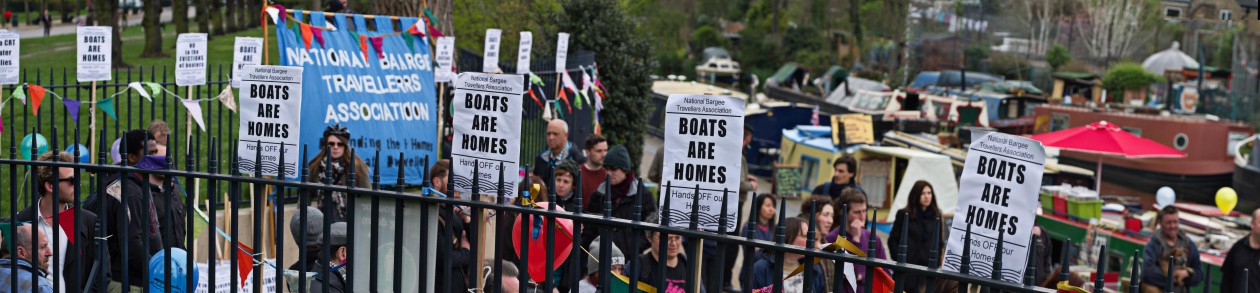
    NBTA volunteers attended events across the country and leafletted beside CRT stalls to raise public awareness about the licence fee surcharge.

    Looking ahead, CRT expects standard licence fees for narrowboats with home moorings to rise by 31% by 2028, based on a projected consumer price index (CPI) of around 4%, plus an additional 1.5%. That’s before any surcharge. CRT’s aim is to increase revenue by an average of CPI plus 3%, but most of the burden will fall on boats without a home mooring and larger vessels. By 2028, narrowboats without a home mooring could face a total increase of 61%, while 10ft and 14ft widebeams might see rises of 97% and 130%, respectively. These figures are minimum estimates.

    Additionally, CRT only provides five-year projections (2023-2028), despite operating under a 10-year financial plan, leaving future price increases uncertain. In 2022, CRT raised licence fees twice, and they may increase them further in the coming years depending on inflation. Current estimates assume 4% CPI plus 1.5% added by CRT for the next five years.

    If CRT manages to extort the surcharge on boats without a home mooring this year, the future looks increasingly unpredictable and financially insecure.


    NBTA London needs your support to carry on our work. Please get in touch here if you would like to volunteer with us. Alternatively your donations are vital to us supporting boaters with their legal case work, campaign banners and other printed material as well as events. You can help us with your donations online here


    The chargeable moorings, the backstory

    It’s been over a year since Canal and River Trust (CRT) started introducing chargeable moorings as part of their plan to bring down boat numbers in London. So far, only part of the plan to bring in 1.1km of chargeable moorings has been implemented and already these have had a great impact on the boaters that use these areas. Added to the chargeable moorings that were bought in with CRT’s London Mooring Strategy, the length of chargeable moorings in London will do up to 1.5km.

    The pretence was that these moorings would allow those from other parts of the country to visit the capital more freely, with assured availability in the most popular destinations. CRT supposedly carried out a consultation on whether boaters wanted such moorings in 2022, however they have so far been unable to provide us with the results of this consultation upon request. Meantime in the “Issues & Challenges Report” published as a result of their 2022 survey, the issue of a lack of moorings in central London is nowhere to be seen: unsurprisingly, a lack of facilities and the waterways falling into disrepair are much higher on boaters’ list of concerns.

    Anyhow, availability there now certainly is. According to a Freedom Of Information (FOI) request submitted to the Canal and River Trust (CRT) in June this year and NBTA’s calculations, 1,203 one-night paid bookings were made between 31st October 2023 and 31st May 2024, where the total availability would have been 7,224. This demonstrates that pre-bookable moorings are being used at approximately 17% of their full potential. Chargeable moorings have existed since 2019, with a few available for £10-£12 a night. Why the need to double or triple the price and create more, when these already sat empty?

    In the aforementioned FOI response, CRT declared a total gross income from these booked moorings of £36,532, averaging an income of just over £30 for each night of each booking. To be clear, this is £30 per night to live in your own home, potentially double-moored, with the wonderful view of central London replaced by that of your neighbour’s curtains. Unfortunately, instead of opening up the capital to those living outside it, it has merely priced those of us already living there out. Instead of opening up new moorings and maintaining those available to us now, we find ourselves crammed into smaller spaces, while the most desirable parts of the city sit empty. This leaves the towpaths increasingly susceptible to crime and violence, particularly as the nights draw in earlier, and commuters walk home after dark. These once thriving community mooring spaces have been left empty and abandoned because CRT has made them financially exclusive – a strange no-person’s land throughout central London.

    For those of us crossing the capital and unwilling  or unable to pay, we now have an obligatory full day’s cruise ahead of us. And what’s to stop CRT extending these expensive moorings further, leaving us no choice but to stop in them and pay a fee or risk a fine? Alternatively, more London boaters will remain on a River Only licence and cruise solely on the Lee and Stort, therefore reducing CRT’s income further. Boaters from outside London will likely do what most Londoners do all year-round: moor up on the outskirts and travel in.

    In an FOI request submitted in October 2023, CRT explained that three Mooring Rangers manage the pre-bookable moorings alongside other tasks, at a cost to them of £104k a year. This doesn’t cover software, IT, admin support, management of that team, or any other associated costs. Considering the gross income from these moorings of £36,532 over six months, so approximately £73k a year, it’s hard to see how CRT could be making much profit, if any. It is in fact more likely they would be making a loss.

    So here we are again. Another scheme started by CRT under false pretences, which is not only detrimental to London boaters, but those all along the network, who aren’t seeing any of the supposed income reinvested into CRT waterways and facilities to meet boaters’ day to day needs.

    Boats moored in protest against chargeable moorings at Little Venice, late 2023

    Where have all the boats gone?

    In March, the Canal and River Trust (CRT) announced that they will be introducing 800 meters of new pre-bookable moorings at 6 sites across London: Kings Cross, Camden, Victoria Park, Broadway Market, Kensal Green and Cowley North. This is in addition to existing chargeable moorings at Islington, Little Venice and Paddington.

    Since then, members of NBTA London have been working together to campaign against the loss of these free mooring spaces, and to tackle the CRT’s assertions that boaters struggle to find somewhere to moor in London and therefore these pre-bookable moorings are justifiable.

    These pre-bookable moorings are now live but if you have been anywhere near these moorings, you’ll be wondering who are the boaters that so desperately want to moor in these spots, because they’re not in London. These moorings, which used to be full of bustling boater life, are now empty and quiet. Locals have already started to comment that they do not feel safe walking these strips of towpath at night again. In response to this, an outreach program targeted at locals and boaters, called “Where have all the boats gone?”, is about to be launched to find out how the lack of boats in these areas is negatively impacting their use of the canal and towpath.

    To make matters worse, more chargeable moorings now seem to be popping up, almost over night, with little or no warning. Embarrassingly for CRT, these pre-bookable moorings are clearly already failing. Based on the lack of uptake, the CRT have been sent several FOIs regarding the use of these moorings, but unfortunately they have not been very forthcoming with their responses so far.

    Chargeable Mooring Sign in London, subverted by local boaters to read, “No Charges apply”

    As many boaters have expressed an interest in continuing to use these moorings as standard, 14 day mooring. Here is guidance regarding the possible implications of mooring in these spots: https://nbtalondon.co.uk/2024/07/12/should-i-moor-on-the-payable-moorings-some-brief-guidance-and-advice/

    Let CRT know that you don’t agree with this new change by using their contact form here: https://canalrivertrust.org.uk/contact-us/ways-to-contact-us

    Should I moor on the payable moorings? Some brief guidance and advice.

    This guidance is to help you to decide whether to moor on the chargeable moorings or not. If CRT charge you for mooring without booking, contact NBTA Caseworkers for help. 

    For more detailed guidance, including case law and foot notes, see here

    I’ve already decided to moor – what are the basics I need to remember? Brief Information

    CRT’s ability to issue charges is untested. They state that they will charge double the nightly cost for any boat that stays without paying. It isn’t known if they can uphold this (see [link] for more info). 

    Stick to the British Waterways Act 1995: do not overstay the 14 day limit unless reasonable, use your boat for bona fide navigation, have a valid BSS, have insurance. 

    Check that mooring is available on CRT’s website before mooring on the chargeable mooring. If it is fully booked, don’t moor there. Be respectful to other boaters who may have paid.

    If you say that you are mooring there in protest or there are clear signs which state the charges, then then CRT could argue that you have agreed to the terms and conditions of mooring there. This may make it easier to charge you. 

    Hiding index numbers is against the 1975 BW byelaw. However, CRT do not have the power to refuse you a licence for not displaying your index number. If someone doesn’t display an index number, it is harder for CRT to know who is moored on the chargeable mooring and therefore to send emails to them.

    Do not engage in conversation with mooring rangers. 

    If CRT move beyond threats and do issue a charge, contact the NBTA London caseworkers: https://nbtalondon.co.uk/resources/contact-nbta-caseworkers/

    Should I moor on the payable moorings? More detailed guidance

    This detailed guidance is to help you to decide whether to moor on the chargeable moorings or not. If CRT charge you for mooring without booking, contact NBTA Caseworkers for help. 

    For less detailed guidance, see here.

    I don’t know whether to moor there – what do I need to consider?  Detailed Guidance 

    Can CRT Charge me?

    CRT claims it could charge a fee for breaking the T&Cs and ignoring their signs. They haven’t issued any extra charges to boaters for ignoring their signs. 

    CRT are claiming that they can charge double for mooring on chargeable moorings without booking. This has not been tested. We believe it to be unlikely and as far as we are aware, no charges have been issued for overstaying before. However, mooring will be at your own risk.

    If no signs are visible clearly saying what the restrictions are, CRT will not be able to charge boaters for staying there. If signs are visible, it can be argued that the boater is entering into a contract with CRT by mooring there. In ‘Parkingeye Ltd v Beavis (2015), a motorist’s appeal against a charge was rejected because there were plenty of signs stipulating the length of stay and the penalty1.

    Similarly, if a mooring ranger tells you to move, it can be argued that by remaining there the boater is entering into a contract with CRT. If you were to tell a CRT employee that you are moored in protest, you would be acknowledging that you know about the chargeable mooring and so also be entering into the contract. However, you should only feel compelled to move if safe and able to do so. 

    If you mooring on a chargeable mooring doesn’t stop another boater who has paid, then CRT can not issue a large fine. In the Parkingeye Ltd v Beavis 2015 court case, the judges ruled that a charge collected needs to be in line with the loss incurred. This suggests that if you cause CRT to lose money by mooring in a spot someone else has paid for, they will be able to charge more than if you had not caused them a loss2. Take a screenshot of the available booking online and of the empty spaces so that you have proof of this. 

    The booking website will show you if there is limited or no availability on the chargeable moorings (amber or red). If it is red, we do not advise that you moor there. If it is amber, make your own judgement about whether to moor there. 

    CRT cannot legally issue fines which automatically take money from your bank account. They might be able to send a penalty charge notice to your address. 

    Can CRT take away my licence if I get a charge and don’t pay it? 

    Mooring on chargeable moorings without paying should not affect your licence. It is a breach of your licence Terms and Conditions.

    Legal advice states that CRT that cannot refuse to relicense your boat so long as you satisfy all the conditions of section 17 of British Waterways Act 19953 (Not staying more than 14 days, the boat is used for bona fide navigation, has insurance, and valid BSS). Whether you breach the Terms and Conditions or refuse to pay the charge, it is not relevant and should not affect your renewing your licence.

    CRT cannot evict a boater only for running up charges that they say are owed to them. In Ravenscroft Vs Canal and River Trust court case (2018), the judge ruled that CRT cannot recover ‘outstanding cost’ from boat owners using Section 8 of British Waterways Act 1983 (one of the eviction notices that CRT issues to boaters)4.

    If I decide to moor there, how do I go about it?

    • untickedCheck that mooring is available on CRT’s website before mooring on the chargeable mooring.
    • untickedStick to British Waterways Act 1995: do not overstay the 14 day limit, use for bona fide navigation, have a valid BSS, have insurance. 
    • untickedHiding index numbers is against the 1975 BW byelaw5. If someone doesn’t display an index number, it is harder for CRT to know who is more on the chargeable mooring.
    • untickedYou do not have to engage in conversation with mooring rangers. 

    If CRT move beyond threats and do issue a charge, contact the NBTA London caseworkers: https://nbtalondon.co.uk/resources/contact-nbta-caseworkers/

    Footnotes

     1 Parkingeye Ltd v Beavis [2015] EWCA Civ 402: “[28] …charges of the kind now under consideration should be recoverable, provided that they had been brought clearly to the attention of the motorist at the time he made use of the car park.”

    2Parkingeye Ltd v Beavis [2015] EWCA Civ 402: “ [12] It will be held to be a penalty if the sum stipulated for is is extravagant and unconscionable in amount in comparison with the greatest loss that could conceivably be proved to have followed from the breach.”

    3 https://www.legislation.gov.uk/ukla/1995/1/section/17/enacted

    4  https://www.casemine.com/judgement/uk/5b2897fa2c94e06b9e19e90e

    5  “No person shall knowingly cause or permit to be concealed a pleasure boat licencce or commercial vessel license required to be displayed on a pleasure boat or commercial vessel in accordance with this Bye-law”,