Tag Archives: Strike

Resisting CRT’s controversial Surcharge with a Licence Strike

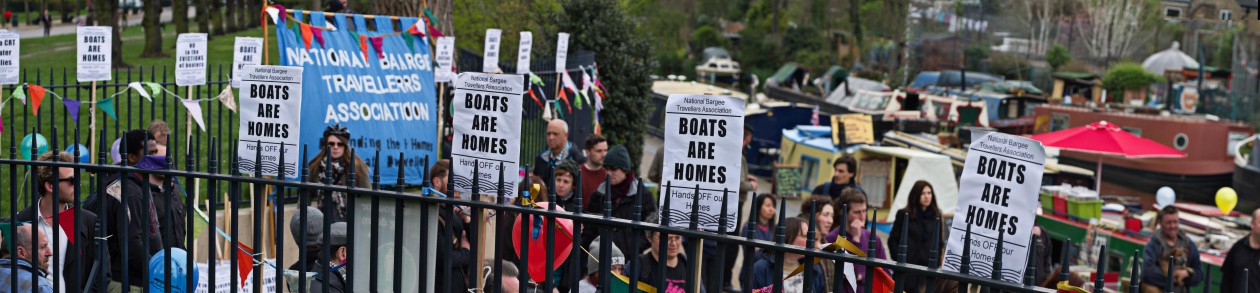
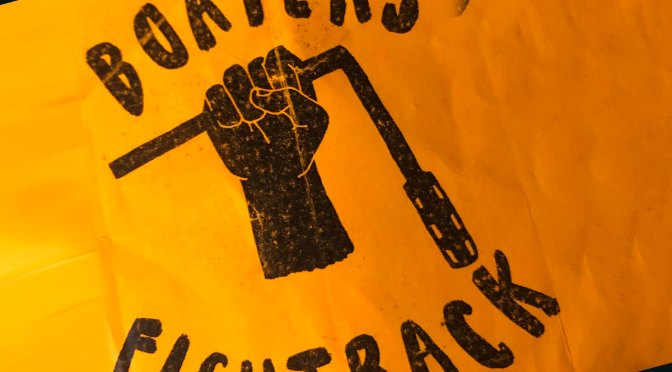
Stop The Surcharge Campaign members are organising ahead of a Licence Strike. They are asking anyone interested in striking to sign up to the Licence Strike Group – tinyurl.com/licencestrike. Strikers will refuse to pay CRT’s new class of licence fee in protest against an ever-increasing additional charge for boaters who do not want, or cannot afford or find a home mooring.

The strength of this protest action is it has real leverage – a real financial and administrational impact on CRT. The new ‘Continuous Cruiser’ fee is perceived within the community as an attempt to incrementally price itinerant boaters off the waterways. Once enough people sign up to the Licence Strike, if CRT doesn’t back down a strike will be called. A coordinated Licence Strike will have a significant impact on CRT, overloading their enforcement team and costing them dearly.

Early signs are strong. Leafleting and promotion has only begun and already over 300 boaters have signed up. Strike organisers have indicated that the number of strikers are growing of their own accord:

“Boaters can see how divisive and unfair the Surcharge is and they want to strike – some are striking already. The intent is already there in the community – all we’ve had to do is facilitate it as a viable protest action. Our job is to make the strike effective and safe for boaters. There are legal protections we can incorporate. There is protection in numbers. Already more than 300 hundred boaters have signed up, and there’s an entire community behind them.”

“Boaters are being charged unfairly every time they renew a licence. CRT almost certainly aim to increase the surcharge beyond what they have stated so far and destroy our community, and boaters know this. The number of strikers will only grow. Once we have enough interest we will call a ballot and strike. CRT have left us with little choice – take action or they will end our community. We must take collective action to stop the ‘surcharge’. “

Stop the ‘surcharge’ by signing up to the License Strike Group – go to tinyurl.com/licencestrike and complete the signup form. There will be a full description of the strike action and a full ballot to members and boaters before any strike action is taken.


NBTA London needs your support to carry on our work. Please get in touch here if you would like to volunteer with us. Alternatively your donations are vital to us supporting boaters with their legal case work, campaign banners and other printed material as well as events. You can help us with your donations online here


Remembering the Great Canal Strike – A century on

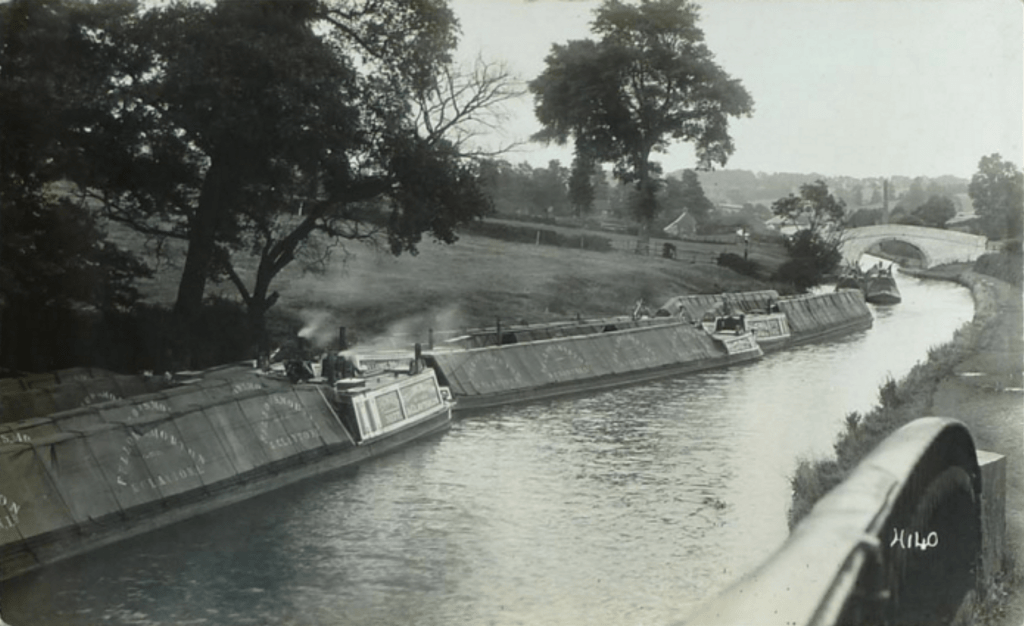
This summer will mark 100 years since the Great Canal Strike when boaters brought England’s canals to a standstill in a dispute over pay and conditions. The action centred around Braunston in the Midlands where the Grand Union and Oxford Canals meet and where one of the country’s largest canal carrying companies was based at the time. 

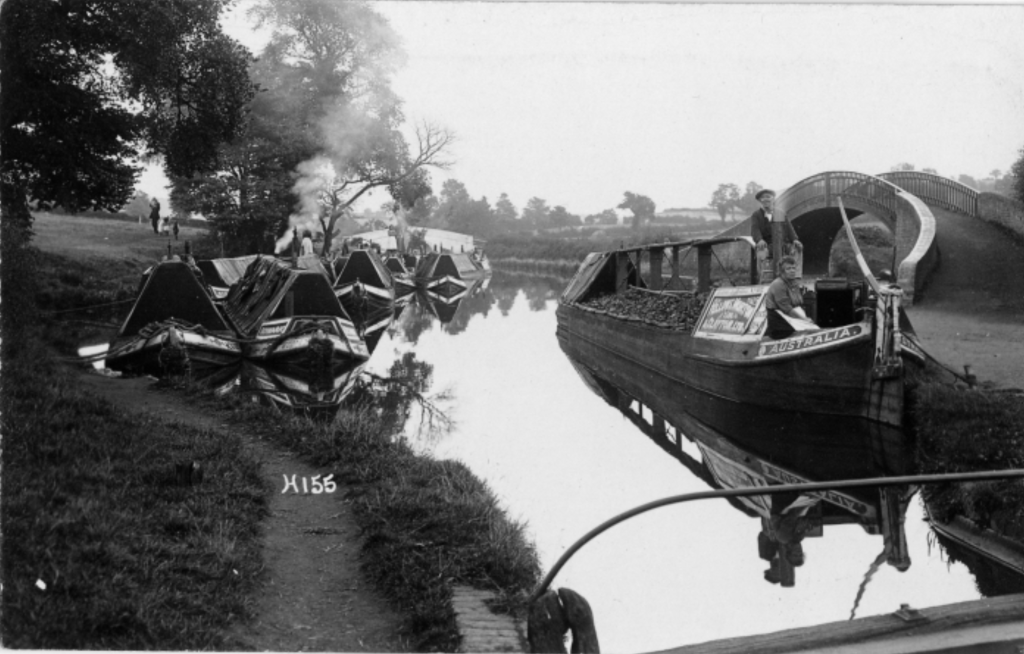
In August 1923, Fellows Morton & Clayton (FMC) announced they would be cutting boatmen’s wages by an average of 6.47% from the following Monday, the 13th. Within days, up to 60 boats moored up along both sides of the two canals blocking FMC’s wharf. For 14 long, hard weeks, canal workers and their families took over the busiest junction on the network in one of the inland waterway’s first strikes. 

(Pic: Dennis Ashby Collection)

The workers were called out on strike by the recently formed Transport and General Workers’ Union (TGWU). This new union was led by Harry Gosling who was behind the famous London dock strike of 1889. He had previously been the General Secretary of the union formed by the river workers’ following their collective action – the Amalgamated Society of Watermen, Lightermen and Bargemen.

Opposite the towing path bridge over the arm that used to lead to the Oxford Canal (Pic: Dennis Ashby Collection)

In January 1922, a number of transport unions, including the Watermen’s Society, joined to form the TGWU and Gosling became its president. The canals had not been unionised before, but canal workers were soon singled out as a sector needing union assistance after many years of neglect.  It’s said that boatmen on the canals compared notes with Thames dockers in the pubs around Limehouse and Brentford.

Boater families gather under a railway viaduct (Pic: Dennis Ashby Collection)

In just over a year, the TGWU had negotiated agreements on wages and conditions with many of the larger canal carrying companies, but the FMC at Braunston were determined to go ahead with these cuts, despite protest from the union’s rep. Many of the company’s 600 workers walked out. 

The TGWU sent Mr Sam Brookes to oversee the strike and support the workers in Braunston. While there, he organised reading and writing classes for the strikers and their families, many of whom were illiterate, as well as concerts and church services. The boaters increased the
population of the small Northamptonshire village by nearly a third and many children started at the local school during their stay. 

(Pic: Dennis Ashby Collection)

Six weeks into the standoff, the company threatened boatmen with the sack and eviction from their homes on the boats. The union advised the workers to continue the fight. Faced with losing both their livelihoods and their homes, their protests were said to be colourful and noisy. The
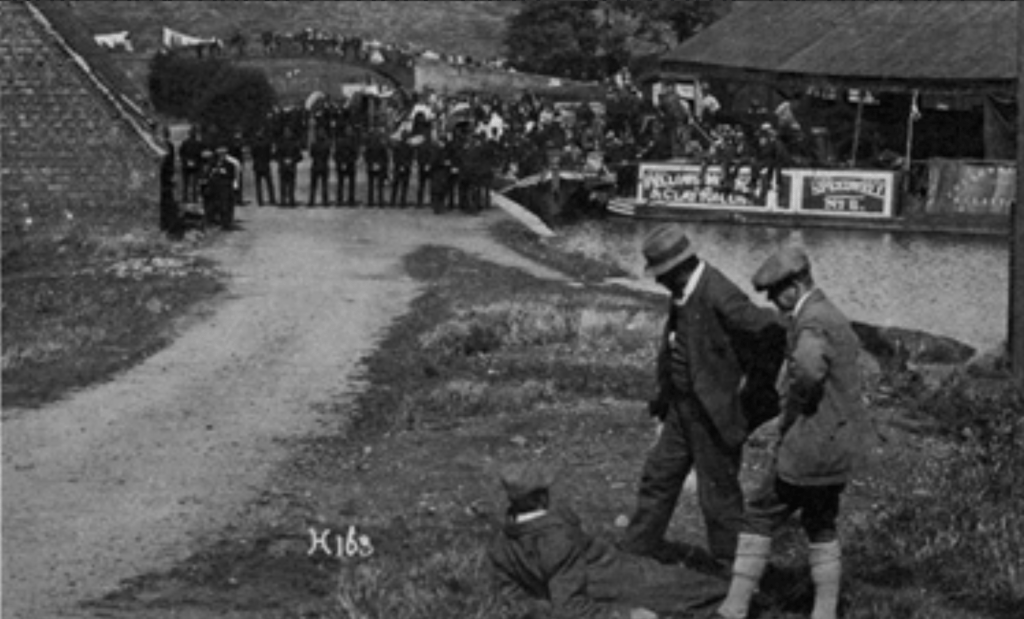
company employed scabs to try and unload the thousand tonnes of tea and sugar from the boats so the cargo could be delivered by road. An already tense situation escalated further when the police were brought in to oversee the transfer of cargo. Needless to say, one boat captain helped the wharf’s foreman take a dip in the canal.

FMC Steamer brought to be unloaded with police blocking the road (Pic: Dennis Ashby Collection)

After over three months with no pay, the strike was finally taken to arbitration. The industrial court ruled that a 6.47% average cut was too high and instead ruled for a 5% reduction staggered over two months to lessen the impact on workers. This was deemed a success at a time when wages across all industries were facing harsh cuts and many canal workers felt as though they’d avoided a larger blow to their already paltry incomes.

(Pic: Dennis Ashby Collection)

The 1923 canal strike was an important moment in the struggle for worker’s rights in this country and led to many fundamental improvements in the working and living conditions of boating
families. The TGWU went on to become part of the UNITE union and the actions of those 60 or so boating families shows the long history of solidarity and resistance we continue to celebrate on the inland waterways today.


NBTA London needs your support to carry on our work. Please get in touch here if you would like to volunteer with us. Alternatively your donations are vital to us supporting boaters with their legal case work, campaign banners and other printed material as well as events. You can help us with your donations online here