Tag Archives: survey

NBTA FIGHT BACK AGAINST LICENCE FEE CONSULTATION

In February earlier this year, the Canal and River Trust (CRT) sent out an email announcing their upcoming “Consultation on future boat licence pricing”. The preliminary email stated that the purpose of the consultation was “to gather feedback on boat licence pricing over the next ten years to help support the long-term future of the 2,000 miles of waterways”. Three weeks later, boaters started to receive the invitation to the consultation from a company called DJS Research, who CRT had employed to undertake the process. In our invitation, we were told in no uncertain terms that CRT will be raising the boat licence fee “by more than the rate of inflation for the foreseeable future” and what CRT supposedly wanted from us was to help them find the “fairest way to apply these increases”. 

Reeling from the shock of being told our licence fees will increase yet again, we cautiously opened the survey only to discover an extremely leading, divisive and biased set of questions, heavily aimed at raising the licence fee for boats without a home mooring specifically. Knowing that this consultation went out to all boaters, those with and without home moorings, the consultation felt very much like it was pitting boater against boater. 

In two out the first three questions, it was suggested that the licence fee for boats without home moorings should rise. A third question focused specifically on whether it is more or less reasonable to charge higher fees for “continuous cruisers”, with no option of saying “not reasonable in the slightest”. The questions in this survey were clearly implying that boats without home moorings should be priced differently to boats with home moorings. CRT may as well have asked: “Should we raise the licence fee for: a) continuous cruisers; b) boats without home moorings; or; c) itinerant boat dwellers?”.

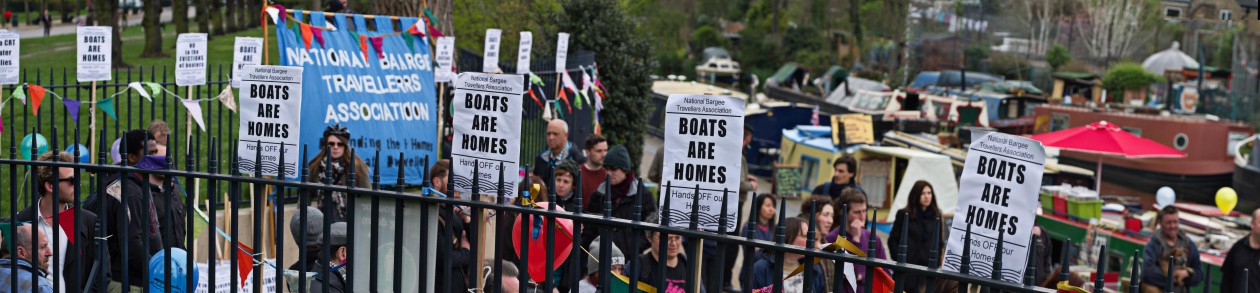
As such, the NBTA saw the potential results of this consultation as a direct threat to our community, so we produced a set of suggested answers to all the questions. Our suggestions aimed to provide answers that would not divide boaters and instead encourage every boater to stand together in the face of rising fees, the opposite to what CRT seemed to be driving at with their questions. Our campaign was nationwide; information leaflets detailing the threat of the consultation were distributed across the CRT network, and we had a huge social media outreach drive. We hope that we managed to reach boaters everywhere, and thwart the very biased views CRT were pushing.

This consultation seemed to be yet another part of CRT’s continued assault on the itinerant boat dweller community and their bid to force us off the waterways. and of course there is their history of attempting to raise licence fees for itinerant boaters specifically (you can read about these in detail here). When the numerous aspects of this sustained effort are considered, it is not hard to see a pattern emerge. CRT have taken away facilities, mooring rings and bollards, and mooring spaces (only to replace them with bookable moorings in some cases), and of course there is their history of attempting to raise licence fees for itinerant boaters specifically (see the history article in this newsletter for more details). Itinerant boat dwellers have been targeted by CRT for decades, and if they get away with pricing boats without home moorings differently to those with home moorings, they will be able to price itinerant boaters out of existence.

The results of the consultation are now due to be published in October 2023. If CRT decide to use their survey to justify a decision that has harmful consequences for our community, we will show them that that would be more trouble than it’s worth.

The NBTA would like to thank everyone who filled in CRT’s leading and divisive survey. Thank you to everyone who helped encourage others to fill it in, to the people who put it on social media, to those who chatted to people, and especially to the people who handed out the ‘Don’t let CRT price us off the water’ leaflet across the CRT network. Together, we are a strong community who will not be bullied off the waterways.


NBTA London needs your support to carry on our work. Please get in touch here if you would like to volunteer with us. Alternatively your donations are vital to us supporting boaters with their legal case work, campaign banners and other printed material as well as events. You can help us with your donations online here


CRT UP TO THEIR OLD TRICKS AGAIN

So this year CRT pulled out of their bag of tricks, one of the favourite waterways authorities questions: ‘Should people without a home mooring pay more than those with?’ And without much warning they actioned this into their new surprise survey. It’s not the first time CRT or their predecessor British Waterways (BW) brought this question out. Within the last 21 years they have bought it out four times.

In the Bill that became the British Waterways Act 1995, BW wanted it to be a criminal offence to keep a boat on BW waterways without a home mooring. However, with an almighty pushback we instead got an Act which gave us the legal right to exist on BW waterways. This was quite a setback for BW, it had for the 20-30 previous years been making life on the water harder. Now it was law that they had to licence our boats as long as we followed three basic criteria. Therefore, BW and following them CRT had to come up with some inventive ideas to deal with their persistent pest – the travelling boater.

They tried a few different tactics in their attempts to eliminate our community from the waterways, from reducing mooring stay times to taking away moorable banks to outlandish enforcement strategies such as 2003’s plan to make our travelling boaters travel 120 different lock-miles every 3 months without turning back. Some plans were beaten back, others weren’t. So far each time BW and CRT have proposed that boats without home moorings should pay more; it has been successfully resisted.

In early 2002, BW stated that they believed the licensing system was “felt by many to be unduly complicated”, in a document entitled ‘A fresh look at BWs craft licensing structure:

Consultation Paper for Boaters May 2002′. They proposed a more complicated tiered licensing system where they would increase the licence fee for a boat without a home mooring to 2.5 times that of the normal licence fee. In their document they even argued, ‘there is a compelling argument for a ‘pay as you go’ system’.

Later that year, after doing a bit a consultation they published ‘A fresh look at BW’s craft licensing structure: Consultation update’. Here BW put boats without home moorings into four categories: genuine continuous cruisers, bridge-hoppers or short range cruisers, static “live aboard” boats and boats awaiting a mooring. Just for clarification, BW considered bridge-hoppers or short range cruisers were people who “moved less than 50 km in any three month period”. They were concerned that if they charged boats without home moorings more then they would harm the “genuine continuous cruisers” as well as the other types of categories they’d coined without home moorings. Therefore, they proposed that boats without home moorings who moved within a range in one region “pay a district mooring fee equivalent to the lowest priced BW permanent mooring in the area where your craft is normally kept or used”. Under pressure, this idea was also discarded.

In a 2005 document entitled ‘Licence Fee Consultation June 2005’ BW proposed to increase the licence fee for boats without a home mooring by 147%. It was identified in a report by BW entitled ‘Fee Structures for Boat Licences in England and Wales White Paper’ in the same year, that if implemented it would have raised £1million from only 1,360 boat licence holders.

A group called the Continuous Cruiser Action Group was set up to coordinate boaters responses to the consultation.

A section of boaters organised themselves against it and set up a campaign mobile phone group. Some of the organised boaters travelled across the nation and painted the phone number on locks asking people to get involved. The phoneline became inundated with texts of people wanting to do something. If BW didn’t back down the plan was to send text messages for people to meet at a list of different lock pinch points and do a go slow flotilla to cause disruption. BW backed down so the resistance plan didn’t need to implemented. At the time in 2006, the Continuous Cruiser Action Group made a statement saying, “just because all has gone quiet, it isn’t over”. They weren’t wrong.

In early 2008, hire boat company Wyvern Shipping circulated a petition calling on BW to make continuous cruisers pay a higher licence fee. In January 2008, Sally Ash BW’s then Head of Boating had received a letter from the Association of Pleasure Craft Operators (APCO), the hire boat companies’ trade body, threatening a drop in BW’s licence income if BW increased the cost of hire boat licences.

In September 2008, BW issued a consultation document to the User Groups entitled ‘Boat Licence Fees – For information and comment on by Waterway User Groups’. This document included a proposal to increase the licence fee for boats without home moorings by £150 in comparison to the published tariff. BW also proposed to introduce higher licence fees for widebeam boats. However, once again boaters organised and beat these plans back.

Then in 2017, CRT announced that the licence fees system was “outdated” with the ridiculous lie that licence fees have never been reviewed. They argued that licence fees were “complex”, “unfair”, “outdated” and that their consultation into the fees would be “cost neutral”. This so called cost neutral consultation had three stages and had to change research company for the third stage.

We in the NBTA were involved in each part of the consultation. All the way through this process, CRT attempted to divide boaters, putting forward the question again about charging boats without home moorings more than those with. Therefore, we spent this time preparing to be ready to ballot our members for a licence fee strike if we had to. We weren’t going to let CRT price us off the water!

Again, it didn’t come to that. CRT decided not to take us on at that time. So they decided to halve the early payment discount, pick on wider boats and further made a statement saying they would think about how to deal with the London waterways problem; separately. This thinking has led CRT to plan to implement chargeable moorings on 1.1km of London’s regular towpath. In a meeting between NBTA and CRT this year, CRT revealed that they still haven’t implemented this plan because they haven’t been able to hire someone suitable to manage the project. While that plan is still apparently to be implemented, CRT has reached back into the bag of tricks and found the same old question, once again hoping for different reply.

As in the past, we must show the waterways authorities we aren’t a community that they can push around and do whatever they want with. We aren’t a social problem that needs culling, our way of life is worth defending and together we can beat them back! Please get involved. If you think the lifestyle of travelling without a fixed address should continue to be defended, then join us here: https://nbtalondon.co.uk/about/welcome-to-the-nbta/ or email nbtalondon@gmail.com.

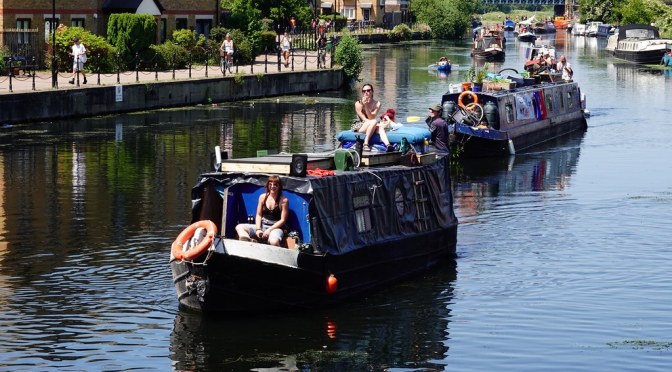
Featured image by David Mould on Flickr


NBTA London needs your support to carry on our work. Please get in touch here if you would like to volunteer with us. Alternatively your donations are vital to us supporting boaters with their legal case work, campaign banners and other printed material as well as events. You can help us with your donations online here