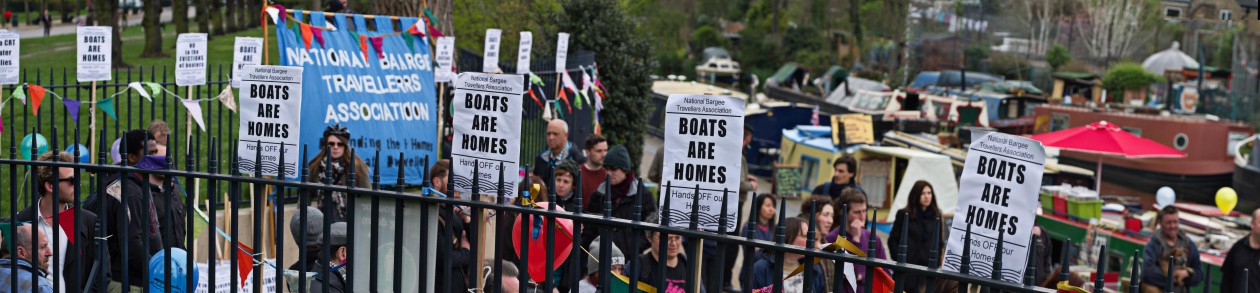
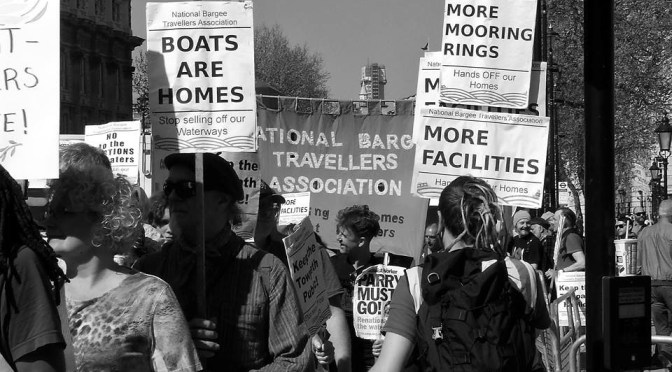
Tag Archives: travel

Licence Review Survey Results: What the Data Really Shows

The other week CRT’s Licence Review Commission published the results of their ‘engagement survey of Canal and River Trust waterway users’, carried out between March and April of this year by independent consultants Campbell Tickell. The survey – which many respondents have reported as being ill-conceived and biased – has nevertheless returned results that will make difficult reading for CRT.

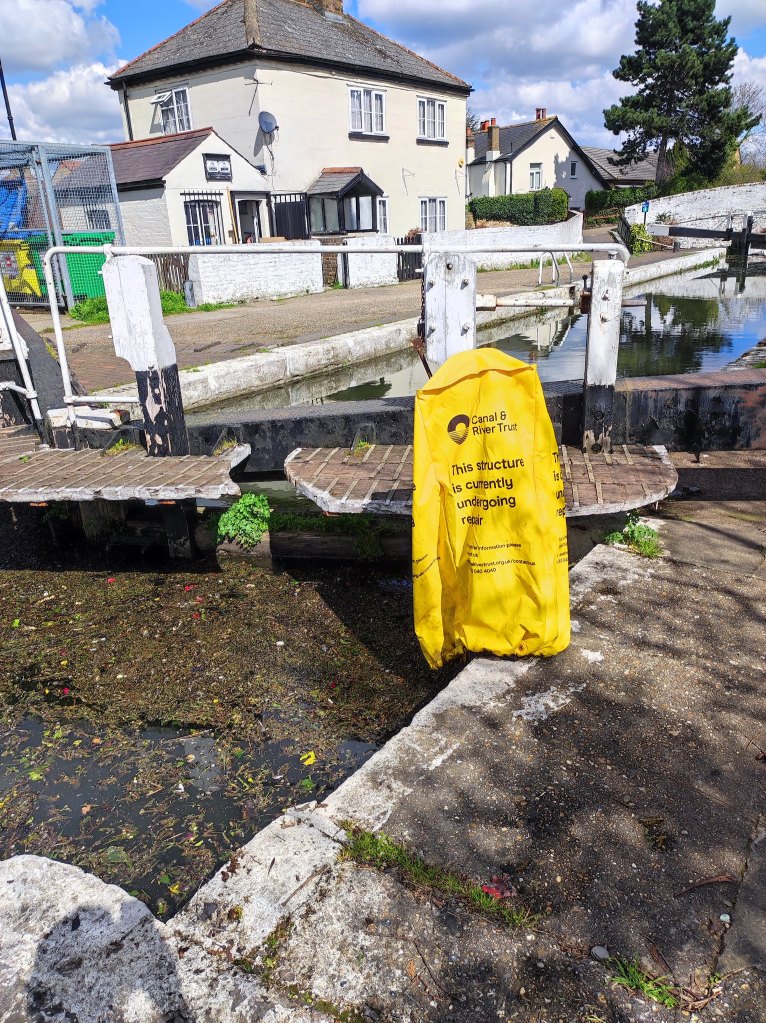
Results showed that more than 8 in 10 are frustrated with the day-to-day management of CRT waterways in the UK. Over 60% of respondents were frustrated about maintenance – including of towpaths and banks, management of water supply and a lack of investment in infrastructure – making this the biggest issue raised in the report. Despite CRT scapegoating the rise in itinerant boat dwellers, only 1 in 20 surveyed saw overcrowding on the waterways as an issue. 9 in 10 did not support legislative change, despite CRT’s recent emphasis on this possibility.
Scapegoating itinerant boaters

The survey forms part of CRT’s ongoing ‘Future of Boat Licensing Commission’ which caused outrage earlier this year when it described the itinerant boating community as an ‘operational, financial and reputational challenge’ and lamented how legislation like the Human Rights Act 1998 and Equality Act 2010 were limiting the charity’s ability to take enforcement action against boaters, which includes forcing people into homelessness via eviction proceedings.

The total amount of itinerant boats is only around 7000 across CRT waterways. Yet CRT continues to target this small community with a controversial fee surcharge, a decline in services, punitive enforcement including of families, pensioners and disabled boaters, and multiple attempts to remove historic mooring spaces altogether.

Questions about the survey data 

The National Bargee Travellers Association, requested the raw data of the survey in a meeting with CRT, but to date has received nothing, shedding doubt on the Commission’s promises of “clarity” and “fairness”.

A Freedom of Information Act request has now been lodged, but CRT continues to deny the boating community its own data.

Failing on the basics

Despite CRT’s continued scapegoating of boaters, the numbers show a convincing rejection of legislative changes that could have decimated England’s boating community. 

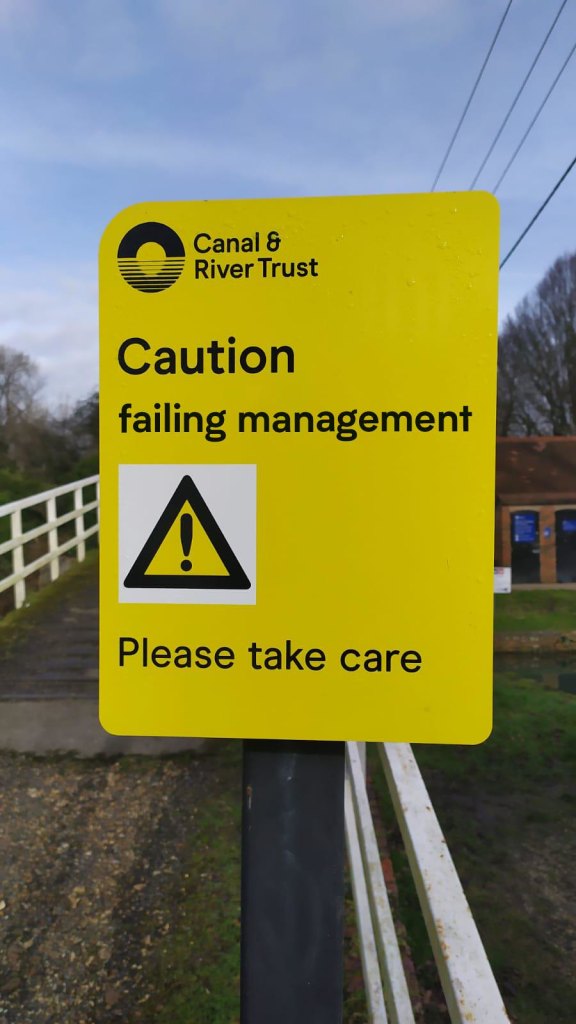
More worryingly for CRT, they also indicate a range of stakeholders’ overwhelming level of frustration with its day-to-day management of the waterways, including financial mismanagement, a decline in facilities and anger over the inflating wages of CRT executives
CRT Expresses Clear Desire to Change the Law

Seemingly out of the blue, late last December, the Canal and River Trust (CRT) announced a commission to review licensing. Attached to the press release was a ‘Terms of Reference” to the commission that clearly outlines their intentions to remove itinerant boat dwellers from inland waterways. It explicitly states that CRT views the community of boat dwellers without home moorings as a problem, advocating for changes to the law to address this ‘problem’. The document claims that the community has “created challenges for the Trust both from an operational, financial, and reputational perspective” and that in dealing with these so-called ‘challenges,’ CRT is seeking changes to the law, pointing to its issues with the Human Rights Act 1998, the Equality Act 2010, and the British Waterways Act 1995 —the very legislations that enshrine our community’s legal protection to exist.


In this document, CRT announced it has appointed an ‘independently led’ commission to review a future legislative framework for how boats on its waterways are licensed. Currently, the rights of itinerant boaters to live on the waterways are underpinned by Section 17(3)(c)(ii) of the 1995 British Waterways Act, which provides that a vessel may be licensed without a permanent mooring as long as it is “used bona fide for navigation throughout the period for which the consent is valid without remaining continuously in any one place for more than 14 days or such longer period as is reasonable in the circumstances.”

It is not just what the document does say that’s alarming, it’s what it doesn’t say too. There is no mention of the many positive aspects of itinerant boating: we ensure the network remains ‘operational’ with itinerant boaters flagging and fixing issues with locks, towpaths, facilities, and the cut itself; we keep each other and non-boaters safe in places that were once seen as no-go areas; and we act as unpaid but willing tour guides/tourist attractions/security guards for the many visitors to the UK’s canal network each year. Numerous things can be said about itinerant boaters’ positive impact, but the document is truly desolate on that front. The document also does not mention any other class of boater (apart from liveaboard) or waterways user……it is us they’re after!

Despite the NBTA sending the commission a response laying out facts which show the invalidity of the Terms of Reference, Commission has already ratified CRT’s document. This is worrying. It may be a sign that a conclusion has already been reached. The Commission has had multiple meetings and has put out a survey, making it clear what is seen as the problem. The commission is expected to run until at least September 2025, when its recommendations will be considered by CRT’s board of trustees.


In the meantime, the NBTA will keep a close eye on the commission and engage whenever possible, relaying information when useful and raising questions on your behalf. After the commission, CRT may well go to Parliament to try to get a new damaging law. We are currently lobbying MPs and Peers to generate support in Parliament to remove the threat. All MPs and Peers engaged so far are very
supportive. It may also help to put together a portfolio of positive boater action. If you want to add to the ‘Better with Boats’ portfolio, please email us at nbtalondon@gmail.com.


If you want to be involved in lobbying MPs or generally in this campaign, please email nbtalondon@gmail.com


You can read the CRT ‘Terms of Reference’ and NBTA’s response to it: https://bargee-traveller.org.uk/nbta-response-to-crt-commission-terms-of-reference-to-review-law-and-policy-on-boat-licensing/#:~:text=The%20Canal%20%26%20River%20Trust%20%28CRT%29%20announced%20that,National%20Bargee%20Travellers%20Association%20%28NBTA%29%20to%20the%20ToR.

Boaters’ Big Bash

National boater event on Saturday 14 June. Come to the Boaters’ Big Bash; it will have food, stalls, children’s activities, speeches, live music, and acts from the boaters, oh and bunting…

Saturday 14th June starting 12 noon, W2 5TF near Westbourne Park, a little west of Paddington on the Paddington Arm, Grand Union Canal, London

what3words///intelligible.dome.until

Edit Post “Big national boaters’ event” ‹ National Bargee Travellers Association – London Branch — WordPress

BW in early 2000’s attempts get rid of boaters

CRT and British Waterways before them have been trying to get rid of boats without home moorings for decades. Here is an article about the early 2000’s boater battles with BW.

In early 2002, BW stated that they believed the licensing system was “felt by many to be unduly complicated” in a document entitled ‘A fresh look at BW’s craft licensing structure: Consultation Paper for Boaters May 2002’. They proposed a more complicated tiered licensing system where they would increase the licence fee for a boat without a home mooring to 2.5 times that of the normal licence fee. In their document, they even argued, ‘there is a compelling argument for a ‘pay as you go’ system.’

Later that year, they published ‘A fresh look at BW’s craft licensing structure: Consultation update’. Here, BW put boats without home moorings into four categories: ‘genuine continuous cruisers’, ‘bridge-hoppers’ or ‘short range cruisers’, static ‘live aboard’ boats, and boats awaiting a mooring. BW considered ‘bridge-hoppers’ or ‘short range cruisers’ to be people who “moved less than 50 km in any three-month period.” They were concerned that if they charged boats without home moorings more, then they would harm the ‘genuine continuous cruisers’. They consequently proposed that boats without home moorings that moved within a 50 km range in one region pay a fee equivalent to the lowest price permanent mooring in the same area. Many felt this to be arbitrary and deeply unfair, and under pressure, this idea was also discarded.

Then in 2003, BW, searching for other ways to get rid of boats without home mooring, looked to introduce a Trial Mooring Code, a part of which required ‘Constant Cruisers’ to travel a staggering 120 consecutive lock miles every 3 months and log their cruising in a book available to patrol officers on demand. A lock mile being defined as passing through a lock as a mile. This BW proposal was to be followed by boaters without a home mooring as well as by leisure boaters who spent more than 42 days away from their mooring. BW claimed this was necessary due to overcrowding and overstaying. They also claimed that their staff would ‘demonstrate flexibility and empathy’ when applying the code, values that they themselves were contradicting in the creation of such an extreme set of rules.

The Trial Mooring Code consultation was sent via post to boat owners; some were given directly to boats and put on BW’s website. BW invited boaters to respond to the code over the following seven months – an impossible task for those itinerant boaters who didn’t have a reliable postal address or internet access (this was 2003!). Many of them didn’t get the consultation directly to their boat. As one boater observed at the time, it was particularly unfair to circulate the questionnaire about the changes by post, as it excluded the population of boaters who would be most disadvantaged by the Trial Mooring Code.

Resistance to the code was strong, and an independent consultation was conducted which approached boaters through IWA, NABO, and by distributing questionnaires on the towpath. The independent consultation examined opinions and impacts on the entire boater community. It found that the vast majority of boaters, those with permanent moorings and those who were itinerant, rejected the code. It would have made attending work, school, and healthcare appointments almost impossible and would have made it very difficult to access benefit payments. The responses from the independent consultation questioned BW’s assumption that overcrowding and overstaying were problems that needed to be addressed with any new legislation. NABO then threatened judicial review, arguing that the mooring code exceeded BW’s powers as determined in the 1995 Waterways Act.

As a result of this coordinated effort from the boating community and interest groups, BW discontinued the Trial Moorings Code and instead published ‘Mooring Guidance for Continuous Cruisers,’ which impressed upon boaters their requirement that they make a ‘genuine progressive journey… around the network or a specific part of it.’ The wildly unfair 120 lock-miles-in-three-months requirement was gone.

The 2002 and 2003 campaigns showed that we can win, which is why now, as we face similar threats, it is important to reflect and learn from previous successes.

Source documents of 2002 A fresh look at BW’s craft licensing structure:

Source documents from Trial Mooring Code:

The Campaign for the Energy Grant

As we head into winter, the cost of living on a boat increases massively for many of us, with paying for coal, gas, or diesel to heat our homes. Some of us may forage for free wood to burn. However, this option is now threatened when moored within ‘clean air zones’ due to bans on burning foraged wood.

In the last few years the cost of fuels to heat our homes has dramatically risen. In some cases costs have doubled. But it hasn’t just been boat dwellers that have felt the cost of heating homes exponentially rise. The whole of the UK has seen a great increase in the cost of heating and energy in general. In 2022 in response to this crisis, the government decided to pay £400 towards energy costs for most homeowners. At first however, many households, including boat dwellers, were left out.

Along with non-NBTA members, and other Traveller organisations, we lobbied different MPs across the country. We also lobbied CRT to get them to put pressure on the government. NBTA also met several times with the civil servants, responsible for the Energy Bills Support scheme, including with the deputy director-general of the Department for Business, Energy, and Industrial Strategy.

Many of us sent emails to CRT demanding they do something as well. Then CRT started to talk to the government and made at least one press release stating that boats without home moorings should also get the grant.

Into the summer of 2023 we continued with our campaign including boats with banners and also handing a petition into 10 Downing St. Along with all this, a few boaters without home moorings on CRT waterways started legal action for discrimination against the government on the basis of being left out of the scheme. Two weeks after the solicitor put the papers into court, the government announced that they would pay both energy grants worth £600 to each boat licenced on CRT waterways without a home mooring.

Although we should have got the grant from the beginning, with a campaign, political and legal pressure, we won. This shows that whilst it’s never guaranteed, sometimes our collective effort can have a huge payoff.


NBTA London needs your support to carry on our work. Please get in touch here if you would like to volunteer with us. Alternatively your donations are vital to us supporting boaters with their legal case work, campaign banners and other printed material as well as events. You can help us with your donations online here


No Fire without Smoke!

Councils everywhere are being pushed to reduce air pollution, especially particulates emitted by burning of various fuels. Under Environment Act 2021, some are considering extending existing Smoke Control Areas to cover waterways. This will enable councils to enforce the use of smokeless fuels and/or DEFRA approved stoves on boats in those areas. No evidence is available to show boats to be more than a minor source of emissions. Be very clear, these measures are not climate measures, indeed, if they were, they would be counterproductive, as are LEZs (-replacing old diesels with new diesels does not tackle carbon emissions!).

Boaters face another costly winter heating their homes. The enforcement of smokeless fuels and/or DEFRA approved stoves will only increase the cost and concerns.

Few boats are kitted out with DEFRA approved stoves, which of course carry a premium price, and the lowest power output is 4.5kw, so many boats would have to open all windows and doors whilst using. The alternatives left are expensive fossil-based smokeless fuels in current stoves, or in DEFRA approved stoves-only smokeless again, or kiln dried wood, despite the massive carbon release at drying stage and at transport from the Baltic. One more alternative is to convert to diesel heating, inflicting carbon and particulate emissions, but seemingly compliant with clean air zones.

Of course, we encourage everyone to take care what you burn. Firewood should be as dry as possible and untreated, but we fully accept that many of us cannot afford such things and scavenge wood as and where it presents. We therefore also ask everyone to be a part of the conversation about our responsibilities, individually and as a community in this matter. Perhaps we can do better than we do now! Please contact us at secretariat@bargee-traveller.org.uk


NBTA London needs your support to carry on our work. Please get in touch here if you would like to volunteer with us. Alternatively your donations are vital to us supporting boaters with their legal case work, campaign banners and other printed material as well as events. You can help us with your donations online here


Chargeable Moorings Remain Underused, However the Price Has Been Reduced for Winter

It’s been over a year since Canal and River Trust (CRT) started introducing chargeable moorings as part of their plan to bring down boat numbers in London.

So far only part of the plan to bring in 1.1km of chargeable moorings to London has been implemented but already these changes have had a great impact on boaters who move through these areas of London.

In the CRT’s London Mooring Strategy, the length of chargeable moorings in London could go up to 1.5km in the next year.

CRT claimed to have consulted boaters in 2022 on the need for such moorings but it has not provided the results of this consultation. Notably, their 2022 “Issues & Challenges Report” did not mention a shortage of moorings, instead it highlighted boaters concerns about disrepair and lack of facilities.

Little Venice chargeable moorings in August 2024. Once brimming with life, now desolate.

Chargeable moorings were first introduced here in 2019, but they were priced at £10 to £12 a night. Despite low demand at that price, CRT has significantly raised the price, leading to even more space in central London being wasted, empty of boaters.

According to a Freedom of Information (FOI) request submitted in June 2024, only 1,203 bookings were made between October 2023 and May 2024 (out of a possible 7,224 bookings), indicating that the moorings were used at just 17% capacity.

The FOI revealed that CRT earned a gross income of £36,532 from these bookings on an average of just over £30 per night. We believe this is barely enough to cover the cost of administering prebookable moorings.

The rationale for them is to enable people to book a berth without having to find somewhere to moor on their own in central London. However, the data tells us that the demand is simply not there: only 16.5% of the availability has been utilised.

Rather than improving access to the capital, the charges have effectively priced many existing boaters out of central London, leaving prime locations empty. As a result, many boaters must now cruise for a full day to find a mooring, or risk being fined.

There is a knock-on effect of leaving these locations empty too: those who cannot afford to pay are forced to moor in now even more crowded areas, making a trip through London even more precarious for boaters with or without a home mooring.

Vandalised chargeable mooring sign in London

The situation has also worsened safety concerns for boaters and local residents, as these once-bustling sections of towpath have been deserted, leaving them more vulnerable to crime.

Others may opt for a River Only license, staying on the Lee and Stort as London’s main canal network becomes too expensive, a move that will reduce CRT’s revenue further.

The decimation of London’s boating community and the safety that it brings to the canal here means those boaters from outside London whom CRT are trying to entice with their pricey prebookable moorings are likely to avoid the capital altogether.

A subsequent FOI in October 2024 revealed that three Mooring Rangers, tasked with managing these moorings, cost CRT £104k annually, far exceeding the (assumed) £73k annual income from the moorings. This suggests CRT may even be operating this policy at a loss. It is an illogical policy that is costing boaters and CRT, with no clear benefit to either.

In November 2024, CRT decided to reduce the price of these chargeable moorings – from between £25 and £35 per night to £20 per night – as a result of NBTA London’s campaigning.

We look forward to seeing whether the reduced price has any positive uptick in the number of bookings made, or if there is in fact NO case for charging per night for mooring on the public towpath at all.

Due NBTA London campaigning CRT has also agreed to stop charging to moor in Camden and says they no longer plans to roll out more chargable moorings across London including Uxbridge, Kensal, Broadway Market and Victoria Park. However, CRT has remained committed to charging boaters to be able to moor in Little Venice, Paddington Basin, Kings Cross and Angel.

NBTA believe these mooring spots should be open for anyone boating through London, as is the norm across the entire canal network, and that the privatisation of public spaces should continue to be resisted.


NBTA London needs your support to carry on our work. Please get in touch here if you would like to volunteer with us. Alternatively your donations are vital to us supporting boaters with their legal case work, campaign banners and other printed material as well as events. You can help us with your donations online here