Stop the ‘Safety Zones’ Protest Picnic


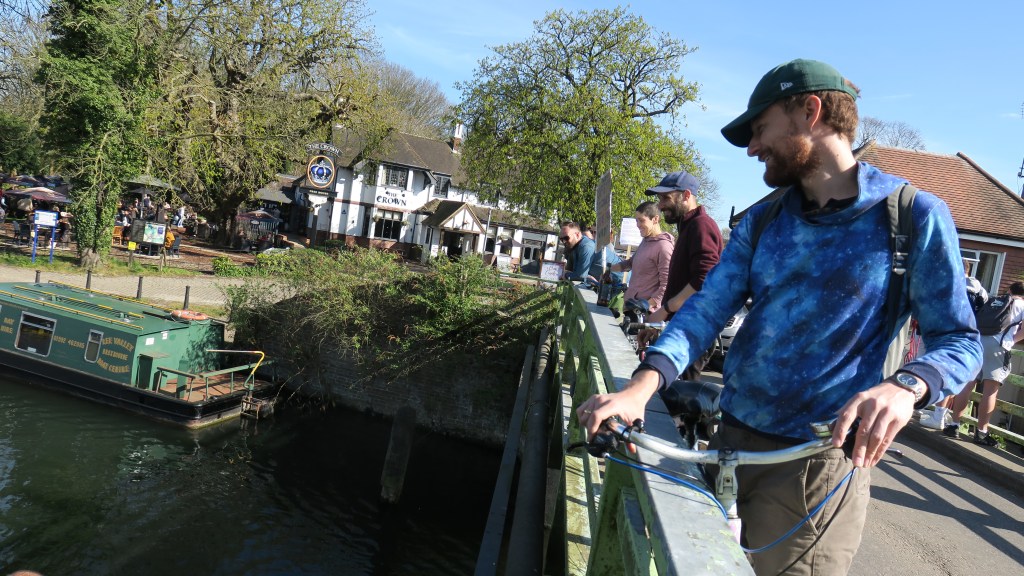
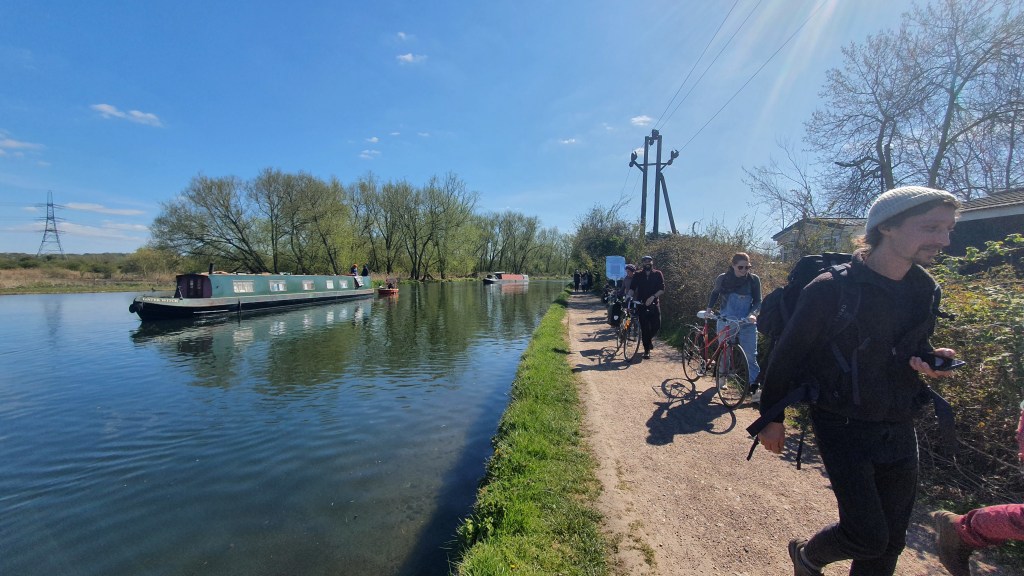
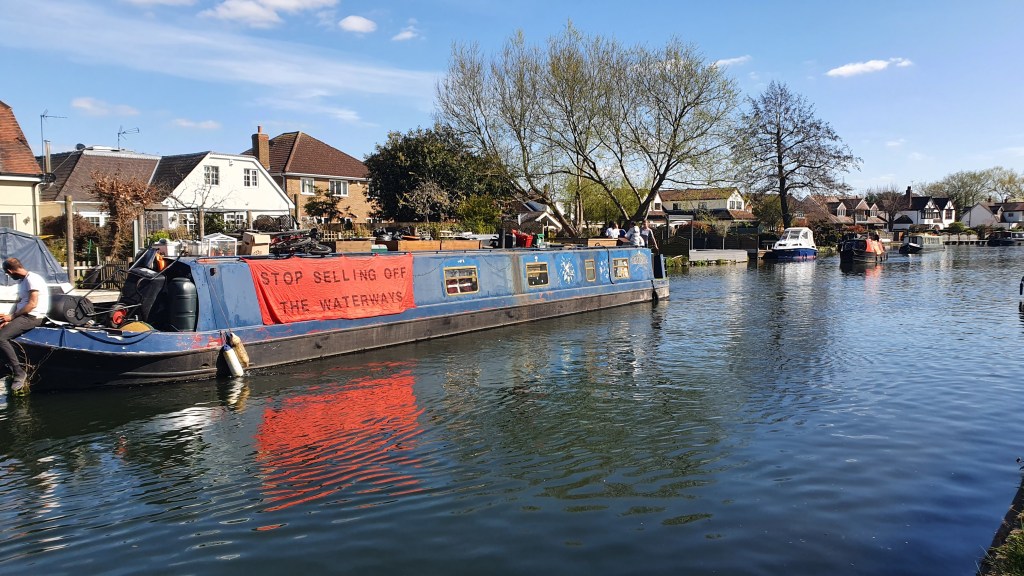
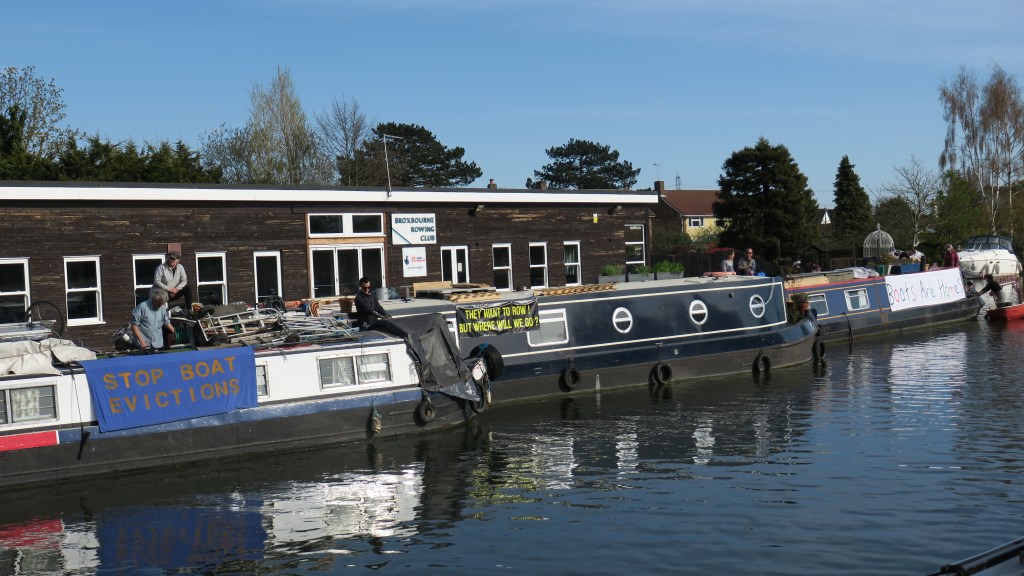
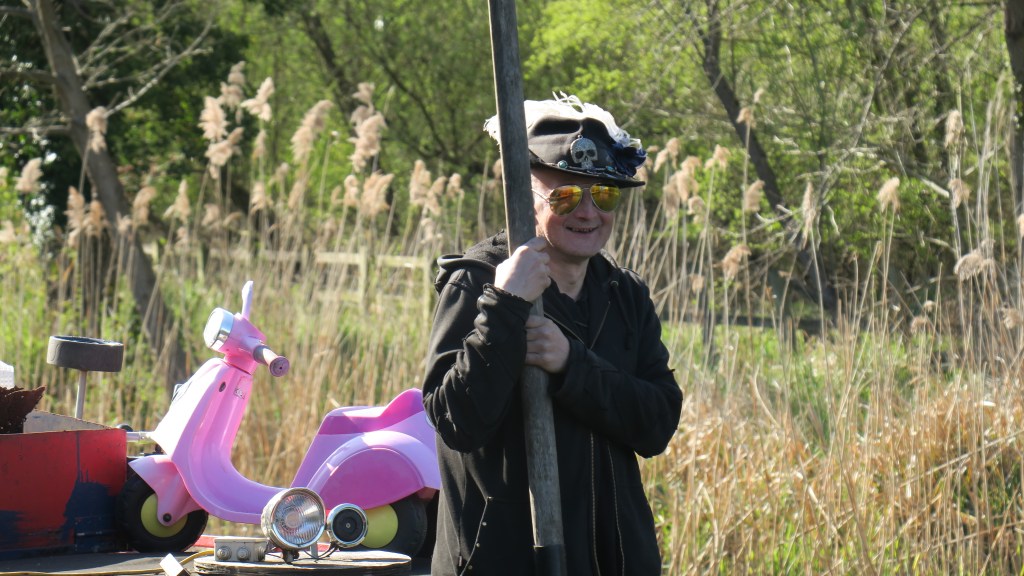
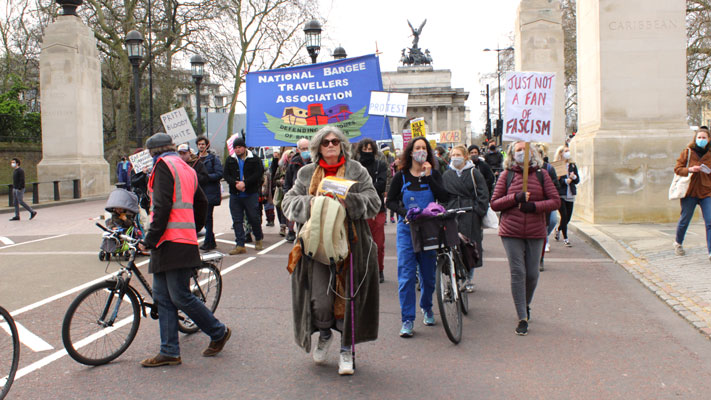
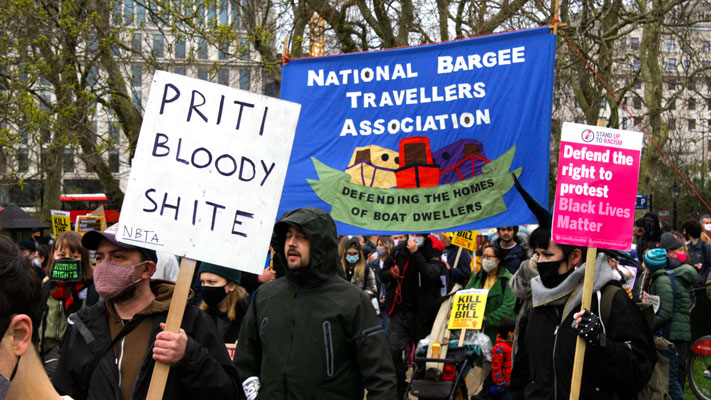
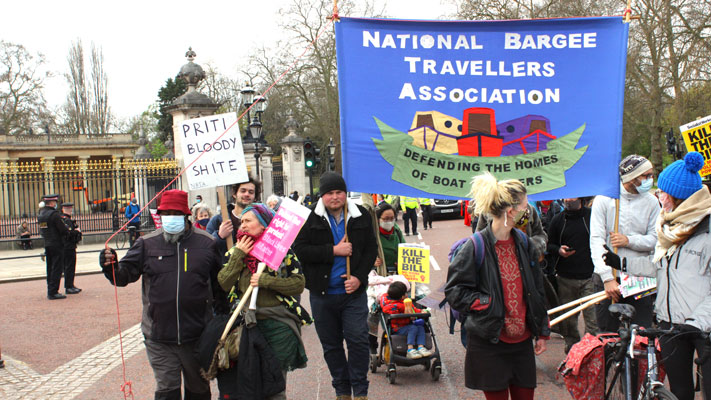
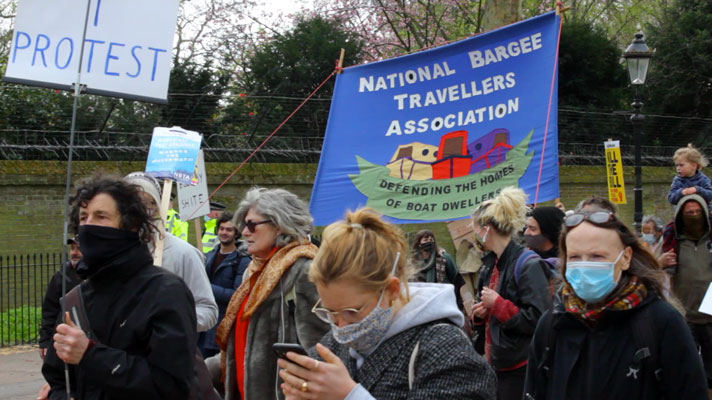
On Sunday 9 th May, Boaters from all over London and the River Lee gathered on Walthamstow Marshes to protest against CRT’s proposed ‘Water Safety Zones’ and to plan the next stage of action against them. An estimated 200 people joined across the five hour protest picnic, including many passers-by and local people who expressed sympathy with our cause.

A round circle discussion in the afternoon brought new faces and new ideas to the campaign. NBTA members left with renewed optimism that CRT will not be allowed to curb our livelihoods by imposing mooring restrictions within the zones.


And that wasn’t the only outcome. The day following the protest picnic, CRT announced that they are postponing the implementation of the so-called Water Safety Zones while they speak to stakeholders. NBTA’s collective action is forcing them to listen to us.

Our actions have impact, let’s keep going…

After powerful demonstrations of collective boater resistance at both of the proposed “safety” zones, the Canal and River Trust (CRT) has agreed to open a formal consultation on the Water Safety Zones, with the participation of representatives from NBTA London and other stakeholders.


While a consultation is a step in the right direction, we believe it can only be successful if CRT provides the data supporting the existence of a safety issue. Thus far, this data has not been forthcoming. NBTA London shall participate in the consultation process, but questions the possible success of a consultation which continues to be based on an unproved claim.


We believe that the Safety Zones as currently framed should be scrapped, and any measures coming out of the consultation should be non-harmful to the lives and wellbeing of liveaboard boaters without home moorings, developed with the input of our community.

Our next protest is on Sunday 13 June

HACKNEY FLOTILLA PROTEST

Note to media: press release here

PROTEST EVENTS AND ACTIVITIES LINED UP FOR FLOTILLA ON SUNDAY 13 JUNE!

The flotilla protest is taking shape! We have music and other creative acts lined up for the day in celebration of boater culture and all of the ways in which boaters make London a richer and more diverse place.

JOIN US, BOATERS AND TOWPATH WALKERS!

DAYTIME

  • Boat flotilla convoy with live acts onboard (brass band, buskers, soundsystems), moving from Walthamstow Marshes to Hackney Wick and back
  • March on the towpath alongside the flotilla
  • Multiple NBTA stalls on the towpath with cakes for sale and passionate discussion for free

LATE AFTERNOON/EVENING

Afternoon gathering at Walthamstow Marshes:

  • NBTA talk
  • Live music (Village Butty roof stage):
    • Gator Dogs Brass Band (7-piece New-Orleans style)
    • Dub Righters (pop reggae)
    • Chewy She (trash-electro-disco)
    • Traditional folk band
    • Family-friendly punk band
    • Soundsystem boats
  • Boater circus show
  • Children’s activities

________________________________________________________

On Sunday 13 June 2021, boaters and canal wanderers alike will gather at Walthamstow Marshes to protest the CRT’s introduction of new mooring restrictions on the lower Lee and Broxbourne.

Boaters will move their boats to the Marshes and travel en masse to Hackney Wick, simultaneously celebrating boat culture and raising a fist to those who want to destroy it.

Towpath users can chat to boaters stationed on the towpath to find out more about the restrictions and our campaign to resist them.

When: Sunday 13 June, 11am for 12pm set-off

Where: Walthamstow Marshes, opposite Anchor and Hope

See facebook event here: Hackney Flotilla Protest | Facebook

See press release here

OTHER WAYS TO HELP

INFORMATION

BROXBOURNE FLOTILLA PROTEST


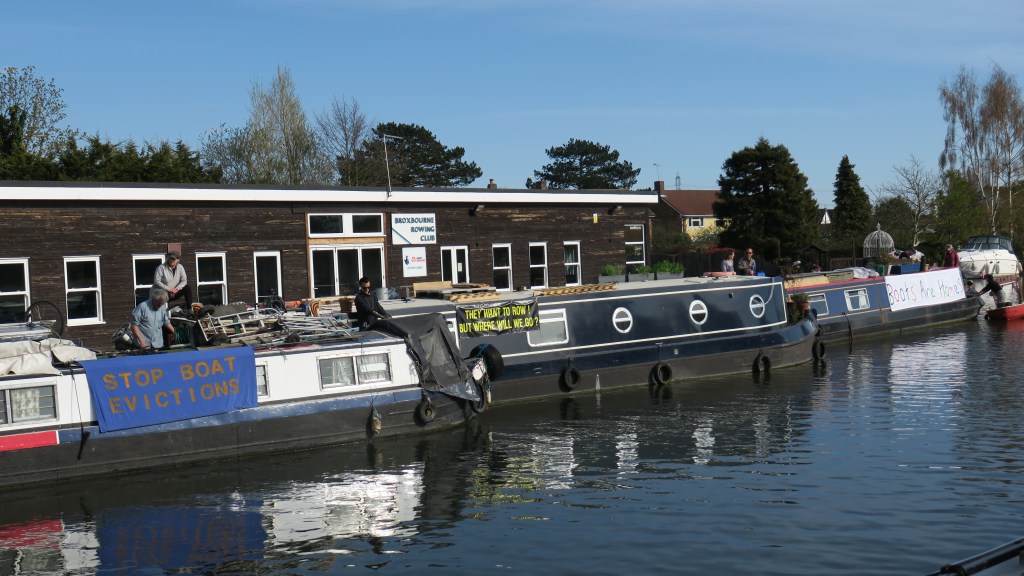
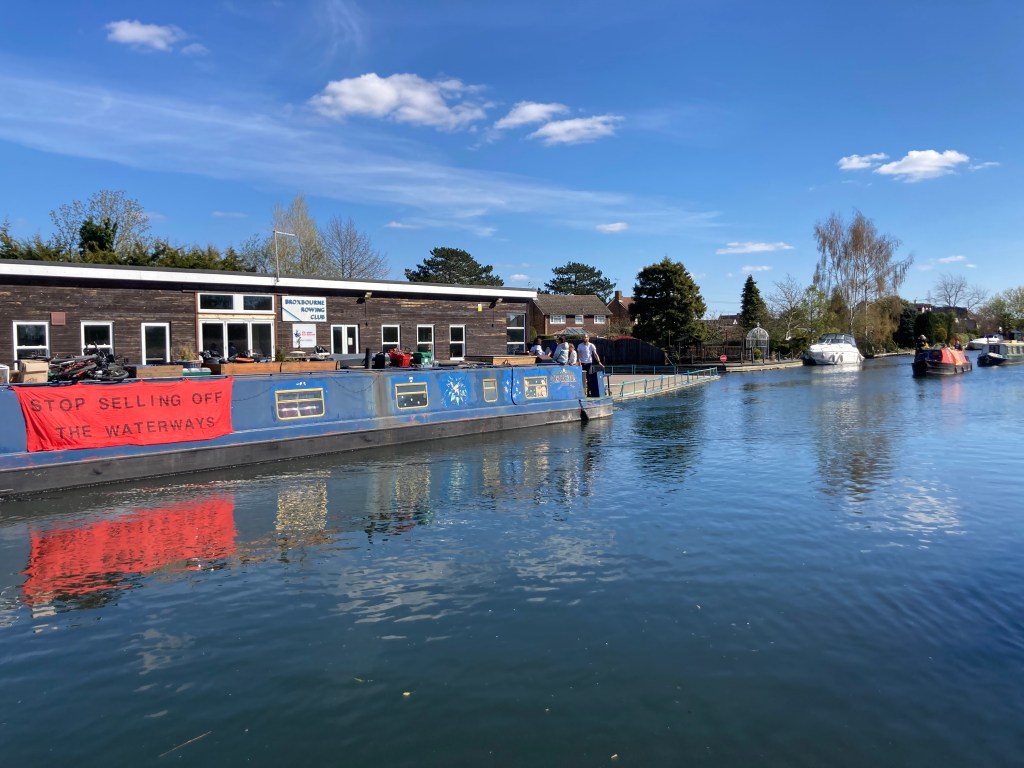
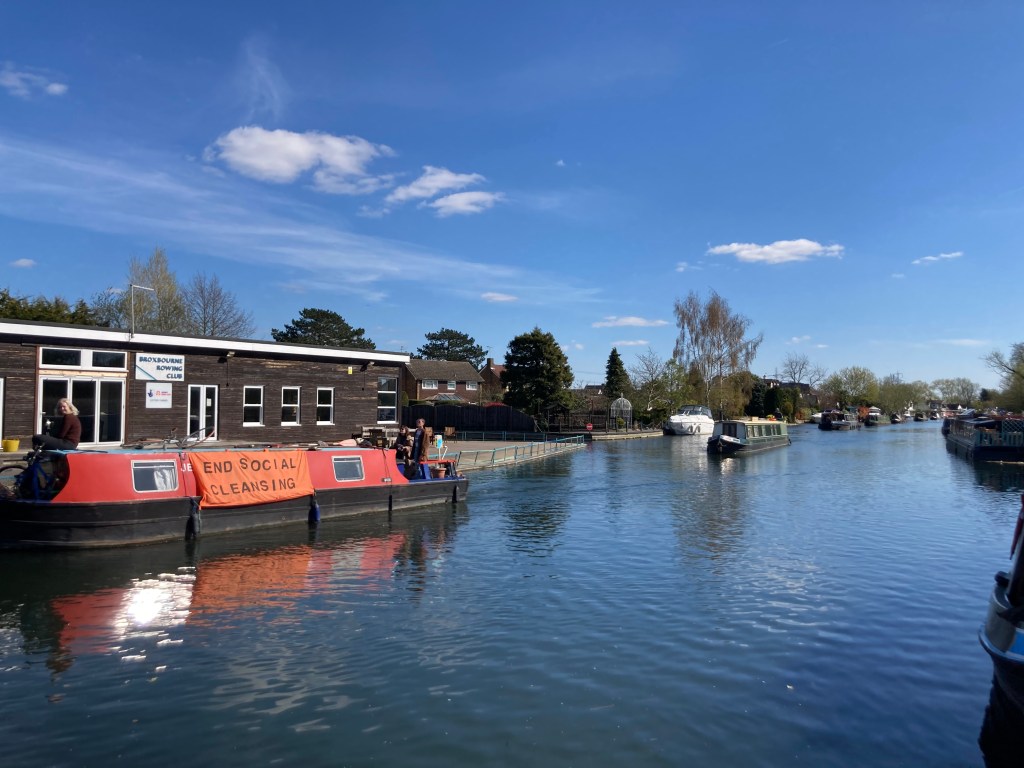
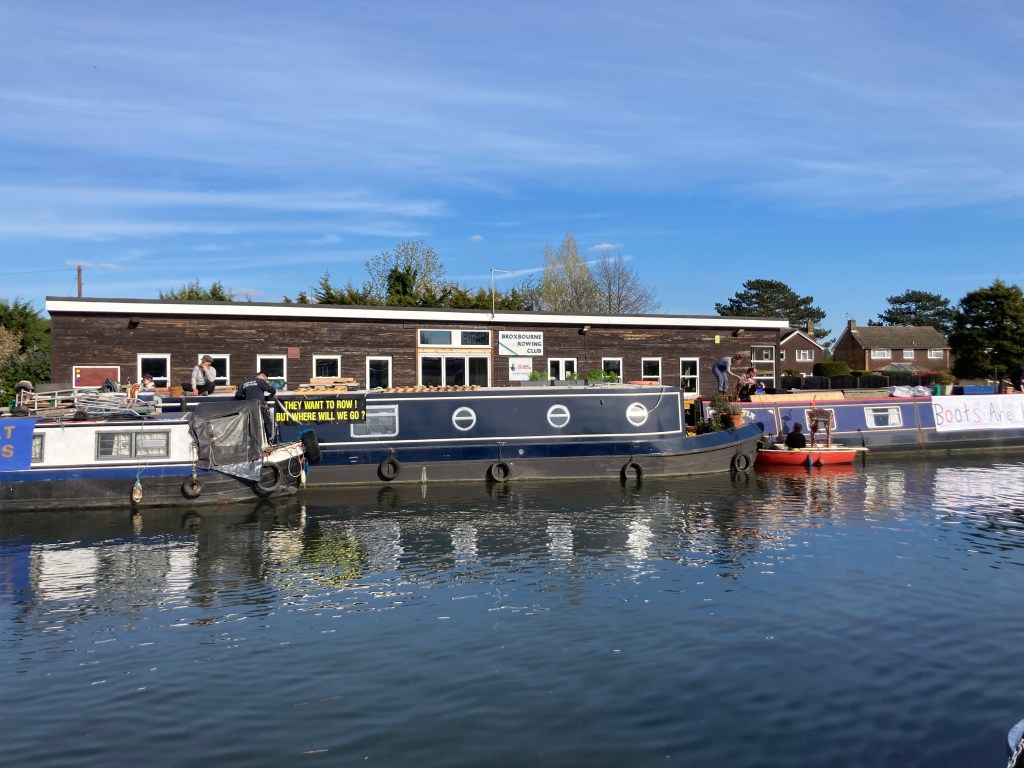
On Saturday (17 April) the Lea River at Broxbourne was filled with a flotilla of boats, all protesting against Canal and River Trust’s absurd and falsely named new ‘Safety Zones’. The Protest included boaters from all over the London region and beyond, including representatives from Broxbourne’s own Cruising Club. A ‘towpath protest’ of boaters and non boaters followed in their wake, raising awareness of CRTs discriminatory policy changes, and how they threaten people’s livelihoods. Support from the local community was passionate, with many affirming how they love the boats, and see no need to introduce these confusing and unnecessary ‘Safety Zones’.


The NBTA argues that the policy is profoundly ill-conceived, particularly in the context of a housing crisis and a pandemic. They also argue that evacuated canals will turn the towpaths into the danger zones they once were, prior to the growth in the boating population.


“Three-quarters of rowing safety incidents occur between two rowers rather than between rowers and boaters. The relationship between moored boats and rowing safety incidents is very weak, if there is any relationship at all” argues Ian McDowell, chair of the London branch of the NBTA. “The CRT has provided very limited data to justify this policy,” he continues, “and yet the impact on the boating community will be drastic. Many boats in London are homes. These planned ‘safety zones’ will displace many boat dwellers from these areas.”


Many boaters believe that the ‘safety zone’ policy is part of a larger attempt to drive them off the waterways. CRT aims to introduce policy proposals later in the year aimed at ‘managing boat numbers.’


Boaters say they have asked the CRT for the data they have used to calculate an ‘optimal’ number of boats, but have been met with silence. They say they are left to conclude that the CRT’s various manoeuvres are motivated by an underlying prejudice against nomadic communities and that this prejudice will have dire consequences for the London boating community.

Legalities of the ‘Safety Zones’ on the River Lea.

A Public Right of Navigation exists on the River Lea. It is a legal right for the public to navigate and moor on this river. This is a Common Law right that has existed since Time Immemorial and can only be changed by primary legislation, in other words by an Act of Parliament; it cannot be changed by byelaws and Terms and Conditions (T&C). The right of navigation includes the right to moor as stated in Halsbury’s Laws of England, 5th edition:


‘The public right of navigation includes the right … to remain for a convenient time, to load and unload, to moor and fix temporary moorings in the waterway’


The signage that has been placed in the so-called ‘Safety Zones’ does not supersede this right and the restriction of mooring in these areas is not lawful. Nevertheless, Canal & River Trust (CRT) might try to enforce the ‘Safety Zones’, using their T&Cs. The T&Cs do say:
‘You must comply with … our lawful directions, spoken or written (including signs). This includes signs that prohibit mooring’.
However, T&Cs can’t override Common Law, therefore the CRT has no legal right to extinguish the right to moor on the River Lea, which the CRT ‘Safety Zones’ intend to do.


Any signs prohibiting mooring on the River Lea are therefore not ‘lawful directions’ as stated in the T&Cs.


In any case, do CRT really have the legal right to enact and enforce their T&Cs? There are no court judgements to say whether CRT can or can’t enforce or enact their T&Cs. CRT doesn’t use breach of the T&Cs as a main argument in court; therefore there is no case law to say one way or another. However, there are legal opinions. CRT’s legal opinion goes like this: under Section 43 of the Transport Act 1962, the Board (CRT) can set T&Cs for use of their services and facilities. CRT claims that because they can set the T&Cs they can make boat licences subject to conditions over and above those listed in the 1995 Act. CRT’s services and facilities include ‘the use of any inland waterway owned or managed by them by any ship or boat’ as well as actual facilities such as taps and rubbish points etc.

However, the opposing opinion is that, of course CRT can set T&Cs for facilities that they can charge for, however, there are enforceable T&Cs, and non-enforceable conditions.


The T&Cs include many of the byelaws, which are indeed enforceable – but only via prosecution in the Magistrates Court, entirely independent of CRT. So CRT’s claims that they can terminate or refuse to renew boat licences if a boat owner breaks the T&Cs is contrary to the law.


Section 17 of the British Waterways Act 1995 says that the Board (CRT) can only refuse a license if a boat doesn’t have one of these three things: boat safety certificate; third party insurance; either used for navigation or has a home mooring. It doesn’t say in any of the Acts or byelaws that you must obey the Board’s (CRT) ‘no mooring’ signs. Any T&Cs are subordinate to Acts of Parliament; therefore that means that due to the British Waterways Act 1995, CRT doesn’t have the right to terminate or refuse to renew a licence on the basis of breaking the T&Cs.


Another way that CRT claims it could enforce T&Cs is to charge a fee for staying longer on a mooring with restricted times. The Transport Act 1962 gave no new power to set charges for anything not previously enabled. On top of this, if CRT tries to charge, because of the outcome of the Ravenscroft v Canal & River Trust case, CRT cannot recover ‘outstanding costs’ from boat owners using Section 8 of the British Waterways Act 1983 (this is one of the eviction notices that CRT issues to boaters).

We have rights and CRT can’t legally override them.

We can defeat the so-called ‘Safe Zones’, disobey the mooring restrictions, the law is on our side.

What are the ‘Water Safety Zones’

You can view NBTA London’s September 2022 Position Statement on the “Water Safety Zones” here

Canal and River Trust (CRT) are trying cull boat numbers.

When CRT first proposed the full details of the Water “Safety” Zones we calculated that 550 mooring spaces would be lost in Broxbourne and Tottenham/Hackney in some places this included no double mooring and no wider boats. Following the magnificent efforts of the boating community to push back against the “Safety” Zones, CRT appeared to desist from their implementation in favour of a navigation forum of stakeholders. But in fact CRT are still attempting to impose perhaps the most draconian part of the original “Safety” Zones – the new no mooring sections. We now estimate that 295 casual mooring opportunities will be lost as a result.

It is these 295 spaces which we are now fighting to protect!

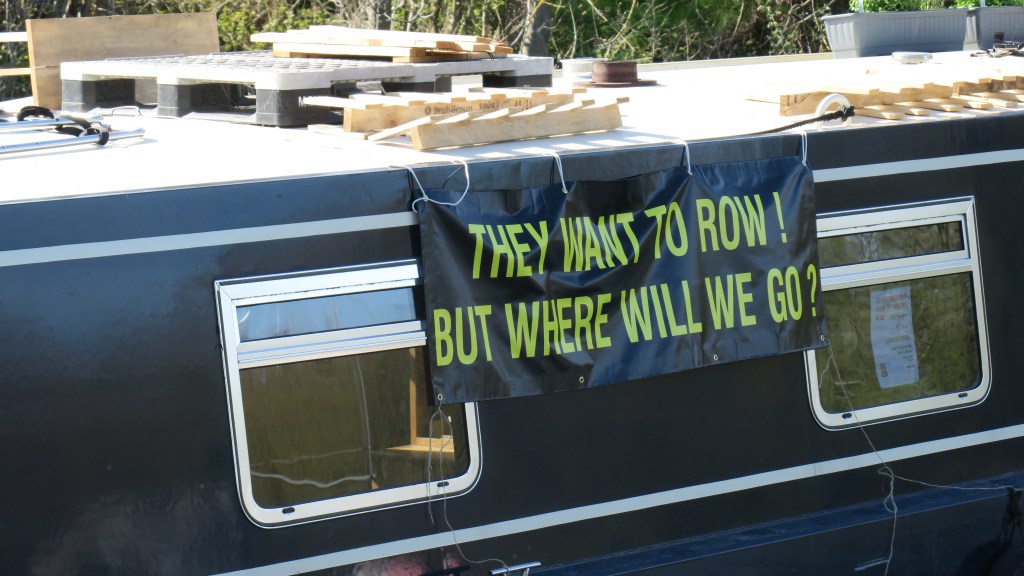
They want more space to row, but where do we go?

The justification offered for the introduction of the ‘safety zone’ is to keep rowers safe. CRT has not provided boaters with any evidence, however, that rowers are placed at risk by powered boats moving at 4mph. It’s claimed that moored boats narrowing the canal pose a danger to rowers, but there is no point on the canal where rowers do not have substantial clearance in the event that a boat passes.

CRT marketed this policy as a ‘water sports’ strategy before re-branding it as a question of ‘safety’. The more likely point of contention is not safety but rather the ordinary inconvenience and frustration that can result from rowers and boaters having to share the water. CRT has translated an elementary management question into a catastrophic policy.

Indeed, despite claiming to address safety concerns, the policy evacuates certain parts of the canal so that fallen-in rowers will have no way of climbing out in the absence of moored boats and boaters to help. 

The areas targeted also include two vital boater hubs for toilet and water services. Forcing boats out of these areas means that rowers will encounter increased boat traffic within the ‘safety zone’ as dispersed boats traverse the rowing areas to access services. Once again, the policy defeats its stated aim.

Ironically, other serious safety concerns are ignored. Evacuated parts of the canal will revert to the crime zones that they were before boaters made them safe for all to enjoy. Boaters and members of the public walking the towpath in these areas will once again become victims of muggings and violent crime. 

Since the policy is incoherent, boaters are led to question whether a general push to cull the boating community is its driving force and whether ‘safety’ is a convenient fig leaf for ugly bias. 

Given London’s housing crisis, boating is often the last line of defense for those who would otherwise be homeless. Many of those who are forced to abandon the boating life will have very few alternatives and some will have none. Is this fair? Does this represent the values that CRT, a charitable trust, claims to uphold?

To save our homes and way of life, boaters want to develop real solutions, rather than scorched-earth solutions. We are working together to develop a fair and just proposal that addresses the concerns of rowers while keeping homes and families on the water. We hope to publish our proposal soon.

We appeal to other communities to help us protect our homes and way of life by opposing CRT’s plan. 

If you would like to be involved in stopping CRT plans, email nbtalondon@gmail.com

Email CRT Matthew.symonds@canalrivertrust.org.uk to express your view towards the ‘Safety Zones’.

_________________________________________________________________

_________________________________________________________________

How we got to the number of mooring spaces lost

Assumptions:

Boats are 15m in length on average

Zones are divided by 20m to take account of 5m advisory gap between boats

Red zone calculation excludes bridges and areas where mooring would impede navigation.

LOWER LEE:

Yellow zone is 1939m

Possible moorings in Y zone: (1939/15) x 2 = 258

Actual moorings in Y zone: 1939/20 = 97

Loss: 161

Red zone is 1259m

Possible moorings: (1259/15) x 2 = 168

Actual moorings: 0

Loss: 168

Green zone is 2279m

Possible moorings: (2279/15) x2 = 304

Actual moorings: (2279/20) x2 = 228

Loss: 76

Total loss: 161 + 168 + 76  = 405

This figure excludes approx 38 lost widebeam spots  in the green zone, since WB and NB can no longer moor together, if we assume 25% of boats are widebeams.

WB moorings lost in G: (2279/15) x 0.25 = 38

Red zone figure excludes bridges but includes the bendy bit at Clapton, north of Princess of Wales, where people currently moor.

BROXBOURNE:

1800m of moorable area no longer moorable to WB (excludes areas too shallow to moor)

WB:

1800/15 = 120 lost

NB:

Possible moorings: 1800/15= 120

Actual moorings: 1800/20 = 90

Loss: 30

Total loss: 120 + 30 = 150
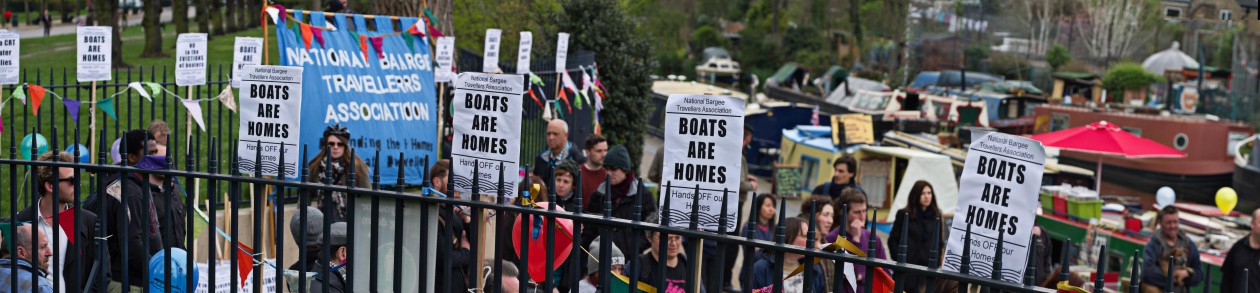
Mooring spaces under threat on the Lea

A criticism commonly levelled at CRT is that they have failed to fully implement the measures of 2018’s London Mooring Strategy (LMS), such as improved mooring opportunities and facilities, before starting the current boat cull process.

While this is true, it is important to remember that the LMS was not all unicorns and stardust for boaters. One of its more draconian measures, which was couched in CRT’s language of sharing, was the introduction of “Water Sports Zones” in Broxbourne and between Tottenham and Old Ford Locks on the Lee Navigation. This was aimed at soothing the sense of entitlement held by the rowing clubs in these areas at the cost of boaters. Now rechristened as “safety zones”. CRT have rebreathed life into the proposal to introduce mooring restrictions in these zones, which will include a ban on double mooring and a complete ban on casual moorings.

As boaters currently suffering lockdown at the Walthamstow Marshes have noticed, CRT appear to have started the groundwork for introducing the mooring bans by installing posts for signage between Horseshoe and Ferry Bridges.

These “safety zones” are prefigurative of what CRT wants to achieve with the upcoming boat cull – fewer boats, and, especially, fewer of the wrong sort of boats.

Download uptodate CRT plans for the ‘Safety Zones’:

——————————————————————————-

People are understandably starting to get nervous about the impending implementation of CRT’s so called “Safety Zones”, previously known as “Water Sports Zones”. Our first meeting organise against the ‘Safety Zones’ when amazingly. There were more people on the online meeting than we could count. Many actions and working groups were agreed on.

The next meeting against the ‘Safety Zones’ will be on Sunday 21 March at 4pm and held on the 8×8 meeting platform, which you can join by video or phone. Here is the link:

https://8×8.vc/nbta/nbta.london

Alternatively you can use the dial in details to join in on the phone:
Dial-in: +44 330 808 1706 PIN: 121 133 06#
Everyone welcome!

What if all the boats were gone?

There are mixed feelings amongst the landlubbing community as to whether living on water is a good or a bad thing. As a boater, I can only see good things from my way of life, but I have been asked whetherI go to the toilet in the canal or whether I drink out of it in the same breath. The public know very little about our lifestyle and sometimes judge us for all the wrong reasons. As such I would like to explore some of the pros and cons of our communities’ impact on London’s waterways.

With increased costs for disposing of non-household waste, the canal has become a target for fly tippers. A large amount is dumped out of vans and cars. This is actively frowned upon by most boatersw who hold each other to account. Most boaters wouldn’t dream of it, but to put it in perspective, a minority do abuse it. However, there are piles of fly-tipped waste across London that are cleared regularly by the council. The towpath does not have a ‘regular’ service, so any unsightly mess can last, and gets unfairly blamed on the boating community.


Litter is upsetting to conscientious boaters, and a lot clear up the towpath that they stay on. When the Lower Lee was polluted with tonnes of oil, it was the boating community that rallied and got the polluted debris out. Not the authorities, and definitely not the culprits. There are also regular litter picks set up between the boating community and towpath community groups.

There is always work to be done on boats and piles of wood and materials should not be mistaken by the public as rubbish. Every boat is an ongoing project and completely individual. This is what makes our community so diverse and unique, and is also what keeps us afloat.

Before there were a volume of liveaboard boats on
London’s waterways, the towpaths were a no-go zone for most. There is still crime on the towpath, but anyone who has lived in London long enough knows
that having a community on the water makes the average towpath user feel safer. Desolate stretches of dark towpath afforded criminals a degree of protection, so the very presence of boats limits this.

Boats bring in a lot of revenue, and not just through our licence fee that feeds into the council boroughs we share. The boating community creates a lot of revenue through tourism and the waterside café culture that has grown in line with it. The colourful boats bring thousands of tourists to the water each year, and we are constantly photographed and tourists often ask us questions. Anyone who has been through Camden lock can testify to this! If there were no boats there would be fewer tourists. Less tourism means less waterside business and this in turn means less income for CRT and the surrounding councils so desperate to create more revenue.


Do boats harm the wildlife? The wildlife is what brought lots of us to the water in the first place. Most boaters look on themselves as interim custodians of the waterways. The towpath is our communal garden, to share with all and be respected for what it is. An absolute treasure of nature and peace hidden in an urban jungle of traffic and deadlines.

And just to clear it up once and for all, we don’t drink the water or wee in the water…
And we do not eat swans, squirrels or hedgehogs – not unless are very hungry, anyway!

A volunteer organisation formed in 2009 campaigning and providing advice for itinerant boat dwellers on Britain’s inland and coastal waterways