Remembering the Great Canal Strike – A century on

This summer will mark 100 years since the Great Canal Strike when boaters brought England’s canals to a standstill in a dispute over pay and conditions. The action centred around Braunston in the Midlands where the Grand Union and Oxford Canals meet and where one of the country’s largest canal carrying companies was based at the time. 

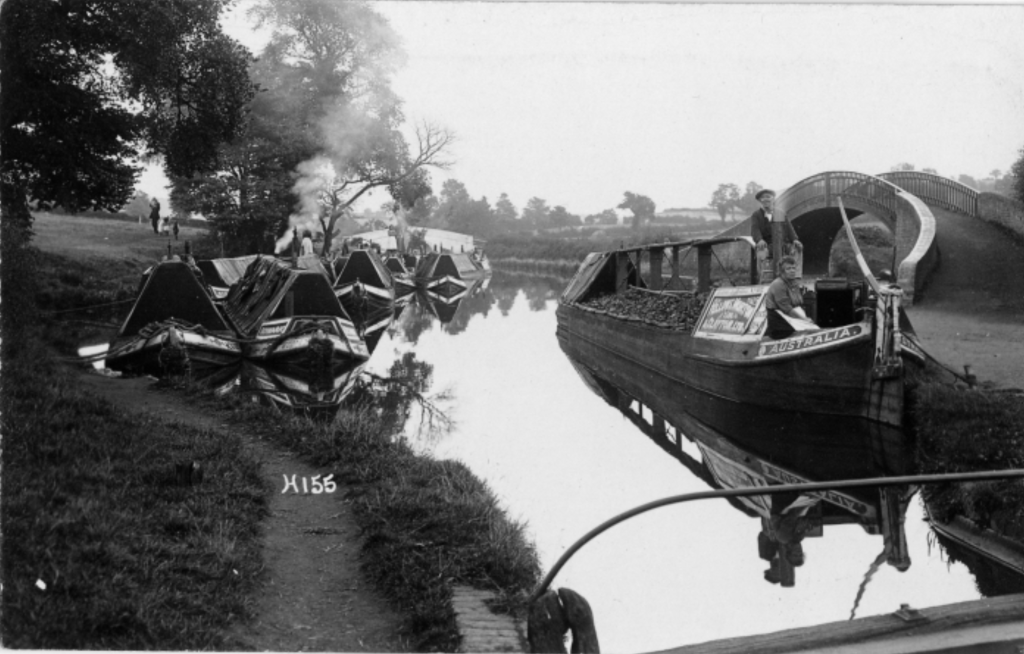
In August 1923, Fellows Morton & Clayton (FMC) announced they would be cutting boatmen’s wages by an average of 6.47% from the following Monday, the 13th. Within days, up to 60 boats moored up along both sides of the two canals blocking FMC’s wharf. For 14 long, hard weeks, canal workers and their families took over the busiest junction on the network in one of the inland waterway’s first strikes. 

(Pic: Dennis Ashby Collection)

The workers were called out on strike by the recently formed Transport and General Workers’ Union (TGWU). This new union was led by Harry Gosling who was behind the famous London dock strike of 1889. He had previously been the General Secretary of the union formed by the river workers’ following their collective action – the Amalgamated Society of Watermen, Lightermen and Bargemen.
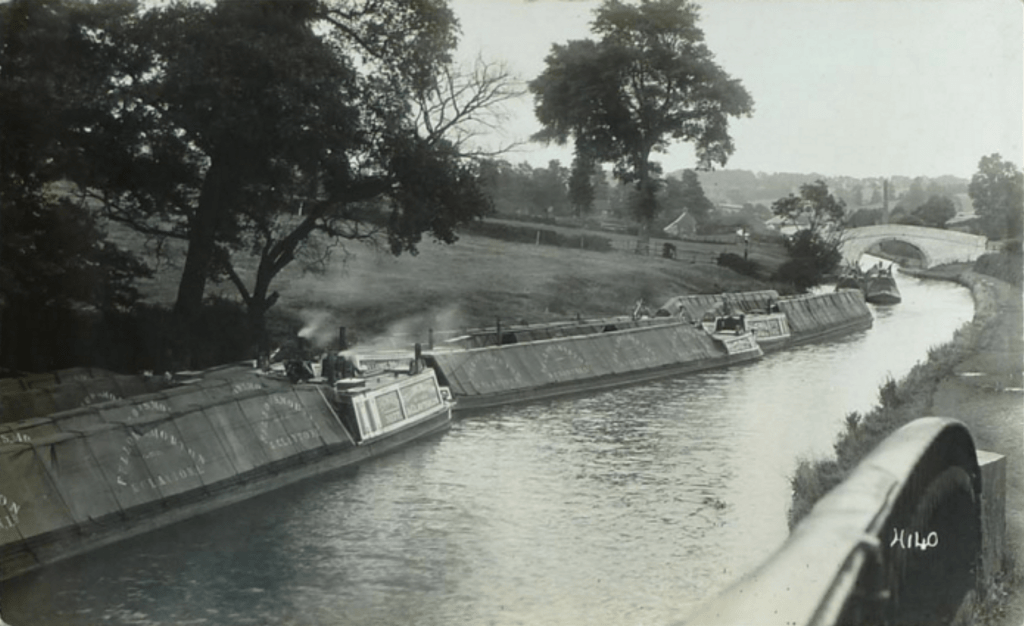
Opposite the towing path bridge over the arm that used to lead to the Oxford Canal (Pic: Dennis Ashby Collection)

In January 1922, a number of transport unions, including the Watermen’s Society, joined to form the TGWU and Gosling became its president. The canals had not been unionised before, but canal workers were soon singled out as a sector needing union assistance after many years of neglect.  It’s said that boatmen on the canals compared notes with Thames dockers in the pubs around Limehouse and Brentford.

Boater families gather under a railway viaduct (Pic: Dennis Ashby Collection)

In just over a year, the TGWU had negotiated agreements on wages and conditions with many of the larger canal carrying companies, but the FMC at Braunston were determined to go ahead with these cuts, despite protest from the union’s rep. Many of the company’s 600 workers walked out. 

The TGWU sent Mr Sam Brookes to oversee the strike and support the workers in Braunston. While there, he organised reading and writing classes for the strikers and their families, many of whom were illiterate, as well as concerts and church services. The boaters increased the
population of the small Northamptonshire village by nearly a third and many children started at the local school during their stay. 

(Pic: Dennis Ashby Collection)

Six weeks into the standoff, the company threatened boatmen with the sack and eviction from their homes on the boats. The union advised the workers to continue the fight. Faced with losing both their livelihoods and their homes, their protests were said to be colourful and noisy. The
company employed scabs to try and unload the thousand tonnes of tea and sugar from the boats so the cargo could be delivered by road. An already tense situation escalated further when the police were brought in to oversee the transfer of cargo. Needless to say, one boat captain helped the wharf’s foreman take a dip in the canal.
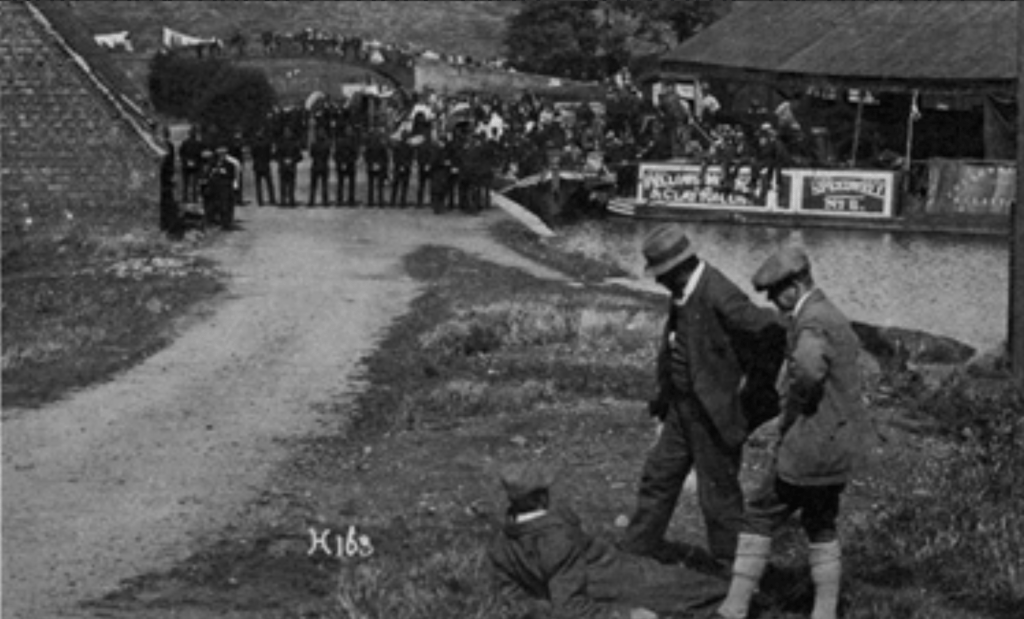
FMC Steamer brought to be unloaded with police blocking the road (Pic: Dennis Ashby Collection)

After over three months with no pay, the strike was finally taken to arbitration. The industrial court ruled that a 6.47% average cut was too high and instead ruled for a 5% reduction staggered over two months to lessen the impact on workers. This was deemed a success at a time when wages across all industries were facing harsh cuts and many canal workers felt as though they’d avoided a larger blow to their already paltry incomes.
(Pic: Dennis Ashby Collection)

The 1923 canal strike was an important moment in the struggle for worker’s rights in this country and led to many fundamental improvements in the working and living conditions of boating
families. The TGWU went on to become part of the UNITE union and the actions of those 60 or so boating families shows the long history of solidarity and resistance we continue to celebrate on the inland waterways today.


NBTA London needs your support to carry on our work. Please get in touch here if you would like to volunteer with us. Alternatively your donations are vital to us supporting boaters with their legal case work, campaign banners and other printed material as well as events. You can help us with your donations online here

Boaters left out in the cold over the Energy Bills Support Scheme

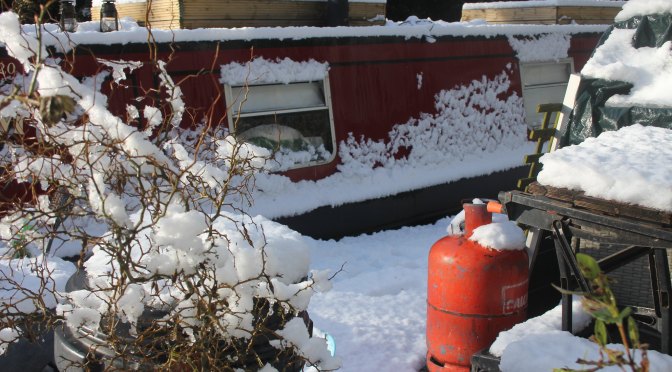
At the time of publication, itinerant boaters have still not received an energy grant from the Government, or been offered a user-friendly way in which to attain this grant. Most households across the UK are now into their sixth month of receiving help towards extortionate energy bills, yet the Government are still dragging their heels when it comes to itinerant boaters and other off grid communities. 

All households in the UK were promised the £400 grant back in March last year, and an article published on the 1st April 2022 on the gov.uk website clearly states: 


“If you live in a park home, houseboat or off the grid…The government has confirmed that further funding will be available to provide equivalent support of £400 for energy bills for the 1% of households who are not eligible for the discount. This includes households without a domestic electricity meter and a direct relationship with an electricity supplier, for example if you live in a park home, houseboat or you live off the grid.” 

Depending on how the above is interpreted, itinerant boaters could be included under either the “houseboat” or living off grid examples. Either way, it seemed like we were included as we obviously do not have a domestic electricity meter or a direct relationship with an electricity supplier and therefore meet the criteria.

Since then, the Government have released several announcements regarding the EBSS, including an additional £200 Alternative Fuel Payment for those not using mains gas. However, none of their literature has directly referred to itinerant boaters, leaving us with a vague assumption that we will receive it at some stage in the future, via some unknown means.

In an attempt to find a good solution on how and when itinerant boaters will receive the EBSS, the National Bargee Travellers Association have been in talks with the relevant Government bodies for some time, and thanks to their efforts, a work around solution is now being trialled.

Unfortunately, the best solution the Government could offer was a perplexing arrangement whereby the applicant applied for the energy grant, knowing it would be rejected as it would not meet the criteria needed, then uses this rejection to apply for another grant from their Local Authority. This convoluted approach failed however, as Local Councils were neither informed nor consulted, with many simply replying as such, adding they had no budget for it

Therefore, we still do not have a definitive answer on how or when the majority of itinerant boaters will receive the energy grant. With many boaters spending upwards of £200 a month on heating this winter, the EBSS could relieve the difficult choice between heat or food that numerous folk may be facing.

As the winter months dwindle off into Spring, we are left wondering, will we ever get help to heat our homes?


NBTA London needs your support to carry on our work. Please get in touch here if you would like to volunteer with us. Alternatively your donations are vital to us supporting boaters with their legal case work, campaign banners and other printed material as well as events. You can help us with your donations online here


Boaters’ Spring Fayre 2023

Boaters’ Spring Fayre
Next to the Clapton S Bend in Hackney
Ain’t No Party like an S Bend Party

We are proud to announce the Boaters’ Spring Fayre community event on Sunday 14th May starting at 12 noon in defence and celebration of our way of life. All boaters and non-boaters are welcome.

We are holding this event of music, acts, stalls and more at one of the key sites the Canal and River Trust (CRT) are trying to erase us from.

At one point CRT called these areas ‘water sports zones’; they then renamed them ‘water safety zones’. These designated ‘zones’ are a part of CRT’s strategy to remove places where boaters can moor. The renaming is part of a PR exercise, the restrictions they are attempting to enact inside the zones have nothing to do with safety.


Initially CRT had plans to get rid of 550 mooring spaces along the River Lea where people can stay up to 14 days at a time. But following the magnificent efforts of events, activism, resolve and resistance from the boating community to push back against the designated zones, CRT relented on the full threatened 550 mooring spaces. However, they continue to try and eliminate 295 mooring spaces, including the Clapton S bend. Boaters are making CRT feel the continuous pushback of our community by ignoring the ‘no mooring’ signs erected by CRT and on Sunday 14th May we will be celebrating our community’s resolve at this key site of resistance. All are welcome 🙂

Please say your going on the facebook event: https://www.facebook.com/events/1237083010552732


North Millfields Recreation Ground,
Clapton, London E5 9PB


NBTA London needs your support to carry on our work. Please get in touch here if you would like to volunteer with us. Alternatively your donations are vital to us supporting boaters with their legal case work, campaign banners and other printed material as well as events. You can help us with your donations online here


Don’t let CRT price us off the water

The Canal and River Trust (CRT) has produced a consultation survey in which they ask boaters whether people without home moorings should pay more than people with home moorings, as well as other leading and divisive questions. If CRT gets away with pricing boats without home moorings differently, they would be able to price us out of existence while not charging boats with home moorings the same amount.

Many of us will know that CRT misspends and wastes money. The idea that CRT wants yet more money from us is abhorrent. However, the most horrendous tactic of this CRT survey is the use of very leading questions that appear to have been designed to divide the boating community. We must be united and not allow CRT to divide us.

We have gone through the survey and made suggested answers to help people orient themselves though CRT’s leading and biased questions. Please, fill in the survey CRT has emailed you. It may be hard to find in your emails, so please search in your emails including your spam for ‘Canal & River Trust – Consultation Survey on Boat Licence Fees’ from a company called DJS Research. If you haven’t received a link to the survey, or a postal version if CRT don’t have your email address, phone CRT customer services on 03030 404040 to request one.

Download pdf here:

CRT SELLING OFF ASSETS…

Ever wondered where to go to buy second hand industrial grade machinery? No, not just Stanstead Abbots summer bootsale, you could try Industry Asset Services Ltd (iaservices.co.uk). And were you to visit this industrial equipment auction site, you’d quite quickly find plenty of recognisable CRT equipment sold or on sale. Mainly boats; Piling Workboats, craning boats (and the cranes), rubbish barges, even the CRT patrol boat usually moored at Enfield Lock. But the CRT own much more than just boats, and it seems that if it can be sold, it IS being sold. There’s been diggers, trailers, even replacement beams for lock gates sold off through this site.

CRT advertisement on iaservices.co.uk

Well why would CRT sell this stuff? The only explanation CRT gave when questioned was

that it: “would usually be the case that these boats and items are surplus to the Trust’s requirements or are no longer required in general.”

As seen on iaservices.co.uk

Which sounds more like, to make/ save some money. Seems fairly reasonable. Any organisation responsible for physical work and upkeep is going to need specialist machinery, tools and vehicles, and those assets will need maintenance themselves, and in some cases re- placing from time to time. So CRT are selling these things because they’re buying new ones right? Well, no. They are simply out- sourcing work in many cases. No need to have a patrol boat if you just pay more money out to a 3rd party company to do your patrols for you…

As seen on iaservices.co.uk

NBTA London needs your support to carry on our work. Please get in touch here if you would like to volunteer with us. Alternatively your donations are vital to us supporting boaters with their legal case work, campaign banners and other printed material as well as events. You can help us with your donations online here


CRT gives highest paid Employees 8% bonus (NBTA Cartoon)

Last year our license fees have gone up 8% and higher paid employees grouped together were paid 8% more in 2021/2022 than 2020/2021 (reported in the CRT 2021/2022 financial report.


NBTA London needs your support to carry on our work. Please get in touch here if you would like to volunteer with us. Alternatively your donations are vital to us supporting boaters with their legal case work, campaign banners and other printed material as well as events. You can help us with your donations online here


Boaters’ Spring Fayre 2023

Boaters’ Spring Fayre
Next to the Clapton S Bend in Hackney
Ain’t No Party like an S Bend Party

We are proud to announce the Boaters’ Spring Fayre community event on Sunday 14th May starting at 12 noon in defence and celebration of our way of life. All boaters and non-boaters are welcome.

We are holding this event of music, acts, stalls and more at one of the key sites the Canal and River Trust (CRT) are trying to erase us from.

At one point CRT called these areas ‘water sports zones’; they then renamed them ‘water safety zones’. These designated ‘zones’ are a part of CRT’s strategy to remove places where boaters can moor. The renaming is part of a PR exercise, the restrictions they are attempting to enact inside the zones have nothing to do with safety.


Initially CRT had plans to get rid of 550 mooring spaces along the River Lea where people can stay up to 14 days at a time. But following the magnificent efforts of events, activism, resolve and resistance from the boating community to push back against the designated zones, CRT relented on the full threatened 550 mooring spaces. However, they continue to try and eliminate 295 mooring spaces, including the Clapton S bend. Boaters are making CRT feel the continuous pushback of our community by ignoring the ‘no mooring’ signs erected by CRT and on Sunday 14th May we will be celebrating our community’s resolve at this key site of resistance. All are welcome 🙂

Please say your going on the facebook event: https://www.facebook.com/events/1237083010552732


North Millfields Recreation Ground,
Clapton, London E5 9PB


NBTA London needs your support to carry on our work. Please get in touch here if you would like to volunteer with us. Alternatively your donations are vital to us supporting boaters with their legal case work, campaign banners and other printed material as well as events. You can help us with your donations online here


HISTORY OF THE RIVER LEA

The River Lea has long been a multi-use space, shared by all kinds of craft. In recent years, however, the Canal and River Trust has emphasised the rights of some river users over others. This is especially true as the Trust attempts to force through bans on mooring on the site of its “Water Safety Zones”, which will prevent itinerant boat dwellers from mooring in these locations for the 14 days which applies elsewhere on the waterways.

The Trust claims that more “no mooring” sites are necessary for the safety of other canal users, such as rowers and kayakers. This is despite scant evidence that moored boats cause collisions and the fact that the Lea Navigation is among the widest waterways of the country.

Moreover, boats and large barges have been using and mooring on the Lea for many years, including in places where the Trust is calling to ban moored boats. The inset photos show boats and industrial barges moored at some of these very locations.

Figure 1: Hackney Power Station, Millfields 1950-69

Figure 1, from between 1950 to 1969, shows barges unloading at Hackney Power Station, near Millfields Park in Clapton, now the site of a recycling centre. Two stretches of canal here are threatened with restriction under the Trust’s “Safety Zones”, where previously widebeam barges have moored for access.

Figure 4: Hackney Power Station, Millfields
1950-69
Figure 5: Hackney Power Station, 1950-69
Figure 6: Hackney Power Station, 1950-69

Judging from other photos from this period (Fig.4, 5, 6), this section of the navigation near the former power station has been used by considerably larger boats than tend to operate on the river today. Not only this, but Lea Rowing Club, some of the most vocal proponents of the “Safety Zones”, operated on the navigation during these years, when timber and coal barges were evidently on the water too. The waterways have been shared for some time, and it’s unreasonable that this should change now.

Figure 2: London Hackney Marshes 1973

In a later photograph from 1973 (Figure 2), a barge is visible moored on the inside of the shallow bend leading round to Milllfields Park. Across from the Princess of Wales pub, where the CRT is proposing no mooring sections, figure 3 shows barges double-moored on the offside. Before the Lea Bridge was constructed, the river was crossed at this site by Jeremy’s and Smith’s ferries as early as 1747, according to A History of the County of Essex: Vol. 6. Passenger boats were therefore mooring at this site as long as over 200 years ago.

Figure 3: The Lea Valley, River Lea

The scene in figure 7 will be familiar as the view from the eastern bank of the river in Hackney Wick, opposite Omega Works and looking north toward Barge East. This photo also dates from between 1950 and 1969, and shows wide-beam timber barges moored at a site which the Trust considers unfit for mooring of boats which are homes, but perfectly suitable for more lucrative restaurant boats and water sports landings.

Figure 7: Hackney Wick, 1950-69
Figure 8: Old Ford Timber Loading, 1950-69

The Canal and River Trust continues to claim that canal boats and liveaboard boaters have not been able to moor in its “Water Safety Zones”, for the benefit of other users. Clearly, there have been large craft sharing the river with others for some decades now.


NBTA London needs your support to carry on our work. Please get in touch here if you would like to volunteer with us. Alternatively your donations are vital to us supporting boaters with their legal case work, campaign banners and other printed material as well as events. You can help us with your donations online here


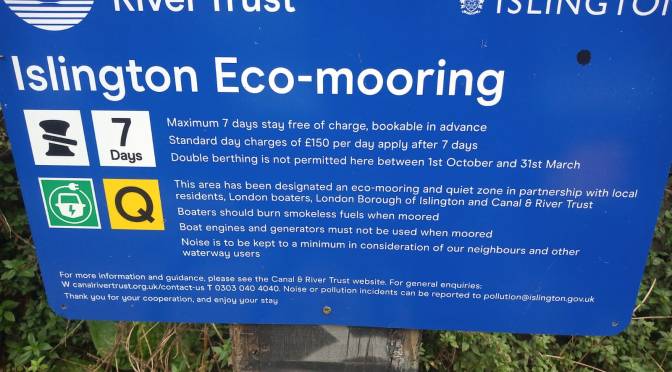
NEW ECO MOORING PLANS

Westminster council have just held a consultation period for a new eco mooring zone in Paddington. If plans go ahead this will be the third eco zone in London. The other eco zones are either side of the Islington Tunnel and in Kings Cross in the borough of Camden. 

In the Paddington eco mooring plans they contextualise the need for eco moorings and how it can benefit boaters and residents. They also mention pollution has caused the hospital ward near the canal to close on occasions. The council said they could not share any details about the cause of the pollution due to GDPR reasons. NBTA London is in the process of finding out more about the hospital ward closures and the reasons for them by means of a Freedom of Information request.

Paddington Basin, picture by Marc Barrot/Flickr

 One particular aspect of the plan is appealing. They have presented the idea of giving grants to boaters to cover the costs of converting boats so they are able to use the electric points (total of £1445 per boat for wiring, fixtures, consumer unit, electrical appliance). However, this mock costing does not consider labour costs and is vague so we can’t be sure whether it’s suitable for all boats. How they would decide which boaters receive the funding is also not clear. As stated in the pamphlet, these conversion grants are not guaranteed. The council will have to apply for funding but there is a worry that the conversion grants idea is tokenistic. 

NBTA London met with Westminster council to ask for more details about the eco zone plans. Present at the meeting were 2 members of K&A consultants, a member of Westminster council and a member of CRT. The Westminster council member played the politician and gave no real answers to our questions stating that the plan is dependent on the results of the consultation and available funding. It was clear the council didn’t want to commit to anything. However, we did propose some ideas on how they could make the eco moorings suitable for more boaters which were received positively: 

Provide electrical heaters that can be borrowed by boaters. 

This would mean boats with off-shore power hook-up wouldn’t need to adapt their boats and they could plug the heaters into their existing plugs.

 Integrate a battery charger into the electrical point. 

This would mean boats wouldn’t need to run their engines or diesel generators and they wouldn’t need to buy any extra appliances to fulfil their electrical needs. Especially as not all boats will be suitable for conversion.

King’s Cross, Regents Canal, picture by Diamond Geezer/Flickr

 All London boroughs have clean air plans to meet clean air targets because illegal levels of air pollution are still being recorded in London, including in the city of Westminster (levels of nitrogen dioxide have been recorded up to 50% higher than legal levels in various areas across London). Despite the pollution from boats being negligible in comparison to the pollution caused by road transport and domestic/commercial heating systems, where we can, it’s good to reduce our emissions. However, in order to transition, boaters need time and support. Stoves and diesel engines are crucial to heat boats and to supply enough power during the Winter months, and are necessary for the majority of the waterways that are without electrical charging points. Then there is the issue of space and money to make boats suitable to use the electric points.


NBTA London needs your support to carry on our work. Please get in touch here if you would like to volunteer with us. Alternatively your donations are vital to us supporting boaters with their legal case work, campaign banners and other printed material as well as events. You can help us with your donations online here


A volunteer organisation formed in 2009 campaigning and providing advice for itinerant boat dwellers on Britain’s inland and coastal waterways