Tag Archives: CRT

Risk Assessment Confirms River Lee ‘No Mooring’ Zones are ‘Not Necessary’

The Canal & River Trust’s (CRT) failing ’Water Safety Zones’ scheme on the River Lee has been dealt another blow after a risk assessment confirmed that the expensive and unpopular zones are ‘not necessary’.

Once referred to by CRT as ‘Water Sports Zones’, these designated areas on both the Lower and Upper Lee – close to the Lea Rowing Club in Hackney and Broxbourne Rowing Club in Hertfordshire – are a part of CRT’s strategy to remove the number of places where boaters can moor, and to force the itinerant liveaboard community off the water.

Initially CRT had plans to get rid of 550 mooring spaces along the River Lea, where boaters have the right to moor for up to 14 days at a time. Following a sustained campaign of resistance from the boating community (many of whom have continued to moor on the sites despite harassment and failed attempts at enforcement) CRT relented on the full threatened 550 mooring spaces. However, they continue to try and eliminate 295 mooring spaces.

CRT have been unable to provide a clear reason for these ‘No Mooring’ Zones, and despite constant requests have not released any assessment that explains why these sites should be ‘No Mooring’. The National Bargee Travellers Association (NBTA) finally ran out of patience and commissioned an independent risk assessment at three of these ‘No Mooring’ Zones themselves. This assessment, carried out by a qualified and experienced IOSH and IIRSM Risk Assessment professional at three of the ‘No Mooring’ Zones, concludes the following:

‘Boats moored in this area cannot be considered an additional risk as they comply with national standard practice(…) Mooring restrictions at these sites are not necessary’.

The resulting verdict goes on to suggest that it is more important for craft – including row boats – to manage their speed effectively to avoid any potential incidents.

The ‘No Mooring’ Zones policy is designed to make life difficult for many boaters, and could ultimately drive them off the water and out of their homes.

Daniel Prada is an itinerant liveaboard boater who has been moored on and off on the ‘No Mooring Zones’ this year, including on one of the sites the risk assessment covers. He said:

“It’s clear to me that this has never been about safety. The Lower Lee is one of the widest waterways in the whole of CRT’s South East waterway region and I’ve never seen any issues with the navigation at all because of moored boats. Honestly, this just feels like another way for the CRT to put pressure on boaters and make our life more difficult. This is my home – it’s where I’m raising my daughter. To have CRT try and force me out of it just makes me more resolved to defend it so that the waterways can remain a place for everyone.”

CRT has recently put out a series of announcements regarding their money issues, blaming everyone but themselves for the holes in their finances. However, a Freedom of Information request shows that as of 31 May 2023, the Trust has wasted anything up to £249,680.09* on the Water Safety Zones – much of it spent on outsourced enforcement contracts with companies like District Enforcement.

Marcus Trower, of NBTA London

Marcus Trower, of the London branch of the National Bargee Travellers Association (NBTA), has also been continuing to defy the ‘No Mooring’ Zones. He said:

“The NBTA has continuously tried to engage with the CRT to address legitimate safety concerns, but this risk assessment confirms what we knew all along – that the so-called ‘water safety zones’ have never been about safety, and have always been about trying to erase our community from our homes, impoverishing the waterways as a result. Boaters have mounted an incredible resistance to this dishonest, wasteful and fundamentally doomed policy for years, ever since it was first announced. The news that CRT has been lying about their intentions all along, and wasting hundreds of thousands of pounds – which we provide through our licence fees – in the process will only galvanise our community further. CRT needs to stop mismanaging both their finances and the waterways in general, and get their house in order. We will continue to resist, protest and push back at any and all further attacks on the boater community with all means at our disposal.”

No Mooring Sign in the ‘Safety Zones’ covered by boaters with a bin bag

The campaign of resistance against the ‘Water Safety Zones’ continues in full swing. Many boats continue to ignore the ‘no mooring’ signs and resist CRT’s campaign of harassment, and in May of this year hundreds attended the NBTA Spring Fayre – a celebration of the boater community held at one of the key sites that the CRT is trying to erase boaters from in Hackney.

*CRT caveats this figure, saying it is the total spend in the ‘Water Safety’ Zones, and so may cover costs relating to other Trust activities. However, after the recent spate of new ‘No Mooring’ signs erected in both areas, this number will certainly have risen since May already.

Freedom of information request here:

https://www.whatdotheyknow.com/request/third_party_contractors_safety_z#banner


NBTA London needs your support to carry on our work. Please get in touch here if you would like to volunteer with us. Alternatively your donations are vital to us supporting boaters with their legal case work, campaign banners and other printed material as well as events. You can help us with your donations online here


CRT ACCOUNTABLE TO WHOM?

Along the waterways, there are signs claiming the Canal & River Trust relies on donations to do its work. A quick look at their annual report shows donations account for a relatively small amount of the Trust’s income, at 3% for 2021/22. Boat licences and moorings, however, make up a fifth of the Trust’s annual income, at £44.5m for the last financial year.  

Income and expenditure are recorded in millions (not thousands or pounds), projects are listed in the abstract without breakdown of costs, charts show vague approximations without quantifying true percentage. In the 176 page report; the word “boater” is mentioned only 8 times, “licence” 6, “mooring” 10. 

The Canal & River Trust (CRT) is known to most if not all boaters who live on or use the waterways through London and beyond. The Trust operates as a charity and as such has charitable objectives, including to “preserve, protect, operate and manage inland waterways for public benefit… [and] improve the conditions of life for socially and economically disadvantaged communities who live nearby”.

The Trust may be best known among boaters for introducing more chargeable moorings, forcing through so-called “Water Safety Zones” that reduce available mooring spaces to boaters without a home mooring, and attempting to hike licence fees for boats without home moorings (again). It comes as no surprise, then, that the “financial strategy of the Trust is to maximise net income from all sources.”

So where exactly does CRT get its funds, and how does it spend the money? 

Despite being a charity, and claiming to rely on donations, charitable giving from the public accounts for only £6.5m (3 percent) of CRT’s income. They spend £41.6m on fundraising. 

£38.8 million came from charities in the form of grants from Historic England, the Active Travel fund, National Lottery, Green Recovery Challenge Fund and local Levelling up funds among others, often directed towards specific projects.  

£300,000 was left to them in peoples’ wills.

Tax exempt on income and profits from investments, a large portion of the Trust’s annual earnings comes from return on its investment portfolio. Value has increased 26% over the past five years, from £800m to over £1.1bn (yes, billion). With “ground rents [being] very resilient holdings over the long term”, last year, returns contributed to a third of CRT’s income. In fact, the submission to the Charity Commission shows an additional £76.7m of investment gains were retained for future use. While the Trust looks around for places to squeeze out a penny, they might also consider digging a little deeper into their own pockets. 

While external contractors are listed for reservoir inspection and property surveys, the cost of outsourced contracts is not. CRT has around 1,700 employees on the payroll and 3,700 volunteers, with 83 of its staff earning over £60k. Of those top earners, 10 earn more than £100k and 2 earn up to £250k… with community, volunteer and corporate groups removing “hundreds of tonnes of environmentally damaging litter and fly-tipping”, perhaps money might be better spent on bins.

A break-down of expenditure by region would be illuminating, as would some acknowledgement in the annual reporting of the fact that the CRT is the de facto local authority for several tens of thousands of people who live on boats as their primary residence.  As they make improvement to reservoirs, water pumps, towpaths, tree clearing, dealing with contamination and pollution, bridges, slipways and aqueducts and are concerned with the upkeep of towpaths for the 9 million reported fortnightly visitors, bins and taps have no mention at all. 

Additionally, NBTA London has recently submitted a Freedom of Information (FOI) request to CRT for the disclosure of spending on “Water Safety Zone” enforcement. With no apparent risk assessment or basis in evidence, could resources and effort be better spent elsewhere? 

Boaters will be most familiar with the Trust’s licencing income stream, which made up £44.5m in the financial year ending 2022. Of this, around half comes from licences, rather than mooring permits and trade. You would expect the Trust to take more of an interest in the wellbeing of liveaboard boaters, given they contribute a fair sum to the Trust’s balance sheet. While an aim of the Trust is the improvement of conditions of life for those in the vicinity of its waterways, its proposed increase in licence fees appears to care less for those who live on them. 

Trawling their high-level corporate finance and accounting jargon, boaters do not seem to figure in their calculations much at all. As their strategy is to “maximise net income” with the promise of being “unrelenting in their efforts to generate funds” it is likely the Trust will find other ways to pass on rising costs to boaters. The Chief Executive reported to the Board earlier this year that boater satisfaction remained on a downward trend. Making life better by water, perhaps, but harder if you live on it.


NBTA London needs your support to carry on our work. Please get in touch here if you would like to volunteer with us. Alternatively your donations are vital to us supporting boaters with their legal case work, campaign banners and other printed material as well as events. You can help us with your donations online here


CRT UP TO THEIR OLD TRICKS AGAIN

So this year CRT pulled out of their bag of tricks, one of the favourite waterways authorities questions: ‘Should people without a home mooring pay more than those with?’ And without much warning they actioned this into their new surprise survey. It’s not the first time CRT or their predecessor British Waterways (BW) brought this question out. Within the last 21 years they have bought it out four times.

In the Bill that became the British Waterways Act 1995, BW wanted it to be a criminal offence to keep a boat on BW waterways without a home mooring. However, with an almighty pushback we instead got an Act which gave us the legal right to exist on BW waterways. This was quite a setback for BW, it had for the 20-30 previous years been making life on the water harder. Now it was law that they had to licence our boats as long as we followed three basic criteria. Therefore, BW and following them CRT had to come up with some inventive ideas to deal with their persistent pest – the travelling boater.

They tried a few different tactics in their attempts to eliminate our community from the waterways, from reducing mooring stay times to taking away moorable banks to outlandish enforcement strategies such as 2003’s plan to make our travelling boaters travel 120 different lock-miles every 3 months without turning back. Some plans were beaten back, others weren’t. So far each time BW and CRT have proposed that boats without home moorings should pay more; it has been successfully resisted.

In early 2002, BW stated that they believed the licensing system was “felt by many to be unduly complicated”, in a document entitled ‘A fresh look at BWs craft licensing structure:

Consultation Paper for Boaters May 2002′. They proposed a more complicated tiered licensing system where they would increase the licence fee for a boat without a home mooring to 2.5 times that of the normal licence fee. In their document they even argued, ‘there is a compelling argument for a ‘pay as you go’ system’.

Later that year, after doing a bit a consultation they published ‘A fresh look at BW’s craft licensing structure: Consultation update’. Here BW put boats without home moorings into four categories: genuine continuous cruisers, bridge-hoppers or short range cruisers, static “live aboard” boats and boats awaiting a mooring. Just for clarification, BW considered bridge-hoppers or short range cruisers were people who “moved less than 50 km in any three month period”. They were concerned that if they charged boats without home moorings more then they would harm the “genuine continuous cruisers” as well as the other types of categories they’d coined without home moorings. Therefore, they proposed that boats without home moorings who moved within a range in one region “pay a district mooring fee equivalent to the lowest priced BW permanent mooring in the area where your craft is normally kept or used”. Under pressure, this idea was also discarded.

In a 2005 document entitled ‘Licence Fee Consultation June 2005’ BW proposed to increase the licence fee for boats without a home mooring by 147%. It was identified in a report by BW entitled ‘Fee Structures for Boat Licences in England and Wales White Paper’ in the same year, that if implemented it would have raised £1million from only 1,360 boat licence holders.

A group called the Continuous Cruiser Action Group was set up to coordinate boaters responses to the consultation.

A section of boaters organised themselves against it and set up a campaign mobile phone group. Some of the organised boaters travelled across the nation and painted the phone number on locks asking people to get involved. The phoneline became inundated with texts of people wanting to do something. If BW didn’t back down the plan was to send text messages for people to meet at a list of different lock pinch points and do a go slow flotilla to cause disruption. BW backed down so the resistance plan didn’t need to implemented. At the time in 2006, the Continuous Cruiser Action Group made a statement saying, “just because all has gone quiet, it isn’t over”. They weren’t wrong.

In early 2008, hire boat company Wyvern Shipping circulated a petition calling on BW to make continuous cruisers pay a higher licence fee. In January 2008, Sally Ash BW’s then Head of Boating had received a letter from the Association of Pleasure Craft Operators (APCO), the hire boat companies’ trade body, threatening a drop in BW’s licence income if BW increased the cost of hire boat licences.

In September 2008, BW issued a consultation document to the User Groups entitled ‘Boat Licence Fees – For information and comment on by Waterway User Groups’. This document included a proposal to increase the licence fee for boats without home moorings by £150 in comparison to the published tariff. BW also proposed to introduce higher licence fees for widebeam boats. However, once again boaters organised and beat these plans back.

Then in 2017, CRT announced that the licence fees system was “outdated” with the ridiculous lie that licence fees have never been reviewed. They argued that licence fees were “complex”, “unfair”, “outdated” and that their consultation into the fees would be “cost neutral”. This so called cost neutral consultation had three stages and had to change research company for the third stage.

We in the NBTA were involved in each part of the consultation. All the way through this process, CRT attempted to divide boaters, putting forward the question again about charging boats without home moorings more than those with. Therefore, we spent this time preparing to be ready to ballot our members for a licence fee strike if we had to. We weren’t going to let CRT price us off the water!

Again, it didn’t come to that. CRT decided not to take us on at that time. So they decided to halve the early payment discount, pick on wider boats and further made a statement saying they would think about how to deal with the London waterways problem; separately. This thinking has led CRT to plan to implement chargeable moorings on 1.1km of London’s regular towpath. In a meeting between NBTA and CRT this year, CRT revealed that they still haven’t implemented this plan because they haven’t been able to hire someone suitable to manage the project. While that plan is still apparently to be implemented, CRT has reached back into the bag of tricks and found the same old question, once again hoping for different reply.

As in the past, we must show the waterways authorities we aren’t a community that they can push around and do whatever they want with. We aren’t a social problem that needs culling, our way of life is worth defending and together we can beat them back! Please get involved. If you think the lifestyle of travelling without a fixed address should continue to be defended, then join us here: https://nbtalondon.co.uk/about/welcome-to-the-nbta/ or email nbtalondon@gmail.com.

Featured image by David Mould on Flickr


NBTA London needs your support to carry on our work. Please get in touch here if you would like to volunteer with us. Alternatively your donations are vital to us supporting boaters with their legal case work, campaign banners and other printed material as well as events. You can help us with your donations online here


CRT SELLING OFF ASSETS…

Ever wondered where to go to buy second hand industrial grade machinery? No, not just Stanstead Abbots summer bootsale, you could try Industry Asset Services Ltd (iaservices.co.uk). And were you to visit this industrial equipment auction site, you’d quite quickly find plenty of recognisable CRT equipment sold or on sale. Mainly boats; Piling Workboats, craning boats (and the cranes), rubbish barges, even the CRT patrol boat usually moored at Enfield Lock. But the CRT own much more than just boats, and it seems that if it can be sold, it IS being sold. There’s been diggers, trailers, even replacement beams for lock gates sold off through this site.

CRT advertisement on iaservices.co.uk

Well why would CRT sell this stuff? The only explanation CRT gave when questioned was

that it: “would usually be the case that these boats and items are surplus to the Trust’s requirements or are no longer required in general.”

As seen on iaservices.co.uk

Which sounds more like, to make/ save some money. Seems fairly reasonable. Any organisation responsible for physical work and upkeep is going to need specialist machinery, tools and vehicles, and those assets will need maintenance themselves, and in some cases re- placing from time to time. So CRT are selling these things because they’re buying new ones right? Well, no. They are simply out- sourcing work in many cases. No need to have a patrol boat if you just pay more money out to a 3rd party company to do your patrols for you…

As seen on iaservices.co.uk

NBTA London needs your support to carry on our work. Please get in touch here if you would like to volunteer with us. Alternatively your donations are vital to us supporting boaters with their legal case work, campaign banners and other printed material as well as events. You can help us with your donations online here


CRT gives highest paid Employees 8% bonus (NBTA Cartoon)

Last year our license fees have gone up 8% and higher paid employees grouped together were paid 8% more in 2021/2022 than 2020/2021 (reported in the CRT 2021/2022 financial report.


NBTA London needs your support to carry on our work. Please get in touch here if you would like to volunteer with us. Alternatively your donations are vital to us supporting boaters with their legal case work, campaign banners and other printed material as well as events. You can help us with your donations online here


HISTORY OF THE RIVER LEA

The River Lea has long been a multi-use space, shared by all kinds of craft. In recent years, however, the Canal and River Trust has emphasised the rights of some river users over others. This is especially true as the Trust attempts to force through bans on mooring on the site of its “Water Safety Zones”, which will prevent itinerant boat dwellers from mooring in these locations for the 14 days which applies elsewhere on the waterways.

The Trust claims that more “no mooring” sites are necessary for the safety of other canal users, such as rowers and kayakers. This is despite scant evidence that moored boats cause collisions and the fact that the Lea Navigation is among the widest waterways of the country.

Moreover, boats and large barges have been using and mooring on the Lea for many years, including in places where the Trust is calling to ban moored boats. The inset photos show boats and industrial barges moored at some of these very locations.

Figure 1: Hackney Power Station, Millfields 1950-69

Figure 1, from between 1950 to 1969, shows barges unloading at Hackney Power Station, near Millfields Park in Clapton, now the site of a recycling centre. Two stretches of canal here are threatened with restriction under the Trust’s “Safety Zones”, where previously widebeam barges have moored for access.

Figure 4: Hackney Power Station, Millfields
1950-69
Figure 5: Hackney Power Station, 1950-69
Figure 6: Hackney Power Station, 1950-69

Judging from other photos from this period (Fig.4, 5, 6), this section of the navigation near the former power station has been used by considerably larger boats than tend to operate on the river today. Not only this, but Lea Rowing Club, some of the most vocal proponents of the “Safety Zones”, operated on the navigation during these years, when timber and coal barges were evidently on the water too. The waterways have been shared for some time, and it’s unreasonable that this should change now.

Figure 2: London Hackney Marshes 1973

In a later photograph from 1973 (Figure 2), a barge is visible moored on the inside of the shallow bend leading round to Milllfields Park. Across from the Princess of Wales pub, where the CRT is proposing no mooring sections, figure 3 shows barges double-moored on the offside. Before the Lea Bridge was constructed, the river was crossed at this site by Jeremy’s and Smith’s ferries as early as 1747, according to A History of the County of Essex: Vol. 6. Passenger boats were therefore mooring at this site as long as over 200 years ago.

Figure 3: The Lea Valley, River Lea

The scene in figure 7 will be familiar as the view from the eastern bank of the river in Hackney Wick, opposite Omega Works and looking north toward Barge East. This photo also dates from between 1950 and 1969, and shows wide-beam timber barges moored at a site which the Trust considers unfit for mooring of boats which are homes, but perfectly suitable for more lucrative restaurant boats and water sports landings.

Figure 7: Hackney Wick, 1950-69
Figure 8: Old Ford Timber Loading, 1950-69

The Canal and River Trust continues to claim that canal boats and liveaboard boaters have not been able to moor in its “Water Safety Zones”, for the benefit of other users. Clearly, there have been large craft sharing the river with others for some decades now.


NBTA London needs your support to carry on our work. Please get in touch here if you would like to volunteer with us. Alternatively your donations are vital to us supporting boaters with their legal case work, campaign banners and other printed material as well as events. You can help us with your donations online here


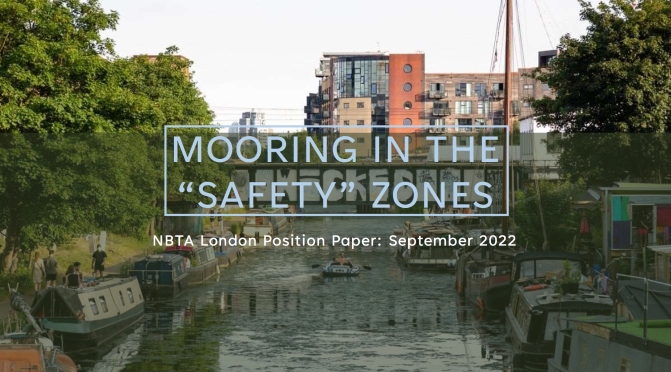
Explained: the no mooring sites in ‘safety’ zones

Have you ever wondered what the ‘no mooring’ sites in the ‘safety’ zones” are all about? 

What are CRT trying to say to justify them, and which sites are NBTA London challenging and why? 

In this document we answer these questions *and more*.  

As well as hashing out the main arguments, we have throughly, concisely and clearly laid out each area which CRT are trying to ban boats from in the ‘safety’ zones. 

The document states CRT’s position and shows NBTA London’s counter argument to each of the sites which we are challenging. 

It’s very useful to help understand the ‘safety’ zones better. It’s not only very pretty, but also a must read!’ —> view pdf


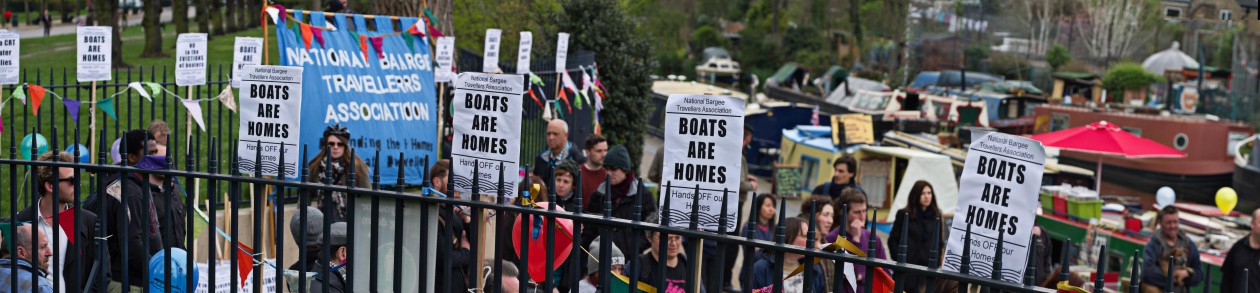
NBTA Boats are homes protest outside CRT’s London offices

NBTA London needs your support to carry on our work. Please get in touch here if you would like to volunteer with us. Alternatively your donations are vital to us supporting boaters with their legal case work, campaign banners and other printed material as well as events. You can help us with your donations online here

Moorings threatened in Harlesden

The green space in Harlesden, which is many boaters’ most popular West London mooring, is being gentrified by developers in tandem with the mayor’s office. The ‘regeneration’ claims to be creating a ‘boaters’ paradise’, but will involve replacing the grass verge with mooring rings (which are easy to remove in the future) and will take away 3 visitor mooring spaces which will be replaced with ‘community boats and a canoe pontoon. Because the canal to the East and West of Harlesden is too shallow to moor on, this reduces capacity in Harlesden by approximately 20%.

Towpath in Harlesden (Image by diamond geezer/Flickr)

Apparently as a compensation measure, the developers are installing an elsan and water point at the West end of the stretch, but we remember that CRT promised us facilities years ago. So, in reality, these moorings spaces are being taken without any compensation measures being made. This is yet another example of CRT working with developers behind our backs and to our detriment.

While the NBTA have objected to the planning proposal, we are considering the next steps we should take to fight for the moorings.

If you would like to get involved in this, please email nbtalondon@gmail.com  to let us know that you want to help. 

For more information about the development, see here: 

https://consult.opdc.london.gov.uk/harlesdencanalside


NBTA London needs your support to carry on our work. Please get in touch here if you would like to volunteer with us. Alternatively your donations are vital to us supporting boaters with their legal case work, campaign banners and other printed material as well as events. You can help us with your donations online here


Meeting at Mayor’s office

On 14 March 2022, NBTA London had a meeting with  Deborah Halling, Senior Policy Officer, Housing and Land GREATER LONDON AUTHORITY about NBTA Pan London Needs Assessment For Boat Dwellers Without A Home Mooring.

In the meeting, which was requested by Deborah Halling, NBTA reminded the Mayor’s office of the relevant excerpt of the existing policy for itinerant boaters, including that it was imperative for the Housing to talk direct with NBTA rather than CRT with regard to number of boats without a home mooring, and what the needs are for boat dwellers without a home mooring. We informed her of CRT’s continued reduction of mooring spaces, of CRT’s refusal to have a consultation until NBTA put pressure on CRT to do so. We also explained some basic mooring terminology, and why “bookable” moorings should not compromise existing towpath mooring spaces.

CCing boats on the Regents Canal, Islington visitor moorings (Image by Marc Barrot/Flickr)

We suggested that planning could have some weight with developers in ensuring that mooring spaces in the developed area are not taken away or restricted for boat dwellers without home moorings, for example; furthermore, simple and inexpensive facilities could be encouraged to be installed (water taps, secure boaters bins/recycling) alongside land residential facilities.

In follow-up emails after the meeting the question of grants for boat dwellers without home moorings for solar panels (thus reducing emissions whilst moored) has also been raised.

Deborah Halling was apparently committed to continuing talks with NBTA about Pan London Needs Assessment For Boat Dwellers Without A Home Mooring.


NBTA London needs your support to carry on our work. Please get in touch here if you would like to volunteer with us. Alternatively your donations are vital to us supporting boaters with their legal case work, campaign banners and other printed material as well as events. You can help us with your donations online here


CRT’s skewed spending

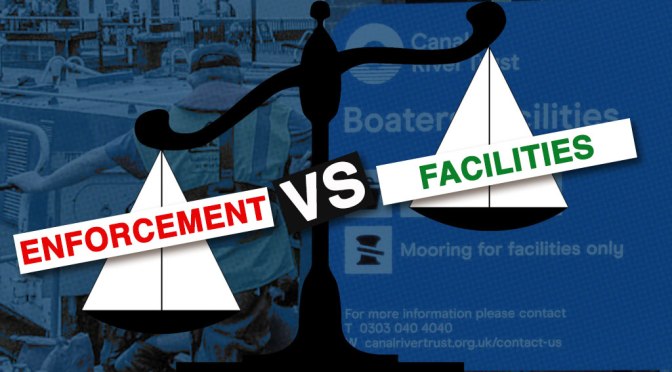
It is possible to see the priorities of an organisation by what they spend their money on. On London waterways, CRT spends more money on enforcement than on boaters’ facilities.

The cost of wages & equipment for Licensing Support Officers and Rangers and Mooring Rangers in 2020 was roughly £371k. Additionally, from October to the end of December CRT spent £24,840 on the District Enforcement in ‘safety’ zones. CRT has budgeted an extra £180k for District Enforcement for this year. Enforcement isn’t the only thing they like to spend their money on. 

For 2020 Stuart Mills, the Investment Officer, received a salary and benefits totalling £236,936.  CRT also paid the head of CRT, Richard Parry, a salary and benefits totalling,£226,346.  It cost CRT £463,282 for just two salaries in one year. 

We we’re unable to calculate how much the CRT executive team costs in total as the two salaries mentioned were the only ones published, there was no data for the rest of the team, so we can only imagine! However, in the same year CRT spent only £350K on boater facilities on the London Waterways. 

So to recap, the figures are as follows: 

£395K for enforcement on London Waterways
£463K on the salary and benefits of just two staff at the CRT executive team
and just £350K on boaters facilities on the London Waterways.


NBTA London needs your support to carry on our work. Please get in touch here if you would like to volunteer with us. Alternatively your donations are vital to us supporting boaters with their legal case work, campaign banners and other printed material as well as events. You can help us with your donations online here