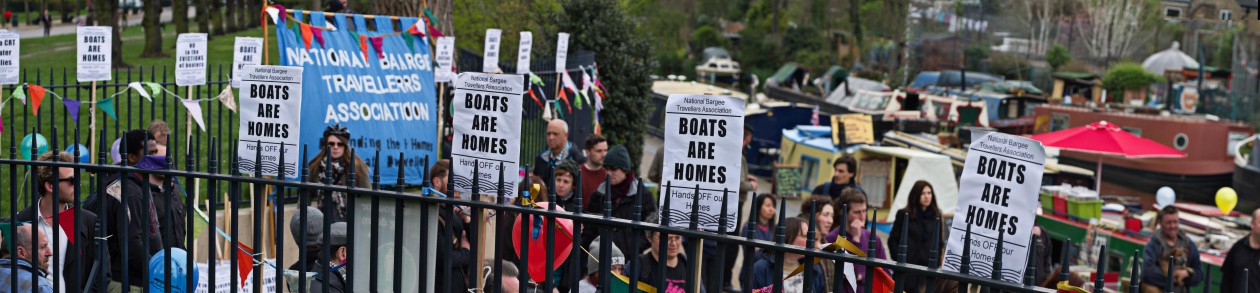
CRT and British Waterways before them have been trying to get rid of boats without home moorings for decades. Here is an article about the early 2000’s boater battles with BW.
In early 2002, BW stated that they believed the licensing system was “felt by many to be unduly complicated” in a document entitled ‘A fresh look at BW’s craft licensing structure: Consultation Paper for Boaters May 2002’. They proposed a more complicated tiered licensing system where they would increase the licence fee for a boat without a home mooring to 2.5 times that of the normal licence fee. In their document, they even argued, ‘there is a compelling argument for a ‘pay as you go’ system.’
Later that year, they published ‘A fresh look at BW’s craft licensing structure: Consultation update’. Here, BW put boats without home moorings into four categories: ‘genuine continuous cruisers’, ‘bridge-hoppers’ or ‘short range cruisers’, static ‘live aboard’ boats, and boats awaiting a mooring. BW considered ‘bridge-hoppers’ or ‘short range cruisers’ to be people who “moved less than 50 km in any three-month period.” They were concerned that if they charged boats without home moorings more, then they would harm the ‘genuine continuous cruisers’. They consequently proposed that boats without home moorings that moved within a 50 km range in one region pay a fee equivalent to the lowest price permanent mooring in the same area. Many felt this to be arbitrary and deeply unfair, and under pressure, this idea was also discarded.
Then in 2003, BW, searching for other ways to get rid of boats without home mooring, looked to introduce a Trial Mooring Code, a part of which required ‘Constant Cruisers’ to travel a staggering 120 consecutive lock miles every 3 months and log their cruising in a book available to patrol officers on demand. A lock mile being defined as passing through a lock as a mile. This BW proposal was to be followed by boaters without a home mooring as well as by leisure boaters who spent more than 42 days away from their mooring. BW claimed this was necessary due to overcrowding and overstaying. They also claimed that their staff would ‘demonstrate flexibility and empathy’ when applying the code, values that they themselves were contradicting in the creation of such an extreme set of rules.
The Trial Mooring Code consultation was sent via post to boat owners; some were given directly to boats and put on BW’s website. BW invited boaters to respond to the code over the following seven months – an impossible task for those itinerant boaters who didn’t have a reliable postal address or internet access (this was 2003!). Many of them didn’t get the consultation directly to their boat. As one boater observed at the time, it was particularly unfair to circulate the questionnaire about the changes by post, as it excluded the population of boaters who would be most disadvantaged by the Trial Mooring Code.
Resistance to the code was strong, and an independent consultation was conducted which approached boaters through IWA, NABO, and by distributing questionnaires on the towpath. The independent consultation examined opinions and impacts on the entire boater community. It found that the vast majority of boaters, those with permanent moorings and those who were itinerant, rejected the code. It would have made attending work, school, and healthcare appointments almost impossible and would have made it very difficult to access benefit payments. The responses from the independent consultation questioned BW’s assumption that overcrowding and overstaying were problems that needed to be addressed with any new legislation. NABO then threatened judicial review, arguing that the mooring code exceeded BW’s powers as determined in the 1995 Waterways Act.
As a result of this coordinated effort from the boating community and interest groups, BW discontinued the Trial Moorings Code and instead published ‘Mooring Guidance for Continuous Cruisers,’ which impressed upon boaters their requirement that they make a ‘genuine progressive journey… around the network or a specific part of it.’ The wildly unfair 120 lock-miles-in-three-months requirement was gone.
The 2002 and 2003 campaigns showed that we can win, which is why now, as we face similar threats, it is important to reflect and learn from previous successes.
Source documents of 2002 A fresh look at BW’s craft licensing structure:
Source documents from Trial Mooring Code:


 National Bargee Travellers Association - London Branch