Tag Archives: River Lea

2010-Present: BW and CRT’s local mooring strategies for London and the K&A

As itinerant boaters face the double threat of license surcharges and extortionate ‘pre-bookable paid towpath moorings’, it is worth reminding ourselves that when we faced similar challenges in the past, our protests were successful. 

In 2010, British Waterways (who were later succeeded by CRT), introduced ‘local mooring strategies’ in London and the West end of the Kennet and Avon. They claimed that ‘more boats are moored along the river Lea than desirable’ and tried to implement a set of rules that would make it near impossible for most itinerant boaters to live in these areas. 

British Waterways, in an attempt to make the river Lea less popular for boaters, tried to define the word ‘place’ in the following statute: the vessel ‘will be used bona fide for navigation throughout the [license period] without remaining continuously in any one place for more than 14 days or such longer period as is reasonable in the circumstances.’ (BW Act 1995, Section 17)

They claimed that a ‘place’ is the same as a neighbourhood and then defined enormous stretches of the waterways as one neighbourhood. In London, the entire length of the river Stort became two ‘neighbourhoods’ (and almost entirely seven day mooring only); all waterways in London south of the North Circular became one neighbourhood, including Limehouse cut and the Hertford Union; the Lea north of the north circular was split into three neighbourhoods. 

Having redefined the meaning of the word ‘place’, British Waterways declared that itinerant boaters had to move to a new neighbourhood each 14 days and would have to spend an equal amount of time in each neighbourhood across the licence period. 

Against this unfair attempt to cleanse the river Lea of itinerant boaters, hundreds of boaters protested. It was at this time that London Boaters, originally a protest group, formed. They got information about the changes out to residents, rowers, canoers, cyclists and surveyed boaters and towpath users. They encouraged responses to the consultation and demonstrated that, far from being unwanted on the Lea, itinerant boats were welcome. 

London Boaters also challenged the legality of BW’s proposals  and worked with other boating organisations such as NABO (National Association of Boat Owners) and RBOA (Residential Boat Owners’ Association). They conducted their own research which challenged BW’s unsupported claims about congestion and examined the likely impact of the proposals, which would increase homelessness and put pressure on local housing waiting lists. They showed that the changes would prevent boaters accessing education, employment and health care.

Eventually, in September 2011, British Waterways realised the game was up and announced that it was dropping its plans for London. But, they were implemented by the newly formed Canal and River Trust in a 12 month trial in 2014 on the K&A.

On the K&A, similar to the ‘neighbourhoods’ idea, they set a maximum length of time that could be stayed on each stretch of the canal. They also planned to implement a charge of £25 a day for staying longer than stated on a less-than-14 day visitor mooring and introduced a 20 mile minimum distance. If boaters couldn’t abide by these draconian rules,  CRT offered ‘roving mooring permits’ (£800 a year for a 60ft boat) which enabled the boater to move every 14 or 28 days. While CRT eventually conceded that the ‘roving mooring permits’ were illegal , many of these requirements will be familiar to itinerant boaters across the country as they have since been rolled out in guidance to all boaters. The parallels between the new ‘constant-cruiser’ surcharge and the ‘roving mooring permits’ might also be noted. BW backed down in London because boaters dedicated a huge amount of time and energy to fighting their cause, but CRT re-used the same ideas on the K&A some years later and are re-using them again now in the introduction of the itinerant boater surcharge and the pre-payable visitor moorings in London. We must stick together and stay united in our opposition to their incessant attacks on our way of life – attacks which have been defended against before and can be defended against again.


    NBTA London needs your support to carry on our work. Please get in touch here if you would like to volunteer with us. Alternatively your donations are vital to us supporting boaters with their legal case work, campaign banners and other printed material as well as events. You can help us with your donations online here


    ‘Safety Zones’ Update

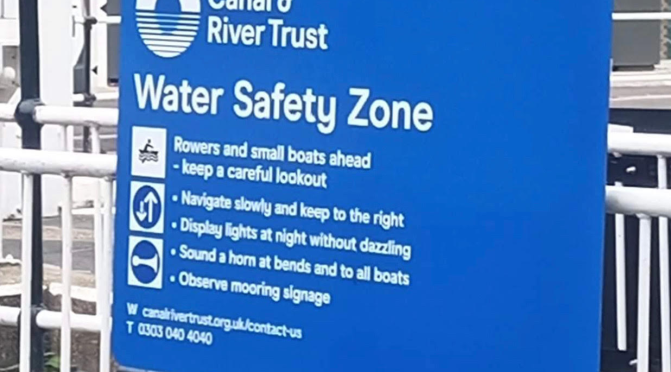
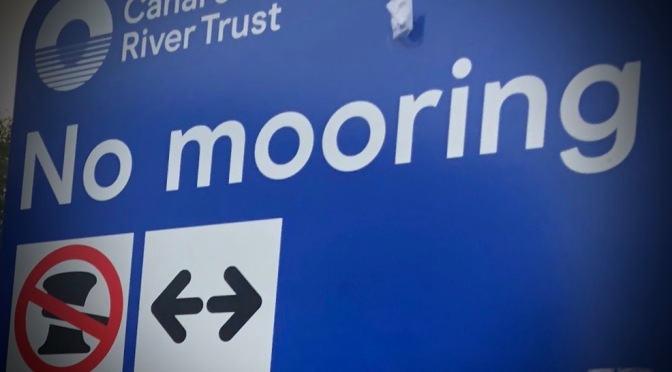
    It has been 3 years since CRT installed a new set of ‘No Mooring Zones’ on the River Lee. These ‘No Mooring Zones’ were exclusionary and unpopular at their outset – leaving the boating and wider community confused why it was so necessary to push boaters out of such a vital community area – without any evidence of a safety issue in the first place.

    For 3 years boaters have continued to moor in protest at these ‘No Mooring Zones’ – yet the river has remained safe, with no significant, or even noticeable spike in safety incidents. The Itinerant Boating Community is full of diversity. Boat dwellers are also canoeists, paddle boarders and rowers, and NBTA are keen to encourage and celebrate this diversity, so we have approached CRT to suggest a different approach. An approach based on mutual initiatives – rather than exclusionary ‘No Mooring Zones’ – where different aspects of the boating community work together to ensure the river is accessible to all. 

    It is early days yet, and we hope that discussion will have began in earnest by the end of July – but early signs are good, with CRT and key boating orgs along the River Lee showing interest in a different and more collaborative approach.

    A further benefit to this collaborative approach is it can be ‘grassroots’, growing within the community – saving CRT the cost of needless and ineffective micro-management and policing during this time of financial need.

    CRT is losing the ‘safety zones’

    It’s been over two years since CRT decided to enforce ‘no mooring’ in areas of the ‘safety’ zones; their aim is to clear boats away from parts of the River Lea, yet boaters are continuing to resist. Boaters on mass are ignoring CRT’s ridiculous ‘no mooring’ sites. Thanks to collective boater action, the ‘safety zones’ have clearly failed. For more information about the safety zones: https://nbtalondon.co.uk/3049-2/


    NBTA London needs your support to carry on our work. Please get in touch here if you would like to volunteer with us. Alternatively your donations are vital to us supporting boaters with their legal case work, campaign banners and other printed material as well as events. You can help us with your donations online here


    Chargeable, Bookable Moorings

    In 2016, prior to launching the London Mooring Strategy, which was published in 2018, CRT and NBTA-London had round-the-table discussions about CRT’s thoughts on “pre-bookable” moorings. NBTA made it explicitly clear that if there were any “pre-bookable” moorings to be created, then they should be on the offside, and that tow-path moorings should never be chargeable.

    Instead, CRT proceeded to make use of any vacant offside space not yet used for mooring for “long term”, or “residential” moorings, rather than increasing mooring space for visitors who were willing to book ahead, often making deals with third parties who owned the offside land. Two such set of moorings is at Broadway Market on the Regent, which in particular impedes navigation in what was already a very busy part of the London network, whilst overlooking the opportunity to create “pre-bookable” moorings; the other being Matchmakers on the River Lea, where the installation of those moorings meant CRT with their ‘safety’ zones are trying to enforce a ‘no mooring’ site on the towpath.

    Yet, this is taken from CRT’s website:

    “It’s really important that navigation is maintained and that it’s not impeded by moored boats. The inner London waterways are very busy with many different types of boater: liveaboard, leisure, freight, and business craft as well as increasing numbers of unpowered craft. This measure is intended to ensure that there is clear navigation for everyone in these busy areas.”

    Their policy for safe navigation goes into the ether, however when it comes to the possibility of monetising new moorings, such as those on the offside at Broadway Market on the Regent.

    Broadway Market, Regents Canal. Pic by Flickr/@scratch_n_sniff

    Seven years following CRT’s first discussions with NBTA, CRT have now taken away several “casual”, “visitor” or towpath moorings, making them “pre-bookable”, and furthermore, have started charging extra. Usually, a CRT licence includes the right to moor on any towpath without extra charge, but CRT are turning 1.1km of London’s regular towpath into new ‘Chargeable’ Moorings that would cost an additional £25 extra a day. CRT’s argument for doing so is to make it ‘fairer’ for past-time and full-time liveaboard boaters alike to have a chance of mooring up in popular parts of the canal network. When we checked the facts behind the manipulated CRT survey on how successful the Paddington Basin chargeable moorings are, a Freedom Of Information Request reveals that these moorings have only been used 25% of the time – the rest of the time they remained empty and unused. 

    The latest moorings to be eradicated from public, free-for-all use are in Little Venice and Paddington Basin, but this is just the beginning . 

    On reading the T&Cs for what CRT call “pre-bookable”, but are actually chargeable moorings, included in these T&Cs are “planned” eco moorings on the Regent at Kings Cross and on Sweetwater in the Olympic Park on the Lee Navigation, strongly implying that these eco moorings may also become chargeable. NBTA also infer from this that the existing eco moorings on the Regent at Angel may become chargeable too, not just “pre-bookable”.

    Aside from being financially exclusive and therefore fundamentally unfair in the first place, the quantity of chargeable moorings is not proportionate to the needs of boat owners. Lots of these bookable, chargeable mooring spaces will either be paid for by boaters who can’t find public towpath mooring since CRT have reduced those spaces, or they will remain empty because people a) can’t afford them, and b) don’t want them. If they remain largely empty,  this may then be a great excuse for CRT to turn them into private moorings – as was the case at Here East moorings on the River Lee.

    CRT announce itinerant boat dwellers will pay higher licence fees than others

    Just before this newsletter went to press, the Canal and River Trust (CRT) announced that it plans to charge boats without home moorings more than boats with home moorings. 

    The implications of this are devastating. CRT will now be able to use boat licence fees as a way of removing the travelling boat dweller community from the waterways. It is more important than ever that we join together as a united community to stop CRT in their tracks. We will be sending round a ballot to all members of the NBTA to ask for your input on what action we take next. If you are not already a member, please sign up now to contribute to this vital decision. We have also organised an online meeting to coordinate our fight back. Please join us on Monday 9th October at 7pm. The access details for the meeting can be found on page 3. We hope to see you all there.


    NBTA London needs your support to carry on our work. Please get in touch here if you would like to volunteer with us. Alternatively your donations are vital to us supporting boaters with their legal case work, campaign banners and other printed material as well as events. You can help us with your donations online here


    Safety zones cost quarter of a million

    CRT admits to spending up to £250k on trying to stop boaters from mooring in the ‘Water Safety Zones’ on the River Lea. A Freedom of Information request shows that as of 31 May 2023, the Trust has spent anything up to £249,680.09 in the two WSZs on the Lower Lea at Hackney/Tottenham and at Broxbourne. All the while, trying to up licence fees and divide the boating community. CRT should stop wasting money on preventing people mooring in these so-called ‘Safety Zones’.


    NBTA London needs your support to carry on our work. Please get in touch here if you would like to volunteer with us. Alternatively your donations are vital to us supporting boaters with their legal case work, campaign banners and other printed material as well as events. You can help us with your donations online here


    River Lea’s ’No Mooring’ zones are ‘not necessary’ finds independent risk assessment.

    After CRT ignored repeated requests to provide evidence that boats moored in the ’Safety Zones’ were a danger to navigation, NBTA-L commissioned its own independent assessment. The report, carried out by a qualified and experienced Risk Assessment professional, concluded: ‘Boats moored in this area cannot be considered an additional risk as they comply with national standard practice(…) Mooring restrictions at these sites are not necessary’.

    It goes on to suggest that it’s more important for craft – including row boats – to manage their speed effectively to avoid any potential incidents. This upholds NBTA’s long held view that CRT’s ’Safety Zone’ policy has never been about safety, but aims instead to make life difficult for boaters, which could ultimately drive many off the water and out of their homes.


    NBTA London needs your support to carry on our work. Please get in touch here if you would like to volunteer with us. Alternatively your donations are vital to us supporting boaters with their legal case work, campaign banners and other printed material as well as events. You can help us with your donations online here


    Risk Assessment Confirms River Lee ‘No Mooring’ Zones are ‘Not Necessary’

    The Canal & River Trust’s (CRT) failing ’Water Safety Zones’ scheme on the River Lee has been dealt another blow after a risk assessment confirmed that the expensive and unpopular zones are ‘not necessary’.

    Once referred to by CRT as ‘Water Sports Zones’, these designated areas on both the Lower and Upper Lee – close to the Lea Rowing Club in Hackney and Broxbourne Rowing Club in Hertfordshire – are a part of CRT’s strategy to remove the number of places where boaters can moor, and to force the itinerant liveaboard community off the water.

    Initially CRT had plans to get rid of 550 mooring spaces along the River Lea, where boaters have the right to moor for up to 14 days at a time. Following a sustained campaign of resistance from the boating community (many of whom have continued to moor on the sites despite harassment and failed attempts at enforcement) CRT relented on the full threatened 550 mooring spaces. However, they continue to try and eliminate 295 mooring spaces.

    CRT have been unable to provide a clear reason for these ‘No Mooring’ Zones, and despite constant requests have not released any assessment that explains why these sites should be ‘No Mooring’. The National Bargee Travellers Association (NBTA) finally ran out of patience and commissioned an independent risk assessment at three of these ‘No Mooring’ Zones themselves. This assessment, carried out by a qualified and experienced IOSH and IIRSM Risk Assessment professional at three of the ‘No Mooring’ Zones, concludes the following:

    ‘Boats moored in this area cannot be considered an additional risk as they comply with national standard practice(…) Mooring restrictions at these sites are not necessary’.

    The resulting verdict goes on to suggest that it is more important for craft – including row boats – to manage their speed effectively to avoid any potential incidents.

    The ‘No Mooring’ Zones policy is designed to make life difficult for many boaters, and could ultimately drive them off the water and out of their homes.

    Daniel Prada is an itinerant liveaboard boater who has been moored on and off on the ‘No Mooring Zones’ this year, including on one of the sites the risk assessment covers. He said:

    “It’s clear to me that this has never been about safety. The Lower Lee is one of the widest waterways in the whole of CRT’s South East waterway region and I’ve never seen any issues with the navigation at all because of moored boats. Honestly, this just feels like another way for the CRT to put pressure on boaters and make our life more difficult. This is my home – it’s where I’m raising my daughter. To have CRT try and force me out of it just makes me more resolved to defend it so that the waterways can remain a place for everyone.”

    CRT has recently put out a series of announcements regarding their money issues, blaming everyone but themselves for the holes in their finances. However, a Freedom of Information request shows that as of 31 May 2023, the Trust has wasted anything up to £249,680.09* on the Water Safety Zones – much of it spent on outsourced enforcement contracts with companies like District Enforcement.

    Marcus Trower, of NBTA London

    Marcus Trower, of the London branch of the National Bargee Travellers Association (NBTA), has also been continuing to defy the ‘No Mooring’ Zones. He said:

    “The NBTA has continuously tried to engage with the CRT to address legitimate safety concerns, but this risk assessment confirms what we knew all along – that the so-called ‘water safety zones’ have never been about safety, and have always been about trying to erase our community from our homes, impoverishing the waterways as a result. Boaters have mounted an incredible resistance to this dishonest, wasteful and fundamentally doomed policy for years, ever since it was first announced. The news that CRT has been lying about their intentions all along, and wasting hundreds of thousands of pounds – which we provide through our licence fees – in the process will only galvanise our community further. CRT needs to stop mismanaging both their finances and the waterways in general, and get their house in order. We will continue to resist, protest and push back at any and all further attacks on the boater community with all means at our disposal.”

    No Mooring Sign in the ‘Safety Zones’ covered by boaters with a bin bag

    The campaign of resistance against the ‘Water Safety Zones’ continues in full swing. Many boats continue to ignore the ‘no mooring’ signs and resist CRT’s campaign of harassment, and in May of this year hundreds attended the NBTA Spring Fayre – a celebration of the boater community held at one of the key sites that the CRT is trying to erase boaters from in Hackney.

    *CRT caveats this figure, saying it is the total spend in the ‘Water Safety’ Zones, and so may cover costs relating to other Trust activities. However, after the recent spate of new ‘No Mooring’ signs erected in both areas, this number will certainly have risen since May already.

    Freedom of information request here:

    https://www.whatdotheyknow.com/request/third_party_contractors_safety_z#banner


    NBTA London needs your support to carry on our work. Please get in touch here if you would like to volunteer with us. Alternatively your donations are vital to us supporting boaters with their legal case work, campaign banners and other printed material as well as events. You can help us with your donations online here


    HISTORY OF THE RIVER LEA

    The River Lea has long been a multi-use space, shared by all kinds of craft. In recent years, however, the Canal and River Trust has emphasised the rights of some river users over others. This is especially true as the Trust attempts to force through bans on mooring on the site of its “Water Safety Zones”, which will prevent itinerant boat dwellers from mooring in these locations for the 14 days which applies elsewhere on the waterways.

    The Trust claims that more “no mooring” sites are necessary for the safety of other canal users, such as rowers and kayakers. This is despite scant evidence that moored boats cause collisions and the fact that the Lea Navigation is among the widest waterways of the country.

    Moreover, boats and large barges have been using and mooring on the Lea for many years, including in places where the Trust is calling to ban moored boats. The inset photos show boats and industrial barges moored at some of these very locations.

    Figure 1: Hackney Power Station, Millfields 1950-69

    Figure 1, from between 1950 to 1969, shows barges unloading at Hackney Power Station, near Millfields Park in Clapton, now the site of a recycling centre. Two stretches of canal here are threatened with restriction under the Trust’s “Safety Zones”, where previously widebeam barges have moored for access.

    Figure 4: Hackney Power Station, Millfields
    1950-69
    Figure 5: Hackney Power Station, 1950-69
    Figure 6: Hackney Power Station, 1950-69

    Judging from other photos from this period (Fig.4, 5, 6), this section of the navigation near the former power station has been used by considerably larger boats than tend to operate on the river today. Not only this, but Lea Rowing Club, some of the most vocal proponents of the “Safety Zones”, operated on the navigation during these years, when timber and coal barges were evidently on the water too. The waterways have been shared for some time, and it’s unreasonable that this should change now.

    Figure 2: London Hackney Marshes 1973

    In a later photograph from 1973 (Figure 2), a barge is visible moored on the inside of the shallow bend leading round to Milllfields Park. Across from the Princess of Wales pub, where the CRT is proposing no mooring sections, figure 3 shows barges double-moored on the offside. Before the Lea Bridge was constructed, the river was crossed at this site by Jeremy’s and Smith’s ferries as early as 1747, according to A History of the County of Essex: Vol. 6. Passenger boats were therefore mooring at this site as long as over 200 years ago.

    Figure 3: The Lea Valley, River Lea

    The scene in figure 7 will be familiar as the view from the eastern bank of the river in Hackney Wick, opposite Omega Works and looking north toward Barge East. This photo also dates from between 1950 and 1969, and shows wide-beam timber barges moored at a site which the Trust considers unfit for mooring of boats which are homes, but perfectly suitable for more lucrative restaurant boats and water sports landings.

    Figure 7: Hackney Wick, 1950-69
    Figure 8: Old Ford Timber Loading, 1950-69

    The Canal and River Trust continues to claim that canal boats and liveaboard boaters have not been able to moor in its “Water Safety Zones”, for the benefit of other users. Clearly, there have been large craft sharing the river with others for some decades now.


    NBTA London needs your support to carry on our work. Please get in touch here if you would like to volunteer with us. Alternatively your donations are vital to us supporting boaters with their legal case work, campaign banners and other printed material as well as events. You can help us with your donations online here


    Together we can stop the boat cull!

    As many of you know, when CRT first proposed the full details of the Water ‘Safety’ Zones we calculated that 550 mooring spaces would be lost in Broxbourne, Tottenham and Hackney. As part of this CRT proposed introducing a number of ‘no mooring’ sites in areas which had been moored on and off for years, plus a ban on double mooring and wider boats in many areas. 

    Following the magnificent efforts of the boating community to push back against these ‘Safety’ Zones, CRT initially appeared to desist from their implementation, in favour of a navigation forum of stakeholders. Unfortunately CRT are still attempting to impose the most extreme part of the original ‘Safety’ Zones outline – the new no mooring sections. CRT has been claiming the ‘no mooring’ sites are based on preexisting rules and regulations, while making up new rules to say the sections have always been ‘no mooring’. This flies in the face of the fact that many of these ‘no mooring’ sections have been moored on for over a hundred years. 

    Boater’s resisting the ‘Safety Zones’ on the lower River Lea

    We in the NBTA have been attending the navigation forum of stakeholders over safety, the Lea Navigation Forum. In this CRT had tried to not talk about the ‘no mooring’ sites, however, we have again and again been putting forward our disagreements over the many ‘no mooring’ sections. This has been done alongside collective boaters’ action to keep mooring in places which we are challenging. CRT in return has announced a reduction of ‘no mooring’ restriction by a total of 157 metres. These include near or under pedestrian bridges and a few other places, often just an extra metre here or there. CRT has now admitted that there are no safety concerns for boats to moor near or under many of the footbridges. Therefore, along with mooring spaces CRT isn’t openly planning to implement such as ban on double mooring etc, so far we have saved 263 mooring spaces out of 550 CRT first wanted to get rid of. While it is good news that CRT seems to be seeing sense on some restrictions, there are many enforced ‘no mooring’ sections which still make no sense in terms of general safety. To see which restrictions we are challenging and CRT’s and our own claimed reasoning, we have put together a clear and concise document which can be found at: https://nbtalondon.wordpress.com/2022/10/14/nbta-londons-position-on-the-water-safety-zones-explained-in-this-handy-pdf/

    CRT ‘No Mooring Sign’ in one of the ‘Safety Zones’
    CRT ‘No Mooring Sign’ in a ‘Safety Zone’ on the Lower Lea covered over with a bin bag

    Most importantly, we must continue as a community to keep mooring on the ‘no mooring’ sites. NBTA will continue to attend the forum meetings and offer legal assistance to boaters, however, what will win this will be the hundreds of boaters who continue to resist and temporarily moor on the safe ‘no mooring’ sites. If you’re in the above areas and see a safe ‘no mooring’ site, please moor there for up to two weeks. If CRT sends you a notice saying you are breaching Condition 12.2 of the T&Cs or that you are entering the improper mooring process, ignore these. You have the full support of the NBTA to do so.


    NBTA London needs your support to carry on our work. Please get in touch here if you would like to volunteer with us. Alternatively your donations are vital to us supporting boaters with their legal case work, campaign banners and other printed material as well as events. You can help us with your donations online here


    The Safety zones continued…

    As many of you know, when the CRT first proposed the full details of the Water “Safety” Zones, we calculated that 550 mooring spaces would be lost in Broxbourne and Tottenham/Hackney. In some places the CRT also proposed introducing a ban on double mooring and wider boats. Following the magnificent efforts of the boating community to push back against these “Safety” Zones, CRT initially appeared to desist from their implementation, in favour of a navigation forum of stakeholders. Unfortunately the CRT are still attempting to impose potentially the most draconian part of the original “Safety” Zones outline – the new no mooring sections. We now estimate that 295 casual mooring opportunities are at risk. 

    A CRT ‘Safety Zones’ No Mooring sign covered over with a black bin bag in Hackney on the lower Lea

    In October of last year the CRT lied to us by stating that they were putting the safety zones on hold, pending a discussion within the Lea Navigation Forum meeting. However, before the first Forum meeting had taken place, the CRT had already installed no mooring signs on most of the ‘no mooring’ sites on their Water Safety Zone map. We (NBTA London) brought this dishonest behaviour to the attention of the Lee Navigation Forum. CRT’s response was to disregard the dishonesty of their own actions which undermined the whole Lee Navigation Consultation. We asked for reasoning from CRT to why each of the no mooring spaces were made as such. CRT didn’t provide this. We then provided a document stating our opinion of each no mooring site at the very next meeting. More than half a year later CRT have yet to give a proper response.

    During that half year, boaters moored in places that are perfectly reasonable and safe have continued to receive unjustified threats from CRT. In total, CRT paid £24,840 from October – January to a car parking company called District Enforcement (DE) to attempt to implore our community not to moor on these sites. Thankfully people continue to moor in these places in large numbers. CRT stated that on January 10th the enforcement of the no mooring zones would begin. During this time we began the process of taking the CRT to court in a Judicial Review. While notices and emails to desist were sent to boaters, hundreds remained defiant, many staying up to 14 days before being replaced by another resistant boater. In the CRT notices left by DE they state that the boater is moored contrary to British Waterways Acts, Bye-laws, Conditions, Guidance etc. To investigate what kind of legal standing CRT thinks they have, our solicitors asked them to qualify which specific Acts and Bye-laws relate to the no mooring sites. Even when asked again by the solicitors, CRT failed to provide any Acts or Bye-laws to support their stance. They were unable to provide these because the CRT has no actual legal leg to stand on.

    Tyrone Halligan, Amelia Friend and their two year old son Isaac are house boat dwellers affected by the ‘No Mooring’ Safety Zones.

    Our caseworkers have been providing boaters with replies to CRT enforcement letters around the clock. In response, CRT responses have been weak and deflective. After one particular email exchange where we sought to clarify the CRT’s stance in relation to the law, the officer ended one of their email with: “Anyway, I’ll leave it there for now. Feel free to get back to me if you have any other
    questions I won’t be able to give a straight answer to.” This elusiveness hasn’t been exclusive to the legal side of the campaign, CRT’s public relations efforts regarding the matter are much the same. We have been successful in getting this campaign into wide range of press outlets. The CRT’s defensiveness includes refusing to quantify how many mooring spaces are at risk. Additionally, CRT have also spread untruths to the press, making ridiculous public statements such as, ‘enforcing no mooring sites does not have a negative impact on our community.’  

    Boaters continue to resist by mooring alongside some of the ‘No Mooring’ Safety Zone sites on the lower River Lea in Hackney

    The boating community are continuing to resist the implementation of the ‘no moorings’ in the safety zones, yet CRT continues to waste money trying stop the resistance. CRT can only afford to waste so much money and incur so much bad press before they are forced to defer to our position on these ‘no mooring’ spaces. However for CRT to back down it will take our community’s continued resistance until CRT does.

    Brief update (08.06.2022):

    CRT have responded to the NBTA’s document outlining our position on the “red zones no mooring sites within the safety zones”. They have announced a reduction of no mooring restriction by a total of 157 metres. These include near or under pedestrian bridges and a few other places, often just an extra metre here or there. You can read CRT’s full response here

    NBTA London needs your support to carry on our work. Please get in touch here if you would like to volunteer with us. Alternatively your donations are vital to us supporting boaters with their legal case work, campaign banners and other printed material as well as events. You can help us with your donations online here

    Join us at our Community Summer event at the end of this month. We are having a picnic at the Walthamstow Marshes on Sunday 26th June 2022 – 12pm start. Click here for more details